

Cars & Driving

Seasonal Car Maintenance: What to Check Before Summer and Winter

Share
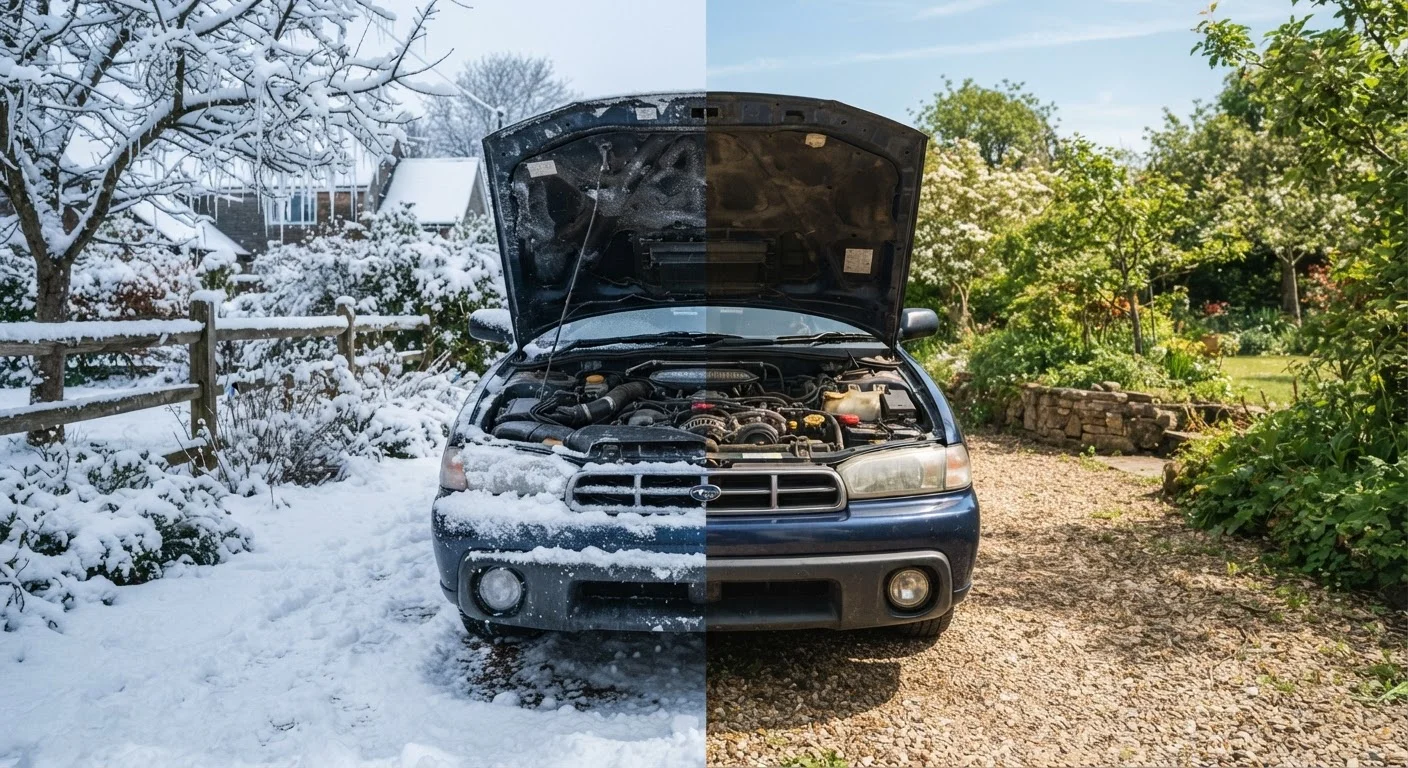
Car with open hood showing engine bay in a split seasonal setting of summer and winter

Key Takeaways

Extreme temperatures — hot or cold — stress fluids, batteries, and tires in different but equally damaging ways.
A pre-season inspection done twice a year can catch small issues before they become expensive roadside emergencies.
Many checks require only a few minutes and no special tools; others may need a qualified mechanic.
Your owner's manual is the most reliable source for fluid specs, capacities, and service intervals.
Tires are the single most season-sensitive component — pressure, tread, and type all matter.
45–90 min

Summary

22 items · 45–90 minutes

Why Seasonal Checks Matter More Than You Might Think

Most drivers think about car maintenance in terms of mileage — the familiar "every 3,000 miles" rhythm. But temperature swings put stresses on your vehicle that miles alone don't capture. Engine oil thickens in deep cold. Coolant systems are pushed to their limits in summer heat. A battery that starts fine in October may refuse to turn over in January. Running through a targeted checklist before summer and again before winter is one of the most practical things you can do as a car owner.

This checklist is designed for everyday drivers, not professional mechanics. Many items take only a few minutes to check yourself. For anything involving your brake system, suspension, or electrical components, consider having a qualified mechanic take a look — see our guide on when to DIY vs. visit a shop for help deciding. And before you start, pull out your owner's manual — it contains the manufacturer-specific fluid grades and intervals that generic advice can't replace.

Fluids

Check engine oil level and condition — look for a low reading on the dipstick or oil that appears dark and gritty rather than amber. Must
Inspect coolant (antifreeze) level and mixture — the ratio matters more in extremes; a 50/50 water-to-coolant mix is the general starting point, but verify against your owner's manual. Must
Check brake fluid level in the reservoir — low levels can indicate worn brake pads or a leak and should be assessed by a mechanic. Must
Verify windshield washer fluid is topped off with a formula rated for the season — summer bugs require a different blend than winter ice. Should
Check power steering and transmission fluid levels if your vehicle uses them — consult your owner's manual for location and specs. Should

Battery

Inspect battery terminals for white or bluish corrosion buildup and clean them with a wire brush if present. Must
Have the battery load-tested at an auto parts store or shop if it is three or more years old — cold weather reduces battery output significantly. Must
Check that battery hold-down hardware is secure — vibration accelerates internal battery wear. Should

Tires

Check tire pressure on all four tires (plus the spare) using a gauge — pressure drops roughly 1 PSI for every 10°F temperature decrease. Must
Inspect tread depth using the penny test: insert a penny with Lincoln's head pointing down into the tread groove — if you can see his entire head, the tread is too low. Must
Look for sidewall cracks, bulges, or uneven wear patterns that suggest alignment or inflation issues. Must
Confirm your tire type is appropriate for the season — all-season tires cover most conditions, but dedicated winter tires provide measurably better traction in sustained cold and snow. Should

Belts, Hoses, and Filters

Inspect serpentine and accessory belts for cracking, fraying, or glazing — heat accelerates belt degradation. Must
Squeeze coolant hoses to check for soft spots, hardness, or cracks that indicate they are nearing the end of their service life. Should
Check the engine air filter and replace it if it appears gray or clogged — a dirty filter reduces fuel efficiency and engine performance. Should
Replace the cabin air filter if it hasn't been changed recently — it affects defrost and air conditioning airflow. Nice to have

Lights and Visibility

Test all exterior lights — headlights (low and high beam), brake lights, turn signals, and reverse lights — replacing any burned-out bulbs. Must
Check wiper blades for streaking or skipping and replace them if they're not clearing the windshield cleanly — winter-specific blades are available for heavy snow regions. Must
Test the defroster (front and rear) to confirm it clears the glass within a reasonable time. Should

Emergency Preparedness

Verify your spare tire is properly inflated and that the jack and lug wrench are present and accessible. Must
Rotate your seasonal emergency kit contents — swap heat-focused items (extra water, sunshade) for cold-weather ones (blanket, ice scraper, sand or kitty litter for traction) as appropriate. Should
Keep a printed copy of your roadside assistance information or emergency contacts in the glovebox. Nice to have

Tools and Resources You'll Want on Hand

You don't need a full garage setup to run through most of these checks. Below are the basics that make the process faster and more reliable. Having these ready before you start means you won't be squinting at a dipstick in bad lighting or guessing at tire pressure by feel.

Required

Tire Pressure Gauge

Accurately measures PSI in all four tires and the spare — don't rely on visual inspection or gas station air pump displays alone.

Required

Flashlight or Headlamp

Lets you clearly see belts, hoses, fluid levels, and the battery even in low-light conditions under the hood.

Required

Penny (for tread check)

Used to perform the quick Lincoln penny tread depth test on each tire.

Required

Vehicle Owner's Manual

Provides the correct fluid grades, capacities, and service intervals specific to your make and model.

Optional

Wire Brush or Battery Terminal Cleaner

Removes corrosion from battery terminals, which can cause hard starts and electrical issues.

Optional

Multimeter or Battery Load Tester

Tests battery voltage and charge capacity; many auto parts stores will perform this test free of charge.

If you're heading into a long road trip right after your seasonal prep, also run through our driver's readiness checklist — it covers vehicle, route, and alertness factors that go beyond regular maintenance.

Interpreting Results and Knowing When to Act

Working through this checklist will surface one of three outcomes for each item: everything looks good, something is borderline, or something clearly needs attention. Don't ignore the middle category. A tire with 3/32" of tread remaining isn't a failure yet, but it's a signal to plan a replacement before the season peaks — not after your first winter storm or summer highway run.

Never Ignore Brake or Steering Warning Signs

If your brake fluid is noticeably low, you hear grinding when braking, or your steering feels loose or pulls to one side, these are not items to defer until a convenient time. Have a qualified mechanic inspect the vehicle before driving it further. Brake and steering system failures can create serious safety hazards for you and others on the road.

For fluid levels and conditions, the car fluids guide explains exactly what each fluid does and what warning signs to look for. For tire-specific decisions — pressure, tread depth, rotation timing — the tire care guide goes into full detail. If you're new to owning and maintaining a vehicle, car maintenance for new drivers is a solid starting point for building the right habits. Finally, if winter weather driving is ahead, review how different weather conditions affect vehicle handling so your car prep and your driving habits are aligned.

This article is for general informational purposes only. Always consult a qualified mechanic before performing or deferring any maintenance work, particularly on safety-critical systems such as brakes, steering, and tires.

Cars & Driving Editorial Team is the collective byline for our editorial team and contributor network. Articles published under this byline or an editorial pen name are researched, written, and reviewed according to our editorial standards for clarity, consistency, and independence before publication.

View all articles by Cars & Driving Editorial Team →
Disclaimer: The content on this site is for informational purposes only and is not a substitute for professional advice. Always consult a qualified professional for guidance specific to your situation.