

Key Takeaways
Why the Manual Outperforms Generic Advice
Walk into any quick-lube shop and you'll see a laminated chart on the wall: standard service intervals for oil, filters, and fluids. That chart is a reasonable starting point for the average vehicle — but your car isn't average. It's a specific model, with a specific engine, built to specific tolerances. Your owner's manual reflects all of that. Generic advice doesn't.
Manufacturers invest significant engineering resources into determining exactly when fluids degrade, when filters clog, and when components wear under real operating conditions for each vehicle they build. That knowledge is distilled into the maintenance schedule inside your manual. Ignoring it in favor of a universal recommendation means you may be over-servicing some things and under-servicing others.
There's also a warranty dimension. Many new and certified pre-owned vehicles come with powertrain or bumper-to-bumper warranties that require maintenance to be performed according to the manufacturer's specifications. Deviating from those specs — even with good intentions — can complicate warranty claims. For a deeper look at what skipped maintenance actually costs, the financial stakes are real.
Can't Find Your Physical Copy?
Most manufacturers publish owner's manuals as free PDF downloads on their official websites. Search your vehicle's year, make, and model along with 'owner's manual PDF.' Some automakers also offer manual access through their official apps. A digital copy is every bit as useful as a printed one.
Where to Look and What to Focus On
Owner's manuals can run 300–500 pages, which makes most people put them back in the glove box and never return. The good news: you don't need to read every page. A handful of sections deliver the vast majority of practical value.
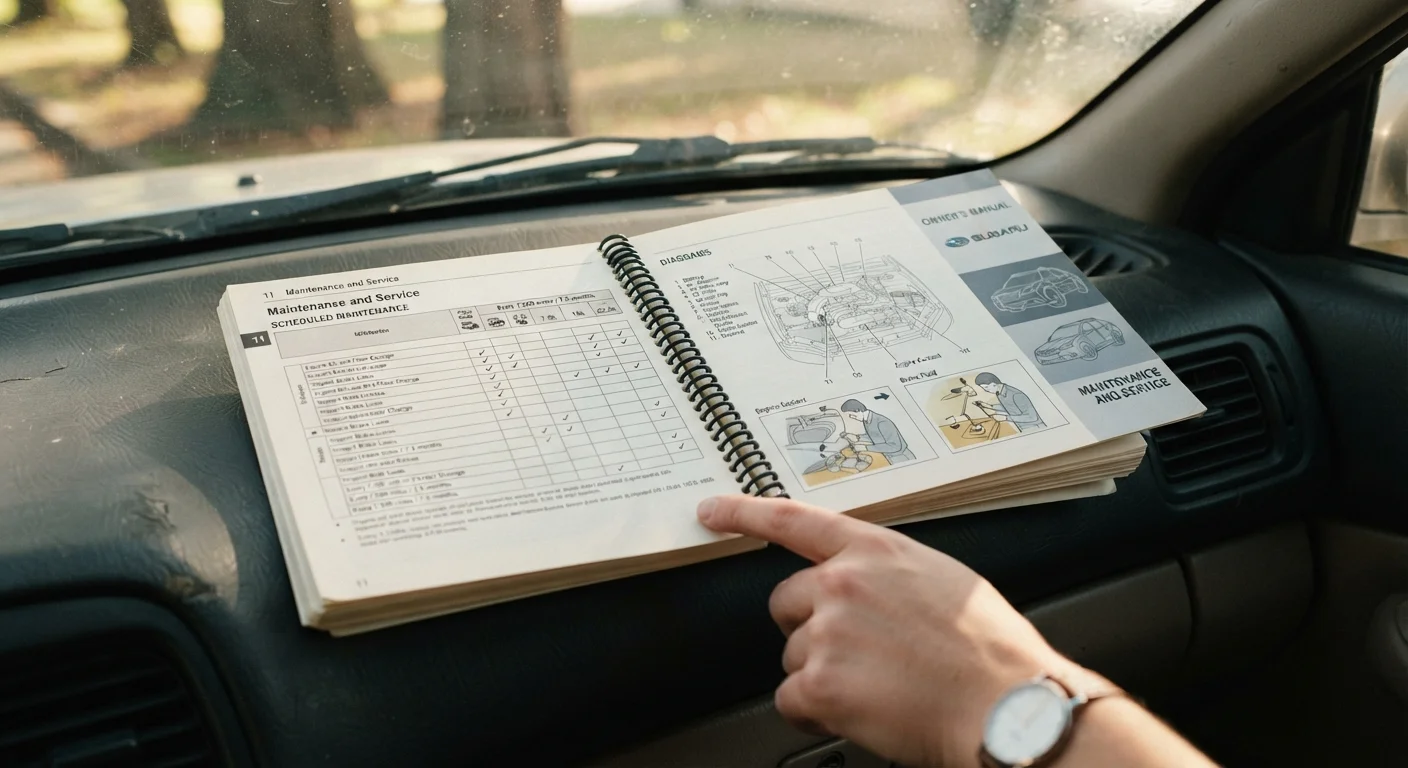
- Scheduled Maintenance Table: This is the most important section. It lists every service task — oil changes, belt inspections, spark plugs, fluid flushes — alongside mileage or time intervals. Start here.
- Fluid Specifications: Lists the exact type, grade, and sometimes brand standard for every fluid your vehicle uses. Critical before you add anything under the hood. See also our guide on synthetic vs. conventional oil for additional context.
- Tire and Wheel Information: Covers correct inflation pressures, load ratings, and rotation patterns — complementing the tire placard on your door jamb. For a complete overview, our tire care guide goes further.
- Warning and Indicator Lights: Shows what every dashboard symbol means and how urgently you should respond.
- Normal vs. Severe Driving Conditions: Defines what qualifies as severe use for your specific model, which determines which maintenance track applies to you.
If you want to understand what's actually happening under the hood before diving into specs, our plain-English engine bay guide is a useful companion.
Putting the Manual to Work: Six Practices That Make a Difference
Locate and read the scheduled maintenance section before your next service appointment.
The maintenance schedule in your manual is written specifically for your engine, transmission, and drivetrain — not a generic vehicle class. Using it means you're servicing what actually needs attention at the right intervals, rather than following a one-size-fits-all shop reminder.
Identify whether your driving qualifies as 'severe service' according to your manual's definition.
Most manuals define two maintenance tracks: normal and severe. Severe driving — such as frequent short trips, towing, stop-and-go traffic, or extreme temperatures — accelerates wear and calls for shorter service intervals. Misidentifying your conditions could mean under-servicing a vehicle that genuinely needs more attention.
Check the fluid specifications section before adding or changing any fluid.
Coolant, transmission fluid, and power steering fluid are not universally interchangeable. Using the wrong type — even a close substitute — can damage seals and internal components over time. Your manual lists the exact specifications your vehicle requires.
Consult the tire and wheel section for correct tire pressure, load rating, and rotation pattern.
Tire placard pressures on the door jamb tell you the vehicle's recommended inflation, but the manual provides the full picture — including load limits, approved tire sizes, and the rotation pattern that suits your drivetrain. Skipping this can affect handling, fuel efficiency, and tire lifespan.
Review the warning lights section as soon as an unfamiliar indicator appears on your dashboard.
Dashboard warning lights are tiered in urgency — some signal an immediate stop, others allow you to continue driving to a shop. Acting on the wrong assumption can lead to engine damage or an unnecessary breakdown on the side of the road.
Record every service you perform alongside the manual's schedule for future reference.
Keeping your completed maintenance aligned with your manual's recommended intervals creates a documented history that protects your warranty and helps a mechanic — or a future buyer — understand the vehicle's care history. It also makes it easier to catch any intervals you may have missed.
Each of these practices takes minutes to implement but can prevent misunderstandings that cost hundreds — or thousands — of dollars over a vehicle's life. For drivers managing older vehicles, these habits become even more valuable; see our guidance on keeping a high-mileage car reliable for specifics.
Start Using It Today
Reading your owner's manual doesn't require a mechanical background — it requires about 20 minutes and a willingness to treat the document as the practical reference it is. Pair what you find with a maintenance log and you'll have a clear, organized record of your vehicle's care that serves you at every service interval, warranty conversation, and eventual resale.
If you're newer to vehicle ownership and want a broader foundation, car maintenance for new drivers covers the essentials without the jargon. And when you're deciding which tasks to handle yourself versus hand off to a professional, DIY vs. shop maintenance lays out the trade-offs clearly.
“The owner's manual is the single most authoritative source for how a specific vehicle should be maintained. No generic schedule, no matter how well-intentioned, can substitute for what the manufacturer actually specifies.”
— Cars & Driving Editorial Team, Automotive maintenance guidance editors