

Key Takeaways
Our Verdict
Neither approach wins outright — the right choice depends on the task, your skill level, and your available time and tools. Simple, well-documented jobs like oil changes and air filter swaps are reasonable DIY candidates for most drivers. Anything involving safety-critical systems, specialized diagnostics, or unfamiliar territory is better left to a professional mechanic.
| Best for | Recommended |
|---|---|
| Drivers comfortable with basic mechanical tasks and willing to invest in tools | DIY Maintenance |
| Those with limited time, no workspace, or vehicles still under warranty | Professional Shop |
| Safety-critical repairs such as brakes, steering, or suspension | Professional Shop |
| Routine, low-complexity tasks like cabin air filters or wiper blades | DIY Maintenance |
The Real Trade-Off: Time, Money, and Know-How
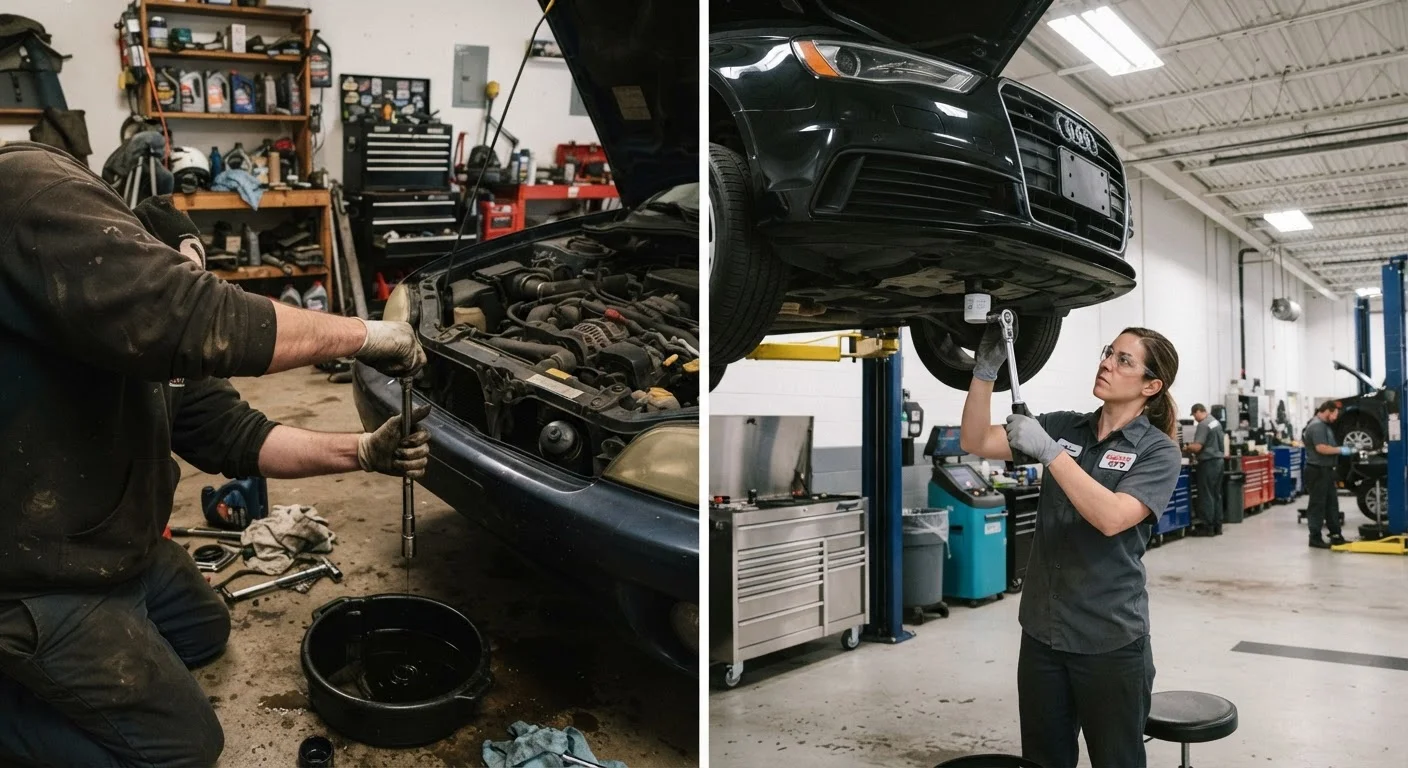
The decision to handle car maintenance yourself or hand it to a professional isn't just about saving money — it's about honestly sizing up what a task involves versus what you're equipped to handle. Both paths have genuine advantages, and many drivers use a mix of both depending on the job.
DIY maintenance can meaningfully cut labor costs, which often make up 50% or more of a shop invoice. But those savings come with conditions: you need the right tools, a safe place to work, reliable information, and enough mechanical confidence to do the job correctly. A botched repair can cost far more to fix than the original service would have. See what gets expensive when maintenance goes wrong for context on how deferred or improper maintenance compounds over time.
Professional mechanics bring training, diagnostic equipment, and accountability. They're also required to stand behind their work — reputable shops typically guarantee parts and labor for a defined period. That peace of mind has real value, particularly for complex systems you can't easily inspect yourself.
What DIY Handles Well
Several routine maintenance tasks are genuinely accessible to drivers with modest mechanical interest and a few basic tools. These include:
- Oil and filter changes — straightforward on most vehicles, though you'll need to dispose of used oil properly at a recycling facility
- Air filter replacement — engine and cabin air filters on most modern cars take minutes and no special tools
- Wiper blade replacement — typically a tool-free job explained in your owner's manual
- Battery terminal cleaning — a small wire brush and some baking soda solution handles corrosion safely
- Tire pressure checks and inflating — a $15 gauge and access to an air source is all you need
The key with any DIY job is using the correct specifications for your vehicle. Generic online advice can be wrong for your make and model. As noted in our guide to using your owner's manual, manufacturer-specific schedules and fluid specs matter more than general rules of thumb.
Start Simple and Build Confidence
If you're new to DIY maintenance, start with the easiest, lowest-risk jobs — cabin air filters and wiper blades are good first tasks. Watch a few vehicle-specific tutorial videos before you start, not generic ones. Once you've built confidence and a basic tool set, you can gradually take on more involved tasks like oil changes. Don't rush into brake or suspension work until you have a solid foundation.
When the Shop Is the Smarter Call
Certain jobs carry safety implications or require specialized tools that put them firmly in professional territory for most drivers:
- Brake system work — pads, rotors, calipers, and brake lines directly affect stopping ability; errors here are dangerous
- Suspension and steering components — misaligned or improperly installed parts affect vehicle handling at speed
- Transmission service — especially on automatic transmissions, which are complex and sensitive to incorrect fluid types or fill levels
- Airbag and restraint systems — these should never be tampered with outside of a professional setting
- Check engine light diagnosis — a scan tool can read a code, but correctly interpreting it and identifying the root cause usually requires experience and additional testing
Vehicles still under a manufacturer or extended warranty also warrant special attention. Some warranties specify that service must be performed by qualified technicians to remain valid — review your documentation carefully before deciding to DIY anything on a newer vehicle.
Don't Guess on Safety-Critical Systems
Brakes, steering, and suspension are not areas for trial and error. An improperly installed brake caliper or a loose tie rod end can cause loss of vehicle control at highway speeds. If you're uncertain about a repair's scope or your ability to complete it correctly, take the vehicle to a qualified mechanic. The cost of a professional repair is almost always less than the consequences of getting it wrong.
How to Compare Costs Honestly
| DIY Maintenance | Professional Shop | |
|---|---|---|
| Upfront cost | Lower (no labor charge) | Higher (labor + markup on parts) |
| Tool investment | Required; builds over time | None needed from customer |
| Time required | Varies; often longer initially | Drop-off/wait; predictable |
| Skill requirement | Moderate for basic tasks | Handled by trained technicians |
| Safety-critical repairs | Not recommended for most | Appropriate and accountable |
| Warranty compatibility | Risk if specs not followed | Generally warranty-safe |
| Diagnostic capability | Limited without equipment | Full diagnostic tools available |
When weighing DIY against a shop visit, factor in the full picture. A $30 oil change at home might actually cost $60 once you buy the oil, filter, drain pan, and a wrench set — though those tools pay for themselves over time. A shop might charge $80–$100 for the same service but include a multi-point inspection that catches something else early.
For a broader view of vehicle ownership costs, our car ownership hub covers insurance, financing, and the ongoing financial decisions every driver faces.
Tracking Your Work Either Way
Whether you change your own oil or pay a shop to do it, documenting every service is worth the small effort involved. A maintenance log — even a simple notebook or a free app — records what was done, when, and with what parts or fluids. This protects your warranty, helps diagnose recurring problems, and adds verifiable history when you eventually sell the vehicle.
Keeping a thorough maintenance log is one of the highest-value habits a car owner can build, regardless of who does the actual work. And if you want to separate reliable guidance from widespread misconceptions, common maintenance myths is worth a read before your next service interval.