

Key Takeaways
Start here
Why a Simple Routine Beats a Complicated One
Next
Know Your Skin Type First
Build your base
The Core Three: Cleanse, Moisturize, Protect
Put it into practice
Building Morning and Evening Routines
When you're ready
What to Add When You're Ready to Expand
Avoid the pitfalls
Common Beginner Mistakes to Avoid
Why a Simple Routine Beats a Complicated One
Walk into any beauty aisle or open a skincare app and you'll be met with dozens of serums, toners, essences, ampoules, and treatments — all promising transformed skin. It's a lot. And for someone just starting out, it's genuinely overwhelming.
Here's the reassuring truth: effective skincare doesn't require a ten-step system. A consistent three-step routine maintained over weeks will outperform an elaborate routine you abandon after five days. The goal at the start is building a sustainable habit, not assembling a full collection. Think of it the way you might approach building a simple, workable budget — small, consistent actions compound into meaningful results over time.
Know Your Skin Type First
Choosing products without knowing your skin type is a bit like buying shoes without knowing your size — you might get lucky, but the odds aren't great. Understanding your skin helps you select formulas that support rather than disrupt it.
A simple at-home test: cleanse your face gently, pat dry, and leave it bare for an hour. Then observe:
- Dry skin will feel tight, look dull, or show flakiness.
- Oily skin will appear shiny across the forehead, nose, and cheeks.
- Combination skin shows oiliness mainly in the T-zone (forehead, nose, chin) with drier cheeks.
- Normal skin feels comfortable, neither too tight nor too shiny.
- Sensitive skin may show redness, stinging, or react easily to new products.
These categories aren't rigid — your skin can shift with seasons, age, and lifestyle. Think of your skin type as a useful starting guide, not a permanent label.
Skin barrier
The outermost layer of skin that keeps moisture in and irritants out. A healthy barrier is the foundation of good skin.
Broad-spectrum sunscreen
A sunscreen that protects against both UVA rays (linked to aging) and UVB rays (linked to burning). Look for SPF 30 or higher.
Humectant
An ingredient that draws water into the skin. Glycerin and hyaluronic acid are common examples found in moisturizers.
Retinoid
A vitamin A–derived ingredient used to support cell turnover and address texture or fine lines. It requires careful, gradual introduction.
Comedogenic
Describes ingredients or products that may clog pores. Products labeled non-comedogenic are formulated to be less likely to cause breakouts.
pH balance
The measure of how acidic or alkaline a product is. Skin is naturally slightly acidic, and cleansers that respect this help maintain a healthy barrier.
The Core Three: Cleanse, Moisturize, Protect
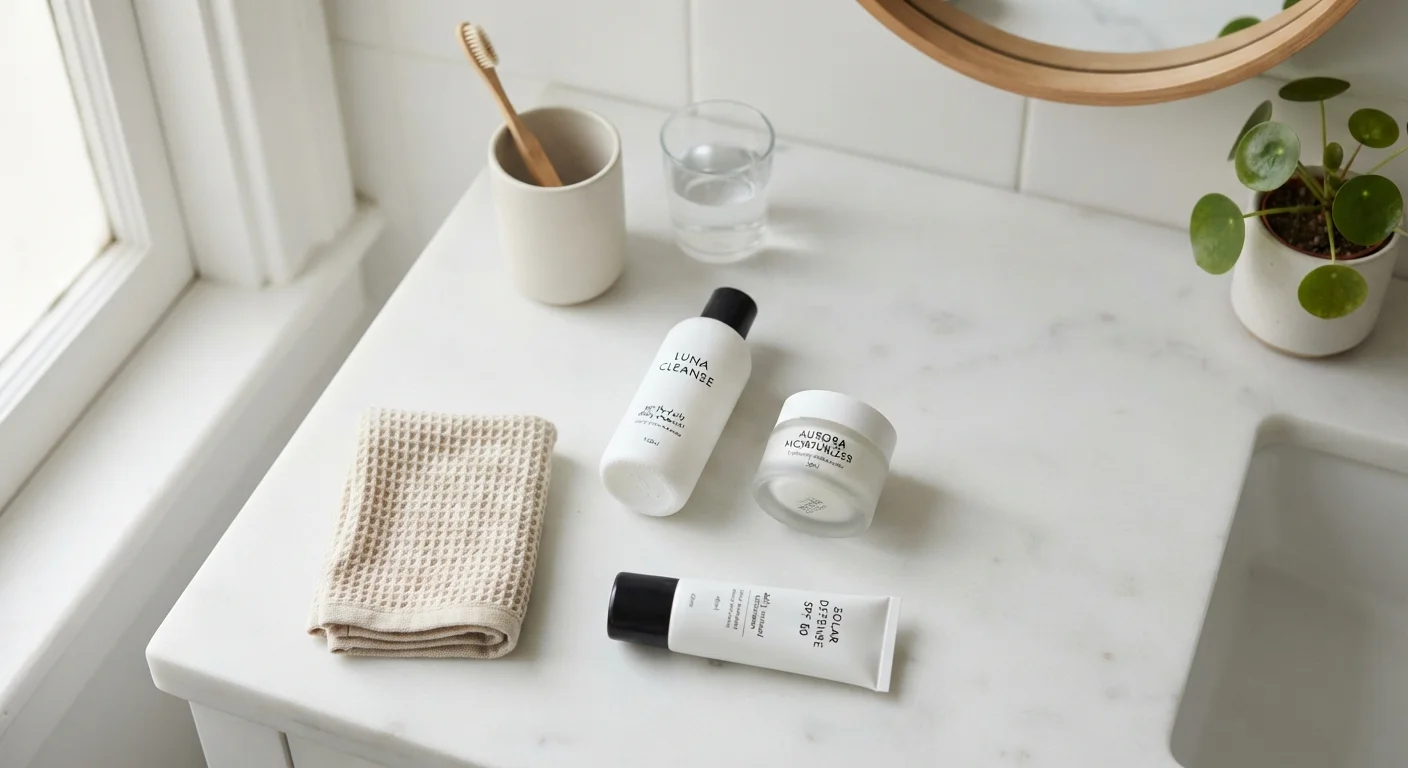
Every solid beginner routine rests on three fundamentals. Master these before adding anything else.
1. Cleanser
A gentle cleanser removes dirt, excess oil, and environmental residue without stripping your skin's natural oils. Look for terms like "gentle," "non-stripping," or "pH-balanced." Foaming cleansers tend to suit oilier skin; cream or gel formulas often work better for drier types. Once daily in the evening is a solid starting point — you can add a morning rinse if your skin feels it needs one. For more on why too much cleansing backfires, see why over-cleansing can damage your skin barrier.
2. Moisturizer
Moisturizer helps your skin retain water and keeps the barrier functioning well. Even oily skin benefits from a lightweight, non-comedogenic moisturizer. Dry skin types may prefer richer creams, while gel-based formulas work well for combination or oily skin.
3. Sunscreen
This is non-negotiable. Daily broad-spectrum SPF 30 or higher is one of the most evidence-supported habits in skincare. UV exposure contributes to uneven tone, texture changes, and other visible signs of skin aging over time. Apply it as the last step every morning, even on cloudy days or when you're mostly indoors.
Don't Overcleanse Your Skin
Washing your face more than twice a day, or using a cleanser that leaves your skin feeling 'squeaky clean,' can strip natural oils and weaken your skin barrier. This often leads to increased dryness, irritation, or even more oil production as your skin tries to compensate. Stick to once or twice daily with a gentle formula.
Building Morning and Evening Routines
AM and PM routines share some steps but serve different purposes. Morning skincare focuses on protection; evening skincare focuses on repair and recovery while you sleep. Here's a simple structure to follow:
| Step | Morning | Evening |
|---|---|---|
| Cleanse | Optional rinse or full cleanse | Full cleanse to remove the day |
| Moisturize | Yes | Yes |
| Sunscreen | Yes — always last | No |
Once you're comfortable with this rhythm, you can explore what else belongs where. Our guide to morning vs. evening skincare routines goes deeper into how AM and PM purposes differ and why ingredient timing matters.
What to Add When You're Ready to Expand
Once your core routine feels natural — typically after a few consistent weeks — you can begin considering additions. Common next steps include:
- Exfoliation: Removing dead skin cells 1–2 times per week can help with texture and radiance. There are two broad approaches — physical scrubs and chemical acids — and they work very differently. See physical scrubs vs. chemical acids to find out which suits your skin.
- Targeted serums: Serums deliver concentrated ingredients for specific concerns, like uneven tone or hydration. They're applied after cleansing and before moisturizing.
- Retinoids: Among the most researched skincare ingredients for texture and visible aging, retinoids require a slow, careful introduction. Read up on how retinoids work and how to start before diving in.
When you do add products, order matters. Layering skincare products correctly ensures each one can actually do its job.
One New Product at a Time
When you're ready to try something new, introduce just one product and use it consistently for two to four weeks before adding another. This way, if your skin reacts — positively or negatively — you'll know exactly what caused it. Patience here saves a lot of guesswork later.
Common Beginner Mistakes to Avoid
Even with good intentions, a few habits can slow your progress or cause unnecessary irritation:
- Skipping sunscreen because you don't plan to be outside. UVA rays pass through windows and affect skin even indoors.
- Switching products too quickly. Giving a product less than four weeks before moving on makes it nearly impossible to know if it was working.
- Piling on too many new products at once. If your skin breaks out or gets irritated, you won't know which product is responsible.
- Expecting overnight results. Skin cell turnover takes roughly four to six weeks. Consistency — not speed — is what delivers change.
Skincare works best as a sustainable practice. If budget is a consideration, our guide to skincare on a simple budget helps you identify which steps matter most when resources are limited. And once your skin routine is running smoothly, you might enjoy pairing it with a 10-minute everyday makeup routine for a complete, efficient morning ritual.
When to See a Dermatologist
This article covers general skincare education for healthy skin and is not medical advice. If you have a skin condition such as acne, eczema, rosacea, or psoriasis, a board-certified dermatologist can provide a personalized plan tailored to your specific needs. General routines are a starting point, not a substitute for professional care.
This article is for general informational purposes only and is not a substitute for professional medical or dermatological advice. If you have a skin condition or persistent concerns, please consult a qualified healthcare provider.