

Key Takeaways
Our Verdict
No single waterproofing method works for every basement. Interior drainage systems offer reliable, lower-cost management of ongoing water infiltration, while exterior membrane systems provide the most thorough long-term barrier. Homeowners dealing with minor seepage may address it with crack injection or improved grading, while chronic flooding typically warrants a professional assessment combining multiple approaches.
| Best for | Recommended |
|---|---|
| Homeowners with minor, localized seepage or hairline cracks | Crack injection or interior sealants |
| Basements with recurring water pooling on the floor | Interior drainage system with sump pump |
| New construction or major renovation with full excavation access | Exterior waterproofing membrane |
| Homes with poor yard drainage contributing to foundation moisture | Exterior grading correction and French drain |
Why Basements Leak — and Why It Matters
Basement water problems stem from a handful of reliable culprits: hydrostatic pressure (groundwater pushing against foundation walls), poor surface drainage that directs rainwater toward the foundation, cracks in poured concrete or block walls, and failing window wells or floor joints. Identifying your specific entry point is essential before choosing a method — treating symptoms without addressing the source often leads to recurring problems.
Moisture in a basement isn't just an inconvenience. Left unaddressed, it can compromise structural integrity, promote mold growth, and damage finished living spaces. Understanding how different waterproofing strategies work gives you a clearer picture of what to expect in terms of effort, disruption, and cost.
Interior Waterproofing: Managing Water After Entry
Interior waterproofing doesn't stop water from entering the foundation — it intercepts and redirects it before it can cause damage. This approach is often the most practical for existing homes where full exterior excavation isn't feasible.
Interior Drainage Systems
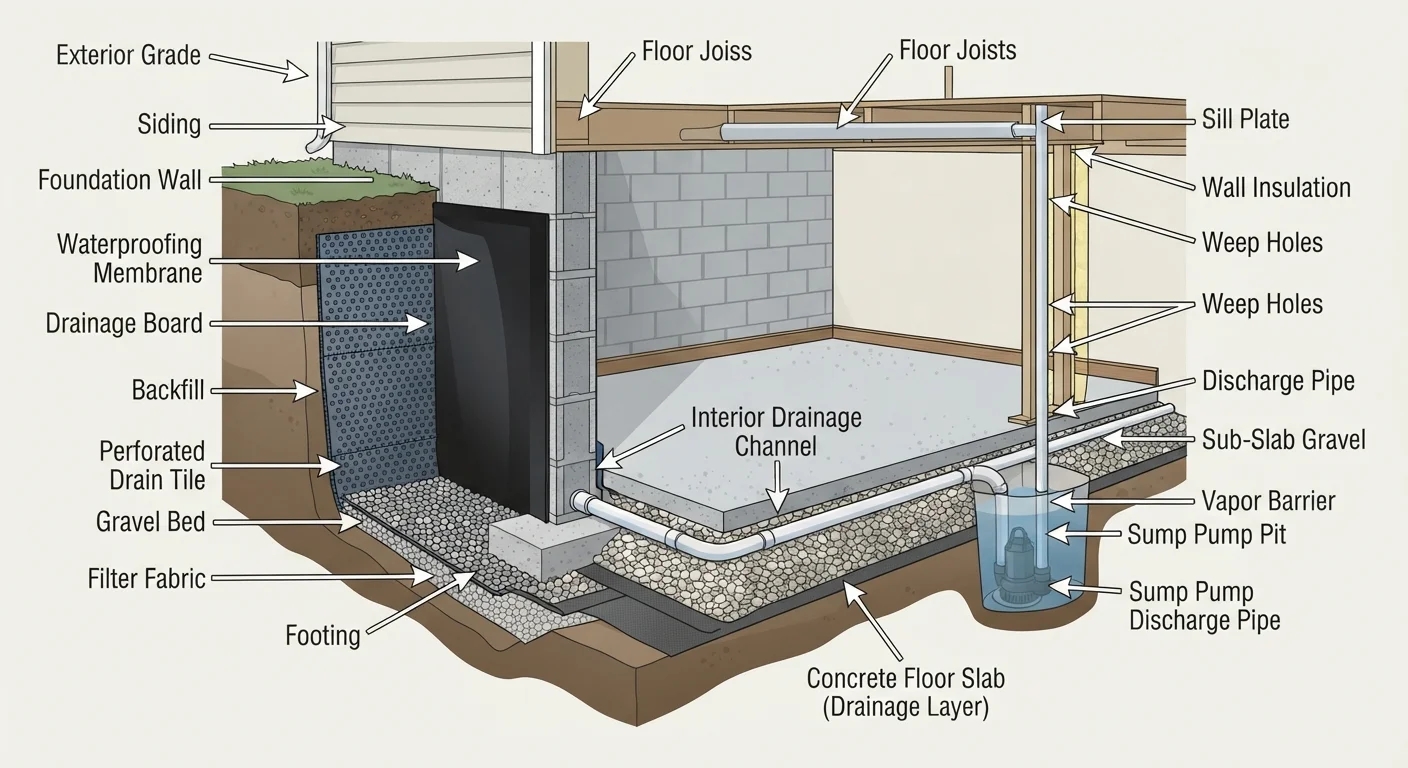
A perimeter drainage channel, sometimes called a French drain, is installed along the interior base of foundation walls. Water seeping through walls or floor joints flows into this channel and drains to a sump pit. This is one of the most reliable long-term solutions for chronic water infiltration and is typically installed by waterproofing contractors, though some experienced DIYers handle smaller sections.
Sump Pumps
A sump pump sits in a pit at the lowest point of the basement and automatically pumps collected groundwater out and away from the foundation. Most installations require an electrical connection and a proper discharge line — work that should meet local electrical codes. A battery backup system is worth considering to maintain function during power outages.
Interior Wall Sealants and Crack Injection
Hydraulic cement and masonry sealants can slow minor seepage through poured concrete walls. For isolated hairline cracks, epoxy or polyurethane foam injection can seal the crack effectively from the inside. These are lower-cost, DIY-accessible options, but they're most appropriate for minor issues rather than significant water pressure problems.
| Interior Drainage + Sump | Interior Sealants/Injection | Exterior Membrane | Exterior French Drain | Grading Correction | |
|---|---|---|---|---|---|
| Water entry point addressed | After entry, at floor | At wall crack | Before wall contact | Before wall contact | Surface runoff only |
| Relative cost | Moderate to high | Low | High | Moderate | Low to moderate |
| Disruption level | Moderate (interior) | Minimal | High (excavation) | Moderate to high | Low |
| DIY feasibility | Partial (pump only) | Yes, for minor cracks | No — professional only | Limited | Yes |
| Best for | Chronic water intrusion | Hairline cracks, seepage | New builds or major reno | High groundwater areas | Poor yard drainage |
| Permit typically required | Often (electrical) | Usually no | Yes | Sometimes | Rarely |
Exterior Waterproofing: Stopping Water at the Source
Exterior approaches address water before it contacts interior spaces and are generally considered the most thorough solution. The trade-off is greater cost and disruption.
Exterior Waterproofing Membranes
This method involves excavating soil around the foundation down to the footing, then applying a waterproof membrane or coating directly to the exterior foundation wall. A drainage board and gravel layer are typically added to direct water to a footing drain. Because excavation involves heavy equipment and can affect utility lines, this work almost always requires a licensed contractor and may require permits.
Exterior French Drains
A perforated pipe surrounded by gravel and filter fabric is buried along the exterior perimeter of the foundation. It collects groundwater before it can build up against the wall and redirects it away from the home. This can sometimes be combined with re-grading the yard slope to encourage surface water to drain away naturally.
Grading and Surface Drainage Corrections
One of the most overlooked — and most affordable — exterior fixes is improving yard slope. The ground around your foundation should slope away from the home at roughly six inches of drop over the first ten feet. Filling low spots, extending downspouts, and redirecting surface water can meaningfully reduce basement moisture without major excavation.
Start with the Simplest Fix First
Before committing to interior drainage or exterior excavation, address obvious surface drainage problems: clean gutters, extend downspouts, and improve yard grading. These steps cost little and sometimes resolve or significantly reduce basement moisture on their own. A waterproofing contractor can help you determine whether deeper intervention is truly necessary after surface corrections are in place.
Choosing the Right Approach for Your Basement
Most waterproofing professionals recommend a diagnostic first step: identify where water is actually entering and whether it's surface water, groundwater, or condensation. A simple test — taping a sheet of plastic to a damp wall and checking after several days — can reveal whether moisture is coming through the wall or condensing on its surface.
98%
Basements experiencing water at some point
The American Society of Home Inspectors has cited figures suggesting the vast majority of basements will experience some form of water intrusion over the life of a home.
$4,000–$10,000+
Typical professional interior drainage system cost
Contractor costs vary widely based on basement size, local labor rates, and the complexity of the drainage and sump pump installation required.
Minor, isolated issues often respond well to targeted interior treatments. Chronic flooding or significant hydrostatic pressure typically calls for a drainage system, sump pump, or exterior membrane — and often a combination of these. For any project that involves electrical work, structural elements, or excavation near utility lines, working with a licensed contractor and pulling the necessary permits protects both your investment and your safety.
Whatever method you choose, ongoing maintenance matters. Clean gutters, extend downspouts at least four feet from the foundation, and inspect sump pump operation seasonally to keep your system performing reliably.