

| Fluids to monitor regularly | 6 core fluids |
| Most critical fluid | Engine oil |
| Typical oil change interval (synthetic) | 7,500–10,000 miles (Varies by manufacturer; consult owner's manual) |
| Coolant flush frequency | Every 2–5 years (Varies by vehicle and coolant type) |
| Brake fluid type (most common) | DOT 3 or DOT 4 (Printed on reservoir cap) |
| Washer fluid winter tip | Use a de-icer formula below 32°F |
Why Fluids Matter More Than Most Drivers Realize
Your car is essentially a system of controlled movements, combustion, and heat — and fluids make all of it possible. They lubricate metal parts, cool the engine, transfer force, and keep your visibility clear. When any one of them runs low or degrades, you'll likely see a dashboard warning — or worse, experience a breakdown on the road.
For a deeper look at what's physically happening under the hood, see our plain-English engine bay guide. And if a warning light has already appeared, our decoded guide to dashboard warnings explains what each one means.
The six fluids below are the ones every driver — new or experienced — should be able to identify, locate, and monitor.
| Fluids to monitor regularly | 6 core fluids |
| Most critical fluid | Engine oil |
| Typical oil change interval (synthetic) | 7,500–10,000 miles (Varies by manufacturer; consult owner's manual) |
| Coolant flush frequency | Every 2–5 years (Varies by vehicle and coolant type) |
| Brake fluid type (most common) | DOT 3 or DOT 4 (Printed on reservoir cap) |
| Washer fluid winter tip | Use a de-icer formula below 32°F |
The Six Essential Car Fluids
Dipstick
A long, thin metal rod inserted into the engine to measure the oil level. Pull it out, wipe it clean, reinsert, and pull again to get an accurate reading.
DOT rating
A classification for brake fluid set by the U.S. Department of Transportation. It indicates the fluid's boiling point and compatibility — always use the type specified for your vehicle.
Coolant reservoir
A plastic tank near the radiator that holds the coolant mixture. It has MIN/MAX markings so you can check the level without opening the radiator cap.
Transmission fluid
A specialized lubricant that keeps the gears in your transmission operating smoothly. Unlike engine oil, many modern vehicles have sealed transmissions that require a mechanic to service.
Engine Oil
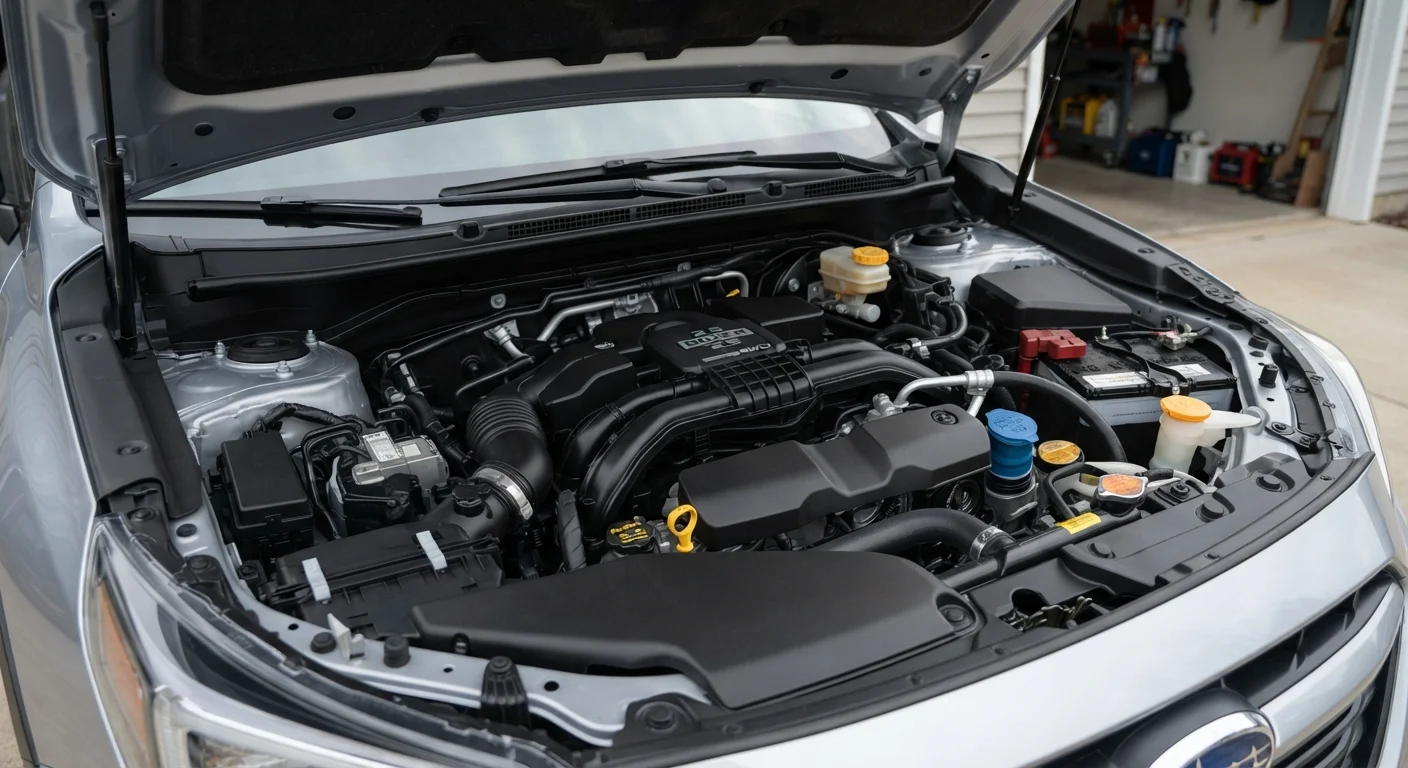
Engine oil is your car's most critical fluid. It lubricates moving metal parts inside the engine, preventing wear and overheating from friction. Most vehicles have a dipstick (usually with a yellow or orange ring) that lets you check both the oil level and its condition. Fresh oil is amber-colored; dark, gritty oil is overdue for a change. Check it when the engine is cool and the car is on level ground. Most manufacturers recommend an oil change every 5,000 to 7,500 miles for conventional oil, though full synthetic oils may last longer — always follow your owner's manual.
Coolant (Antifreeze)
Coolant circulates through the engine to absorb heat and prevent both overheating in summer and freezing in winter. It lives in a translucent plastic reservoir near the radiator, marked with MIN and MAX lines. Never open the radiator cap when the engine is hot — pressurized steam can cause serious burns. Coolant is typically a 50/50 mix of antifreeze and distilled water. It usually needs flushing every two to five years, depending on the vehicle.
Brake Fluid
Brake fluid transmits the force of your foot on the pedal to the brake components at each wheel. It's stored in a small, translucent reservoir near the back of the engine bay. Brake fluid absorbs moisture over time, which lowers its boiling point and reduces braking effectiveness. Most vehicles use DOT 3 or DOT 4 fluid (the type is printed on the reservoir cap). If the level drops noticeably without a visible leak, have a mechanic inspect the brake system promptly — this isn't a DIY situation for most drivers.
Power Steering Fluid
Power steering fluid helps your steering wheel turn with less effort. It's found in a small reservoir, often labeled with a steering wheel icon. Many newer vehicles use electric power steering and don't need this fluid at all, so check your owner's manual first. If steering feels stiff or you hear a whining noise while turning, low fluid may be the cause.
Transmission Fluid
Transmission fluid lubricates the gears in your transmission, keeping gear shifts smooth and protecting internal components from wear. Some vehicles have a transmission dipstick; others have a sealed system that requires a mechanic to check. Healthy transmission fluid is typically pink or red and slightly sweet-smelling. Dark, burnt-smelling fluid is a sign it needs replacing. Intervals vary widely — check your owner's manual.
Windshield Washer Fluid
This is the one fluid that poses no mechanical risk if it runs low, but running out during a dusty highway stretch or winter road-salt season creates a real visibility hazard. Use a fluid rated for your climate — some formulas include de-icer for cold weather. Never substitute water alone, as it can freeze in the lines and doesn't clean as effectively. Driving in poor conditions? See how weather affects your vehicle for broader guidance.
When to Call a Mechanic Instead
Topping off windshield washer fluid or checking oil are tasks most drivers can handle safely. However, brake fluid issues, transmission problems, or any unexplained fluid leak warrant a visit to a qualified mechanic. If you notice puddles under your parked car, discoloration in a fluid reservoir, or a burning smell, don't delay — have the vehicle inspected before driving it further.
Building a Simple Fluid-Check Habit
You don't need to check every fluid every week. A practical rhythm is to inspect engine oil and coolant monthly, and give the others a quick look every three to four months — or before any long road trip. Tying fluid checks to seasonal prep makes it easier to stay consistent; our seasonal car maintenance checklist walks through exactly what to do before summer and winter.
When you're unsure about a fluid's condition or level, the safest move is to consult a qualified mechanic. Some fluid issues — particularly brake and transmission problems — should not be self-diagnosed or ignored. The car maintenance guide for new drivers covers these responsibilities in broader detail if you're just getting started.