

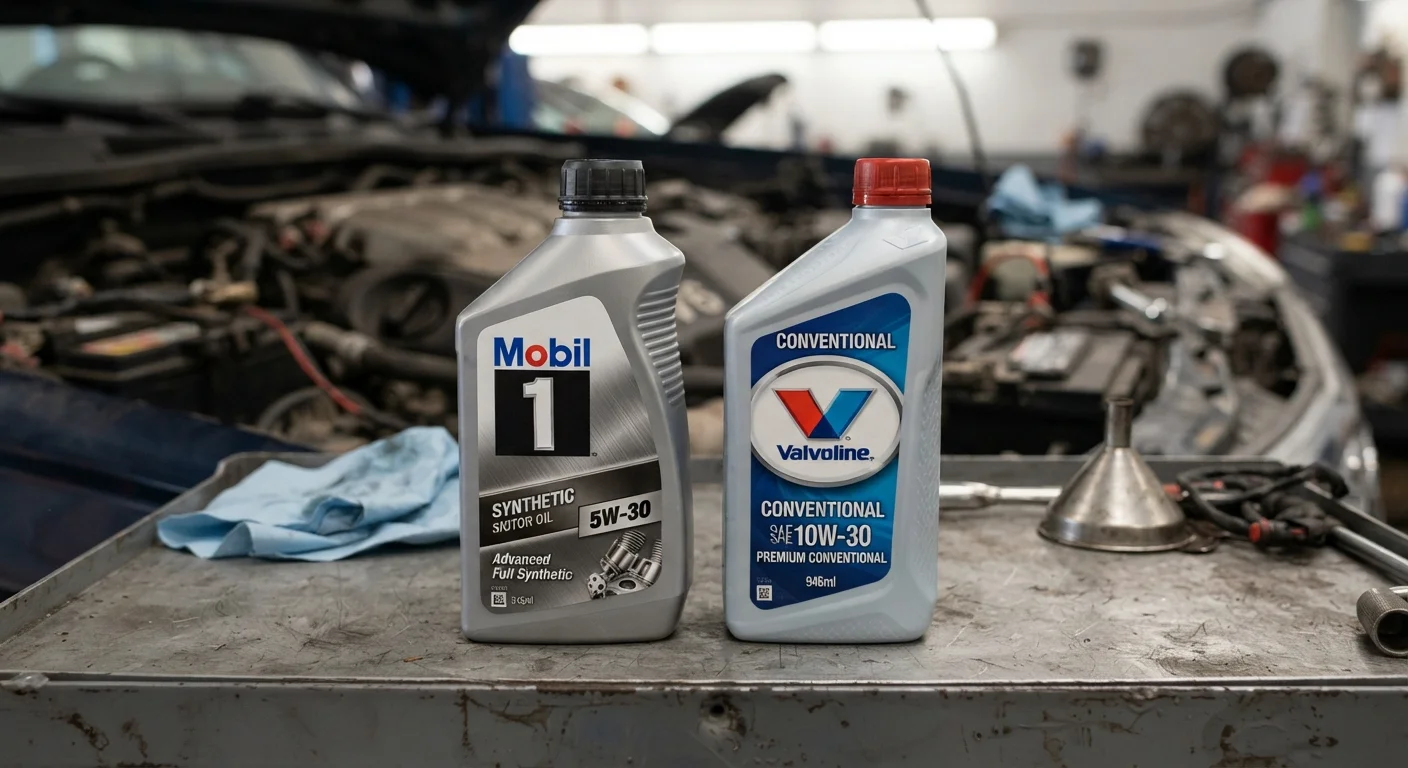
Key Takeaways
Option A
Synthetic Motor Oil
The engineered, high-performance option.
Best for: Drivers with newer vehicles, turbocharged engines, extreme climates, or longer intervals between oil changes.
Option B
Conventional Motor Oil
The time-tested, widely available standard.
Best for: Drivers of older vehicles with simple engines and regular, predictable driving patterns.
If you drive a newer vehicle or one with a turbocharged engine
Synthetic Motor Oil
Modern and turbocharged engines run hotter and tighter tolerances, where synthetic oil's engineered stability provides more consistent protection.
If you drive an older vehicle with a straightforward engine and change oil regularly
Conventional Motor Oil
Conventional oil meets the lubrication needs of simpler, older engines well — especially when maintenance intervals are kept short and consistent.
If you live in a region with very cold winters or very hot summers
Synthetic Motor Oil
Synthetic oil flows more readily in cold starts and resists breakdown in extreme heat, offering more reliable protection across temperature swings.
If your manufacturer explicitly specifies full synthetic in the owner's manual
Synthetic Motor Oil
Manufacturer specifications always take priority — using the wrong oil type can void warranty coverage and reduce engine protection.
If you're watching your vehicle maintenance budget closely
Conventional Motor Oil
Conventional oil costs less per change, and for vehicles that don't require synthetic, it delivers adequate protection at a lower price point.
What Actually Makes Them Different
Motor oil does one essential job: reduce friction between moving metal parts inside your engine and carry away heat and contaminants. The difference between synthetic and conventional oil comes down to how each is made.
Conventional motor oil is refined directly from crude petroleum. Refining removes most impurities, but some molecular inconsistencies remain. Those inconsistencies mean the oil can break down faster under extreme heat or repeated cold starts.
Synthetic motor oil is chemically engineered — either built from scratch (full synthetic) or blended from conventional oil and synthetic base stocks (synthetic blend). That controlled manufacturing process produces more uniform molecules, which tend to resist breakdown longer and flow more consistently across a wider range of temperatures.
For a deeper look at viscosity ratings and what the numbers on the bottle actually mean, see our guide to engine oil grades and change intervals.
| Criterion | Synthetic Oil | Conventional Oil |
|---|---|---|
| Base Material | Chemically engineered molecules | Refined crude petroleum |
| Cold-Weather Flow | Flows quickly in low temperatures | Thickens more at cold start |
| Heat Resistance | Higher thermal stability | Can degrade faster under extreme heat |
| Typical Change Interval | 7,500–10,000+ miles (varies by vehicle) | 3,000–5,000 miles (varies by vehicle) |
| Cost Per Oil Change | Generally higher | Generally lower |
| Best Engine Fit | Turbocharged, high-performance, newer engines | Older, simpler engines under normal use |
| Manufacturer Requirement | Required by many modern vehicles | Acceptable for many older vehicles |
Performance Differences That Matter Day to Day
For most ordinary driving — commutes, errands, highway miles — both oil types will protect your engine adequately when used as specified. Where the differences become more meaningful is at the extremes.
Cold starts: Conventional oil thickens more in cold temperatures, meaning there's a brief moment at startup when parts aren't fully lubricated. Synthetic oil flows faster in cold conditions, reducing that window of wear.
High heat: Turbocharged engines, towing, and stop-and-go traffic in hot weather all push oil to its thermal limits. Synthetic oil's molecular stability means it holds up better under sustained heat.
Change intervals: Conventional oil typically calls for changes every 3,000–5,000 miles under normal conditions, though modern formulations can last longer. Full synthetic oil is often rated for 7,500–10,000 miles or more, depending on the vehicle and oil brand. Always defer to what your owner's manual specifies — generic interval rules can be misleading. Our article on common maintenance myths covers why the old 3,000-mile rule no longer applies to many drivers.
~40%
Share of new U.S. vehicles requiring full synthetic
Industry estimates suggest a growing proportion of modern vehicles — particularly those with turbocharged or direct-injection engines — are factory-specified for full synthetic oil.
3x
Longer interval potential vs. conventional oil
Full synthetic formulations are commonly rated for change intervals up to three times longer than conventional oil, though actual intervals depend entirely on manufacturer specifications.
How to Know Which One Your Car Actually Needs
The single most reliable source of guidance is your vehicle's owner's manual. Manufacturers specify exactly which oil type and viscosity grade their engines are designed to use. Using a different specification — even a premium one — can, in some cases, affect warranty coverage or engine performance.
A few practical rules of thumb:
- If your manual says full synthetic is required, use it. Many turbocharged engines, direct-injection engines, and high-performance vehicles fall into this category.
- If your manual says conventional is acceptable, synthetic will typically still work — but it won't transform your engine's performance. The extra cost may not deliver proportional benefit.
- If you're unsure, a trusted mechanic can look up your vehicle's specifications and recommend accordingly.
Switching from conventional to synthetic mid-engine-life is generally safe in modern vehicles, contrary to an old myth about leaks. That concern largely applied to older engine seals that don't appear in cars manufactured in recent decades.
For context on how oil fits alongside other essential fluids your car depends on, see our guide to car fluids every driver should know. And if you've never closely read your manual, it's one of the most overlooked maintenance tools available — free, specific to your vehicle, and more reliable than general advice.
A Note on Oil Viscosity Grades
Choosing between synthetic and conventional is only part of the decision — the viscosity grade (such as 5W-30 or 0W-20) matters just as much. These numbers describe how the oil flows at different temperatures. Your owner's manual specifies the correct grade for your engine; using the wrong grade, even of a high-quality synthetic, can affect engine protection. Never substitute a different grade without confirming it meets your manufacturer's requirements.