

Key Takeaways
What a Maintenance Log Actually Is
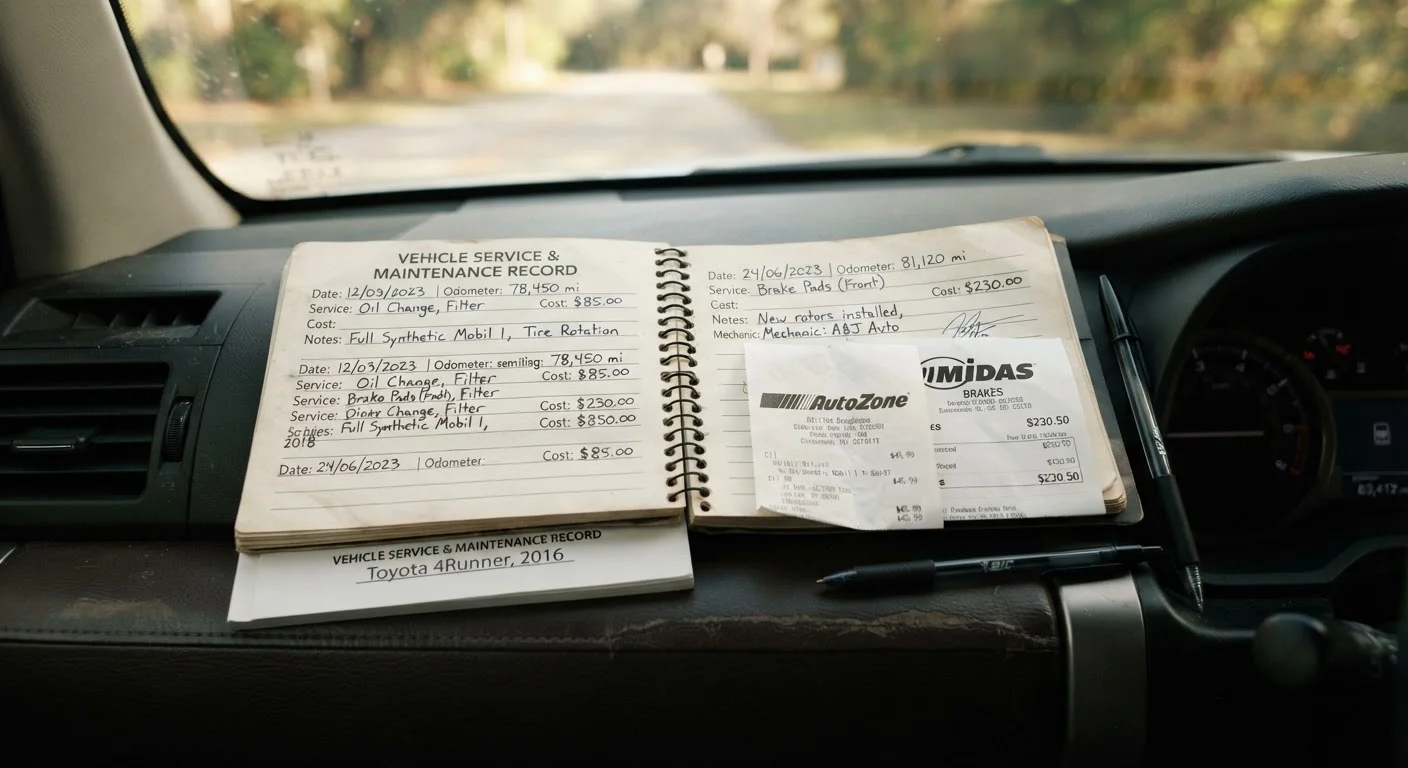
A vehicle maintenance log is a running record of every service, repair, inspection, and part replacement performed on your car. It includes the date, current mileage, what was done, who did it, and what was spent. Think of it as your car's medical history — a document that tells any mechanic, buyer, or warranty administrator exactly what has happened to the vehicle and when.
Most owners keep no formal record at all, relying instead on memory or a shoebox of unorganized receipts. That approach leaves money on the table and creates headaches when problems arise. A structured log, whether in a dedicated notebook, a spreadsheet, or a smartphone app, eliminates that guesswork entirely.
For an overview of what maintenance tasks to track in the first place, the owner's manual guide explains how to read manufacturer-specific service schedules that generic advice often misses.
The Real Financial Stakes
A documented service history is one of the clearest signals of value a used vehicle can carry. Private buyers and dealerships alike treat a complete log as evidence of responsible ownership. An undocumented car — even a mechanically sound one — often faces skepticism that translates directly into lower offers.
Up to $500+
Potential resale value impact of documented service history
Automotive valuation experts and consumer advocates broadly note that verifiable maintenance records can strengthen a private-sale price, though exact amounts vary by vehicle age, condition, and market.
1 in 3
Warranty claims complicated by missing service records
Industry observers and consumer advocacy groups have noted that incomplete maintenance documentation is a common reason warranty administrators delay or dispute repair claims.
Warranty protection is another financial consideration that catches many owners off guard. Most factory and extended warranties require that maintenance be performed on schedule. If a covered component fails and you cannot demonstrate that required services were completed, the manufacturer or warranty company may deny the claim. A log with dated receipts or shop invoices is your clearest line of defense.
The financial reality of skipping records compounds over time. See how deferred documentation — like deferred maintenance itself — can quietly escalate costs in our look at the hidden costs of skipping routine maintenance.
Best Practices for Keeping a Reliable Log
The format matters less than the habit. Whether you prefer a glove-compartment notebook or a cloud-synced app, the practices below will make your log genuinely useful rather than just a formality.
Record every service immediately after it is completed, not weeks later from memory.
Delayed entries are often incomplete or inaccurate. The mileage, specific fluid type, or part number that seemed obvious in the moment becomes fuzzy after a few weeks. Immediate recording keeps the log trustworthy.
Include mileage alongside every date entry.
Vehicle maintenance is scheduled by both time and mileage, and intervals vary. Mileage entries let you calculate exactly when the next service is due and spot if intervals were stretched longer than recommended.
Attach or photograph all receipts and invoices and link them to the relevant log entry.
Written entries can be questioned; receipts from licensed shops carry the name, address, and technician credentials that validate the work. This documentation is especially critical for warranty claims.
Note symptoms and observations, not just completed services.
Mechanics rely on symptom history to diagnose intermittent problems. An owner who can say 'this vibration started at 52,000 miles and gets worse above 60 mph' gives a technician a meaningful head start.
Transfer and verify the log whenever you sell or purchase a vehicle.
A maintenance log only serves its full purpose if it travels with the car. Handing over a complete record at sale demonstrates transparency and can justify your asking price. Reviewing a seller's log before buying protects you from undisclosed neglect.
Quick Wins to Start Today
You don't need a perfect system on day one. Starting with even a partial record is dramatically better than starting with nothing. These immediate actions will put you ahead of most vehicle owners.
If you handle your own oil changes or filter swaps, those entries matter just as much as shop visits. Our guide to DIY car maintenance vs. taking it to a shop covers how to decide which tasks to tackle yourself — and what to record when you do.
Owners of older vehicles should pay particular attention. A well-maintained log becomes especially valuable as mileage climbs, both for diagnosing wear patterns and reassuring future buyers. The guide to keeping a high-mileage car reliable pairs well with a disciplined logging habit.