

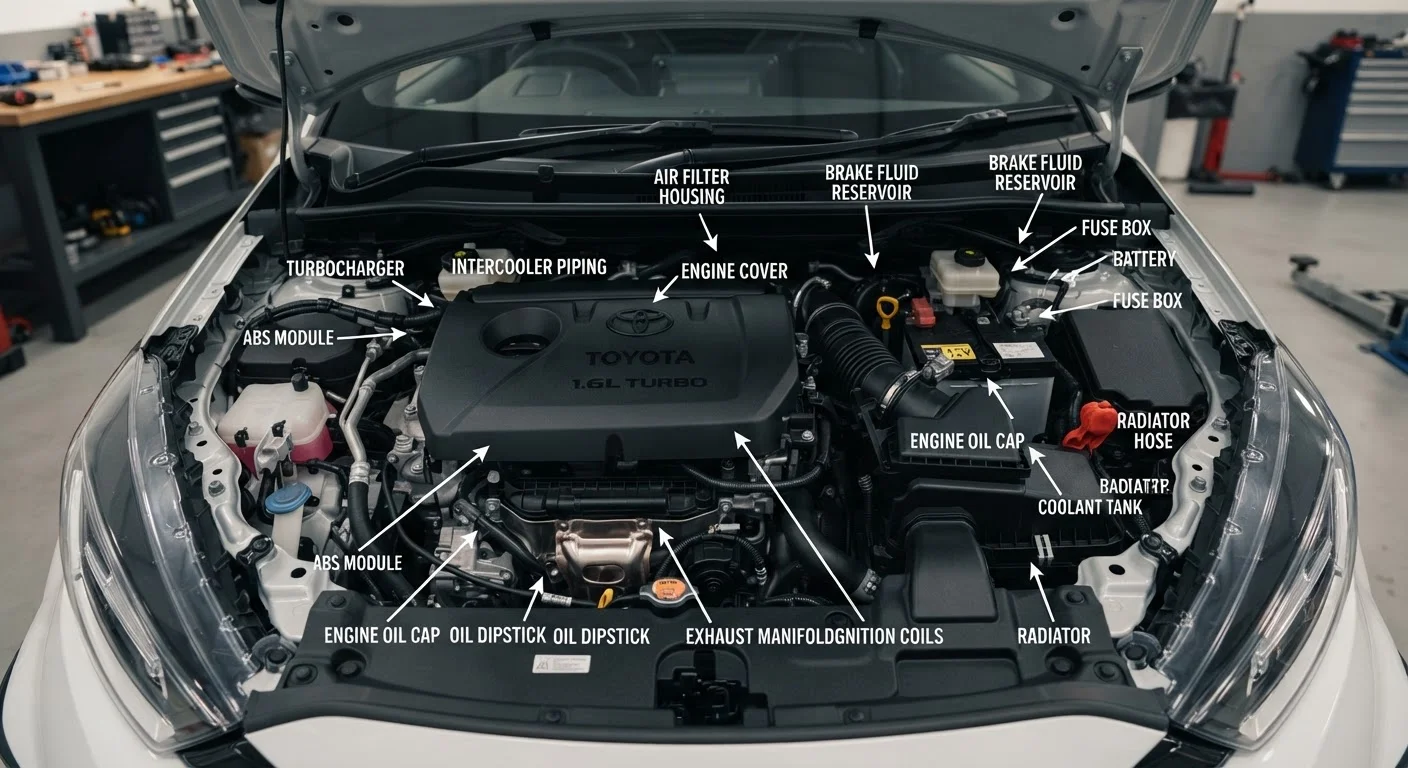
Why Knowing Your Engine Bay Matters
You don't need to be a mechanic to understand what's going on under your hood. A basic familiarity with the major components helps you spot trouble early, communicate clearly with a shop, and avoid being caught off guard when something looks wrong.
Most engine bays follow a similar layout regardless of the make or model. Once you recognize the key parts — the battery, the oil cap, the coolant reservoir — you'll feel a lot more comfortable opening the hood for routine checks. For a full picture of what your specific vehicle requires, consult your owner's manual, which contains manufacturer-specific diagrams and part locations.
The Core Components, Explained
Here's a plain-English breakdown of what you'll typically find when you pop the hood:
Engine Block
This is the heavy metal foundation of everything. The cylinders inside it fire in sequence to create the motion that ultimately turns your wheels. You won't interact with it directly, but every other component either feeds into it or draws from it.
Battery
Usually a black or dark-colored rectangular box with two cable terminals. It starts the car and powers electronics when the engine is off. The alternator keeps it charged while you drive. A battery that's more than three to five years old is worth monitoring — corrosion around the terminals is a visible warning sign.
Oil Cap and Dipstick
The oil cap (usually labeled) is where you add engine oil. The dipstick, nearby, lets you check the current level. Low or dirty oil is one of the most common causes of engine damage, so a monthly glance at this area is time well spent. Learn more about engine oil and other key fluids in our dedicated fluid guide.
Coolant Reservoir
A small translucent plastic tank that holds the coolant (also called antifreeze). You can usually see the fluid level through the tank without opening it. There's a minimum and maximum line — if it's running low, the engine can overheat.
Radiator
The radiator sits at the front of the engine bay and dissipates heat from the coolant. Fins run across its face to maximize airflow. Never open the radiator cap on a hot engine — the system is pressurized and can spray scalding liquid.
Air Filter Housing
A plastic box — often rectangular — connected to a large tube leading to the engine. It holds the air filter that prevents dust and debris from entering the engine. A clogged filter reduces performance and fuel efficiency. Replacement is typically straightforward and inexpensive.
Serpentine Belt
A ribbed rubber belt looping around several pulleys. If you hear a squealing noise from the engine, this belt is a common culprit. Inspect it for cracks or fraying. Replacement intervals vary, but many mechanics recommend checking it at every oil change.
Fuse Box
A covered box — sometimes two, one under the hood and one inside the cabin — containing the fuses that protect your car's electrical circuits. If a window, light, or accessory suddenly stops working, a blown fuse is a logical first place to check. The lid usually has a diagram of which fuse controls what.
What to Do If Something Looks Off
Visual inspections are a powerful habit. Look for fluid puddles under the car, frayed or cracked belts, corroded battery terminals, and fluid levels that are below the minimum line. If you notice a dashboard warning light that aligns with something you've spotted under the hood, don't delay — have it checked by a qualified mechanic.
If you're new to this, our guide for new drivers covers the routine checks and habits that keep a vehicle roadworthy. And if a shop recommends a tune-up, find out what that actually means today — the term covers a lot of ground depending on your engine type.
This article is for general informational purposes only. Always consult a qualified mechanic before performing repairs or if you are uncertain about anything you observe under your vehicle's hood.