

Key Takeaways
Our Verdict
Both physical scrubs and chemical acids can deliver smoother, brighter skin — the right choice depends on your skin type, concerns, and tolerance. Chemical exfoliants tend to be more versatile and easier to control, while physical scrubs offer simplicity and immediate texture feedback. Neither approach is universally superior.
| Best for | Recommended |
|---|---|
| Sensitive, acne-prone, or easily irritated skin | Chemical Acids (low concentration) |
| Oily skin with surface congestion or blackheads | Chemical Acids (BHA/salicylic acid) |
| Normal to combination skin wanting simple, occasional buffing | Physical Scrubs (fine-grain, gentle formula) |
| Dull skin or uneven tone concerns | Chemical Acids (AHA such as glycolic or lactic) |
What Exfoliation Actually Does
Your skin naturally sheds dead cells every 28 to 40 days or so, but that process can slow down with age, dry weather, or certain skin conditions — leaving skin looking dull, feeling rough, or clogging pores. Exfoliation helps speed things along by removing that layer of built-up dead cells. The result: a smoother surface, more even tone, and better absorption of the other products in your routine.
If you're still figuring out the foundations of a routine, our beginner's guide to building a skincare routine is a helpful starting point before adding exfoliation into the mix.
There are two main categories of exfoliation: physical (mechanical) and chemical. They both work toward the same goal but take entirely different paths to get there.
Physical Scrubs: How They Work and Who They Suit
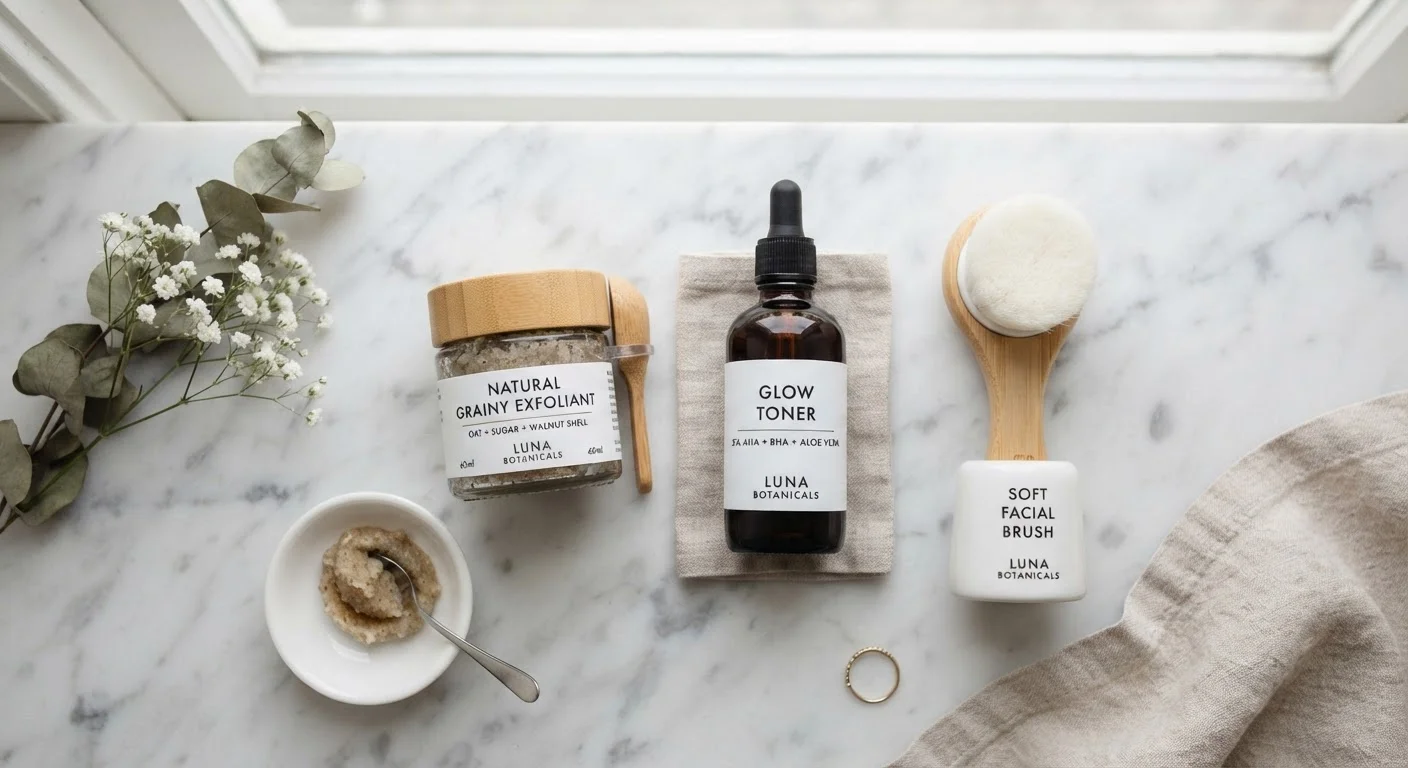
Physical exfoliants use friction to manually dislodge dead skin cells. This includes gritty face scrubs with particles like sugar, salt, or ground seeds, as well as cleansing brushes and textured cloths. The appeal is immediate — skin often feels noticeably smoother right after use.
The downside is control. It's easy to press too hard or use a formula with jagged particles that create micro-tears in the skin. This is especially problematic for people with active acne, rosacea, or thin, sensitive skin, where aggressive scrubbing can cause redness and irritation. If you're prone to over-doing it, physical scrubs carry a real risk of disrupting your skin barrier — something explored in our article on how skin barrier damage happens more easily than most people think.
Physical scrubs tend to work best for:
- Normal to oily skin types without active breakouts
- Body skin, which is generally more resilient than facial skin
- People who prefer simple, product-free routines
Start Gentle and Patch Test First
If you're new to exfoliation, choose a fine-grain physical scrub or a low-concentration chemical exfoliant and use it just once a week to start. Always patch test a new product on a small area of skin — like the inside of your wrist or behind the ear — for 24 hours before applying it to your face. Skin can be unpredictable, and starting slowly gives you time to spot any sensitivity before it becomes a bigger problem.
Chemical Exfoliants: AHAs, BHAs, and PHAs Explained
Chemical exfoliants use acids or enzymes to dissolve the bonds between dead skin cells, allowing them to shed more evenly. No scrubbing required. The three main types are:
- AHAs (alpha-hydroxy acids) — including glycolic acid and lactic acid — work on the skin's surface and are especially helpful for dullness, uneven tone, and fine lines. Lactic acid is gentler, making it a common starting point for beginners.
- BHAs (beta-hydroxy acids) — salicylic acid being the most common — are oil-soluble, meaning they can penetrate into pores. They're widely used for oily and acne-prone skin.
- PHAs (polyhydroxy acids) — such as gluconolactone — are the gentlest option, with larger molecules that don't penetrate as deeply. A good fit for sensitive or reactive skin.
Chemical exfoliants require a little more patience — results build over several weeks rather than being instantly visible — but they're generally considered more consistent and easier to calibrate than physical scrubs.
| Physical Scrubs | Chemical Acids | |
|---|---|---|
| How it works | Friction manually buffs away dead cells | Acids dissolve bonds between dead cells |
| Results timeline | Immediate surface smoothness | Gradual improvement over weeks |
| Best skin types | Normal to oily, resilient skin | Most types, including sensitive |
| Acne-prone skin | Use with caution; can spread bacteria | BHA (salicylic acid) is well-suited |
| Risk of irritation | Higher if used aggressively | Lower when starting at low concentrations |
| Learning curve | Low — straightforward to use | Moderate — requires patch testing |
| Sun sensitivity increase | Minimal | Yes, especially with AHAs |
Using Exfoliants Safely: What to Watch For
Whichever approach you choose, the number-one rule is don't overdo it. Exfoliating too frequently — even with a gentle product — can strip protective oils, cause irritation, and leave skin more vulnerable to environmental stressors. Once or twice a week is a reasonable starting point for most people; three times weekly is typically the upper limit for tolerant skin.
A few practical reminders:
- Always follow exfoliation with a good moisturizer to support the skin barrier.
- Chemical exfoliants, particularly AHAs, can increase sun sensitivity — applying SPF the following morning is important. For more on choosing the right sunscreen, see our comparison of chemical vs. physical sunscreen formulas.
- Avoid using multiple exfoliating products at the same time without guidance from a dermatologist.
- If you experience persistent redness, stinging, or peeling, scale back frequency and consider consulting a skincare professional.
Building an effective routine doesn't require expensive products. Our piece on skincare priorities when you're working with a limited budget can help you decide where exfoliation fits in your overall routine without overspending.
This article is for informational purposes only and is not a substitute for professional dermatological or medical advice. If you have a skin condition or are unsure which exfoliation approach is appropriate for you, consult a qualified healthcare or skincare professional.