

Key Takeaways
Why Order Actually Matters
Skincare products are formulated to be absorbed at specific depths in the skin. When you apply a thick moisturizer before a lightweight serum, you create a physical barrier that limits how much of the serum ever reaches where it's meant to work. The result: you may be spending time and money on products that aren't performing anywhere near their potential.
The general rule is simple — go from thinnest to thickest. Water-based, lightweight formulas absorb fastest and need a clear path to skin. Richer, occlusive products like moisturizers and facial oils create a seal that locks everything underneath in place. Applying in this sequence means each product gets the best possible chance to do its job.
It's also worth knowing that certain active ingredients need careful sequencing. Our guide on ingredients that don't play well together is a helpful companion read before you finalize your routine.
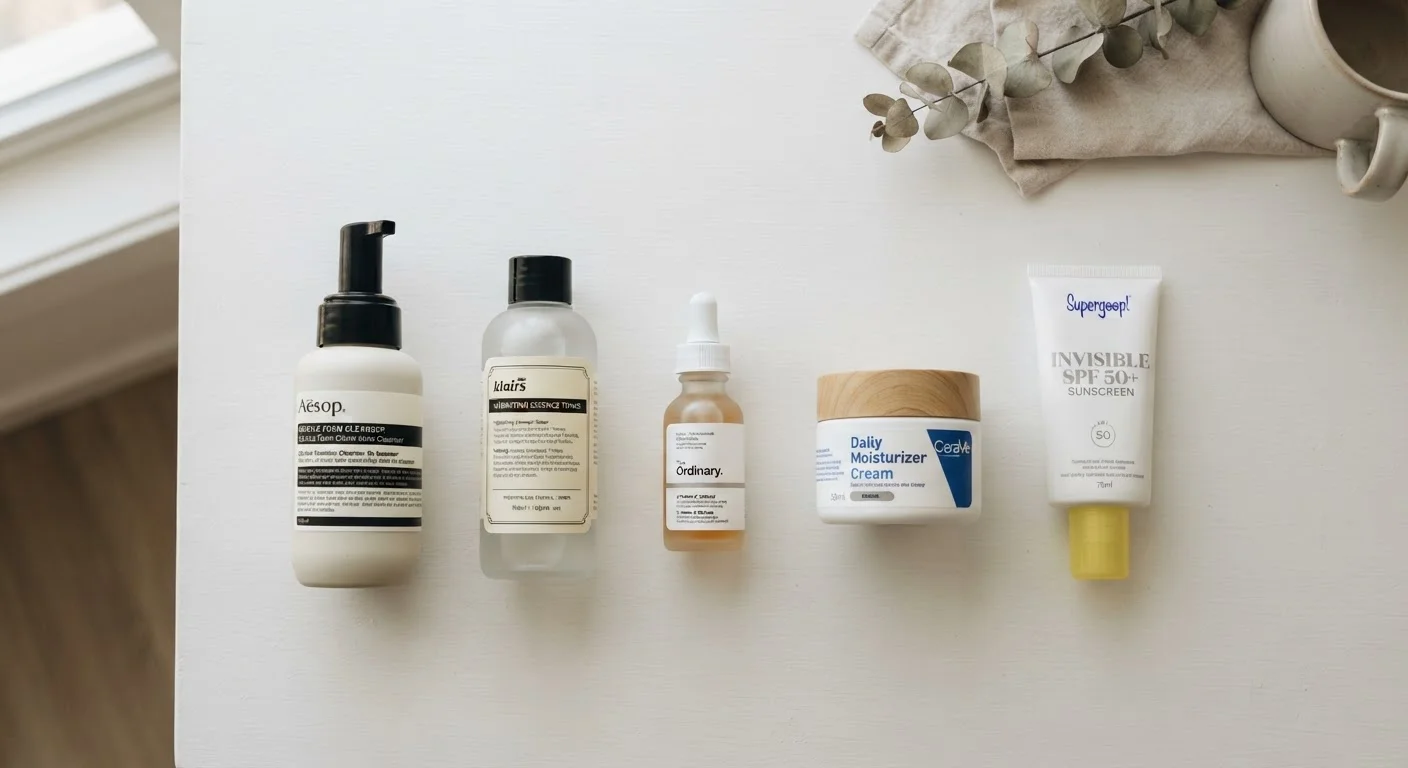
What you will need
Your Step-by-Step Layering Routine
Follow these steps for both morning and evening routines, adapting as noted. For a deeper look at how AM and PM routines differ in purpose, see our article on morning vs. evening skincare routines.
Cleanse
Start with a gentle cleanser to remove surface impurities, excess oil, and any residue from previous products. Clean skin is the foundation — actives applied to unwashed skin have to compete with everything sitting on top of it. Choose a cleanser suited to your skin type and avoid over-cleansing, which can strip your skin barrier. Our article on the risks of over-cleansing explains what to watch out for.
Apply Toner or Essence (if using)
Not everyone uses a toner, but if you do, this is its moment. Toners and essences are water-thin and help rebalance skin's pH after cleansing while delivering a first layer of hydration. Pat gently onto skin with clean hands or a cotton pad — don't scrub.
Apply Treatments and Serums
Serums are where most active ingredients live — vitamin C, hyaluronic acid, niacinamide, retinol, and others. If you use more than one serum, apply the thinnest, most watery formula first. Press serums gently into skin rather than rubbing, and give each one a moment to absorb before layering the next.
If you use prescription treatments (like tretinoin), apply them at this stage or as directed by your dermatologist.
Apply Eye Cream (if using)
Eye creams are typically thicker than serums but lighter than general moisturizers. Apply with your ring finger — it naturally applies the gentlest pressure — using small tapping motions around the orbital bone. Avoid dragging the delicate skin under and around the eyes.
Moisturize
Moisturizer seals in the layers beneath it and supports your skin barrier. Apply while skin is still slightly damp from previous steps for enhanced absorption. Use upward, gentle strokes, and don't forget your neck.
In the evening, this is typically your final step. You may choose to follow with a facial oil if your skin is very dry — oils go on after moisturizer since they are occlusive and will trap everything underneath.
Apply Sunscreen (Morning Only)
Sunscreen is always the final step of your morning routine — applied after moisturizer and before any makeup. This ensures the sunscreen filter sits correctly on the skin's surface where it can do its job. Apply a generous, even layer to face and neck, and allow it to set for a couple of minutes before applying makeup.
If you plan to apply makeup next, our pre-application skin prep checklist walks through exactly how to transition from skincare to a smooth makeup base.
Less Is Often More
A focused routine of three to five well-chosen products applied correctly will almost always outperform a ten-step routine applied haphazardly. If you're just building a routine, start simple and add products one at a time so you can see how your skin responds to each one.
Common Layering Mistakes to Avoid
Even with a great product lineup, a few habits can undermine your results. The most common is rushing — piling on products back-to-back without giving each one time to absorb. Waiting 30–60 seconds between steps isn't just patience; it genuinely affects how well each layer penetrates.
Another frequent misstep is using too many actives at once. Retinol, vitamin C, AHA exfoliants, and benzoyl peroxide all have specific compatibility windows. Layering incompatible actives can cause irritation, redness, or simply neutralize the ingredients before they have a chance to work. When in doubt, rotate actives between morning and evening rather than stacking them in one session.
Finally, don't skip sunscreen on the assumption your moisturizer's SPF is enough. Dedicated sunscreen applied as the final morning step provides more reliable, consistent protection. The science behind this is worth understanding — our article on why dermatologists prioritize daily SPF explains it clearly.
Your routine may also need to shift with the seasons. Heavier occlusive layers that feel great in winter can feel suffocating in summer humidity. Learn more in our piece on seasonal skincare adjustments.
This article is for general informational purposes only and does not constitute medical or dermatological advice. If you have a skin condition or concerns about a specific ingredient, consult a qualified dermatologist or healthcare professional.