

Key Takeaways
Why a Written Budget Changes Your Relationship With Money
Most people have a rough sense of what they earn and what they spend — but a rough sense isn't enough to make intentional decisions. A written monthly budget forces your income and expenses into the same frame at the same time, which is the only way to see clearly whether your spending actually lines up with your priorities.
Research from the Consumer Financial Protection Bureau (CFPB) consistently points to budgeting as a foundational money management skill. It's not about restriction for its own sake — it's about making conscious choices rather than reactive ones. If you're newer to the broader concepts, the household budgeting from the ground up article covers the core frameworks and vocabulary worth knowing before you start.
The six steps below will walk you through the process in order, using real numbers rather than abstract advice. You don't need a finance degree or fancy software — you need accurate information and a willingness to look at it honestly.
What you will need
What You'll Need Before You Start
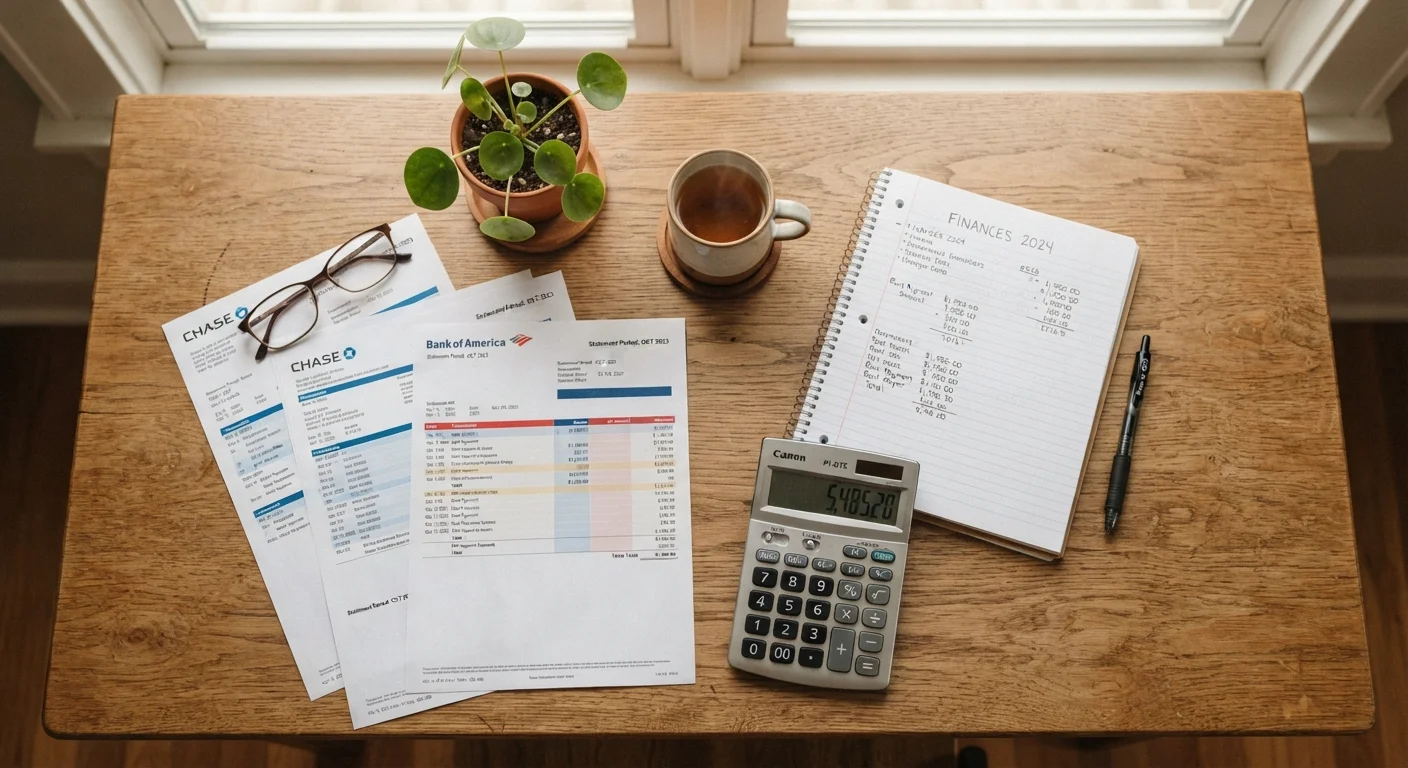
Gathering your materials before sitting down to build the budget saves time and prevents guesswork. The tools below are what make the difference between a budget built on estimates and one built on facts.
Spreadsheet software (e.g., Google Sheets or Excel)
Lets you build a flexible budget template you can update each month without starting from scratch.
Bank and credit card statements (1–3 months)
Provides the real spending history you need to set accurate category limits.
Pay stubs or income records
Confirms your actual take-home pay so your budget is based on real numbers.
Budgeting app
Automates transaction tracking and can categorize spending automatically, saving manual entry time.
Use the 50/30/20 Rule as a Starting Point
If you're not sure how much to allocate to each category, the 50/30/20 framework is a widely referenced guideline: roughly 50% of take-home pay toward needs, 30% toward wants, and 20% toward savings and debt repayment. It won't fit every household perfectly, but it gives you a concrete starting target to adjust from.
The Six Steps to Build Your Monthly Budget
Follow these steps in order. Each one builds on the last, so skipping ahead tends to create gaps that cause budgets to fail in the first month. For more on the structural reasons budgets break down, why budgets fall apart after the first month is worth reading alongside this guide.
Don't Build a Budget Around Gross Income
A common first-time mistake is budgeting from your gross (pre-tax) paycheck instead of your net (take-home) pay. Taxes, benefits deductions, and retirement contributions come out before you see a dime — always use the number that actually lands in your bank account.
Calculate your total monthly take-home income
Add up every source of income you reliably receive each month — after taxes and deductions. This includes your regular paycheck, freelance or side income, and any consistent government benefits. If your income varies month to month, use a conservative estimate: take your three lowest recent months and average them. Building your budget on a number you're confident you'll hit is safer than planning around a best-case figure.
List all your fixed monthly expenses
Fixed expenses are the bills that stay roughly the same every month: rent or mortgage, car payment, insurance premiums, loan minimums, and set subscriptions. Write down each one and its exact amount. These are non-negotiable costs that come out first, so knowing their total up front shows you immediately how much income is already spoken for.
Estimate your variable monthly expenses
Variable expenses fluctuate — groceries, gas, dining out, clothing, household supplies, entertainment. Pull your bank and credit card statements from the past two to three months and calculate an average for each category. These are the areas where most people's spending surprises them. For a more structured approach to this step, the spending audit checklist can help you gather and sort the data systematically.
Set a savings target before you balance the budget
Savings should be treated as an expense — something you pay first, not whatever is left over at the end of the month. Decide on a monthly savings amount before you finalize other categories. Even a modest, consistent contribution adds up over time and builds the habit. If you don't have an emergency fund yet, that's the natural first priority. The guide to building a $1,000 starter emergency fund outlines a practical way to get there.
Assign every dollar a category until income minus expenses equals zero
Add up all your fixed expenses, variable expense estimates, and your savings target. Subtract that total from your monthly take-home income. If the result is zero, every dollar has a job. If you have money left over, assign it — to an extra debt payment, a sinking fund for a future purchase, or additional savings. If the result is negative, your plan is overspending your income: go back to variable categories first and trim until the numbers balance. For a deeper look at this method, see the pros and cons of budgeting every dollar.
Track actual spending throughout the month and review at the end
A budget on paper only works if you compare it to reality. Check your spending against your categories at least once a week — more often if you're new to this. At month's end, sit down and note where you went over or under. Use those findings to adjust next month's plan. Your first budget is a draft, not a finished document. Most people need two or three months of real data before their numbers feel accurate.
After Your First Month: What to Do With What You Learned
No first budget is perfect — and that's not a failure, it's information. After your first full month, you'll likely find categories where you overspent (common culprits: groceries, dining, and subscriptions) and categories where you underspent. Use that data to update your numbers for month two.
Over time, your budget becomes a tool for bigger decisions: building savings goals, planning for irregular expenses like car maintenance or holiday spending, or mapping a path out of debt. The complete guide to managing a household budget long-term covers what comes next once the foundation is in place.
If a strict category-by-category format doesn't feel sustainable for your lifestyle, it's also worth knowing that alternatives exist. A spending plan without a strict budget works differently and suits some people better — neither approach is wrong if it helps you spend with intention.
This article is for general informational and educational purposes only and does not constitute personalized financial, tax, or legal advice. Consult a licensed financial professional before making decisions based on your individual circumstances.