

Key Takeaways
Unit Pricing
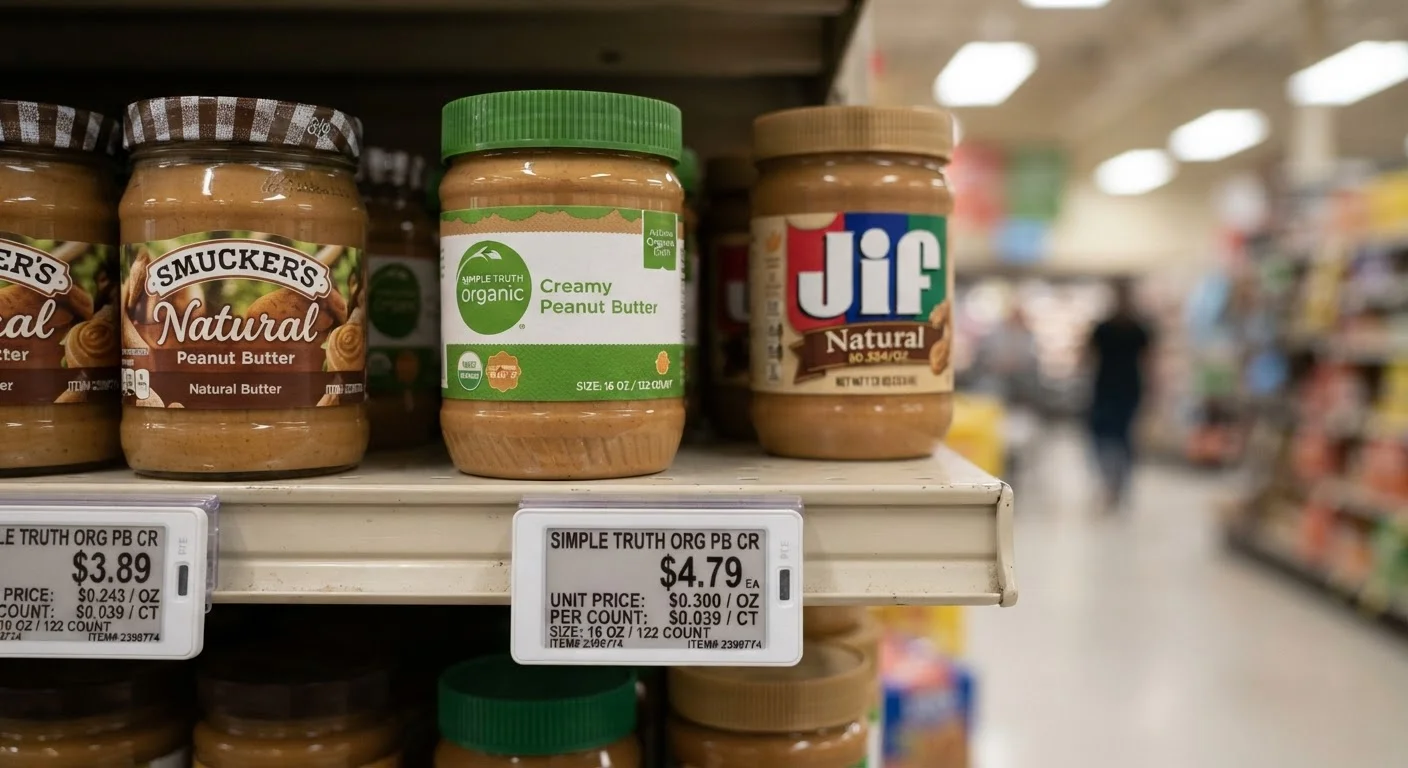
Unit pricing is the cost of a product broken down to a standard measurement — such as per ounce, per sheet, per count, or per fluid ounce. It appears on the small shelf label beneath a product and lets you compare the true cost of different sizes or brands side by side, regardless of package size or total price.
Retailers in many U.S. states are legally required to display unit pricing on shelf labels for grocery and household goods, though requirements vary by state and store type.
What Unit Pricing Actually Tells You
The sticker price on a package answers one question: what does this cost me today? Unit pricing answers a more useful question: what am I actually getting for my money?
When you pick up a 28-ounce can of tomatoes priced at $2.19 and a 14-ounce can at $1.39, the bigger can looks like a better deal at first glance. But run the unit price — $2.19 ÷ 28 oz = $0.078 per oz versus $1.39 ÷ 14 oz = $0.099 per oz — and the bigger can confirms it's the better value. In other cases, the math works out the opposite way, especially during sales or with certain store promotions.
That's exactly the kind of gap unit pricing is designed to expose. It strips away the packaging and marketing and leaves you with a plain number you can actually compare. For a broader look at how to think beyond sticker prices, see our guide to comparison shopping.
~$1,500
Annual grocery overspend per household from poor price comparisons
Consumer advocacy research and USDA household spending data suggest that inattention to unit pricing and package sizing contributes to significant recurring overspend for average American families.
30%+
Typical unit price difference between store and name brands
Studies by the Food Marketing Institute and consumer research organizations have consistently found store-brand products carry unit prices 20–30% or more below equivalent name-brand items in many categories.
32 states
U.S. states with some form of unit pricing requirement
According to the National Conference of State Legislatures, a majority of U.S. states have enacted laws or regulations requiring unit pricing disclosures at grocery and general merchandise retailers, though requirements vary.
How to Read a Shelf Label
Most shelf labels have two prices: the large total price and a smaller unit price, often printed in a separate box or at the top of the label. The unit price will be followed by a standard measurement abbreviation:
- oz — fluid or weight ounces (common for food, beverages, cleaning products)
- ct — count (paper goods, vitamins, batteries)
- sq ft — square feet (trash bags, aluminum foil, plastic wrap)
- lb — pound (produce, meat, bulk items)
The key habit is to look at the unit price before comparing total prices. If two products use different measurement units, you'll need to convert — for example, dividing a per-pound price by 16 gives you the per-ounce cost.
If a label doesn't show a unit price, you can calculate it yourself: divide the total price by the number of units on the package. It takes about 20 seconds with a phone calculator. You can also learn more about what else shelf labels communicate in our article on reading a retail price tag.
Snapshot Rule for Quick Comparisons
When you're in a hurry, focus on the first digit of each unit price. If one product shows $0.08 per ounce and another shows $0.12 per ounce, the gap is 50% — worth noticing even without exact math. You don't need to calculate precise savings to make a meaningfully better choice.
Common Situations Where Unit Pricing Changes the Outcome
Unit pricing matters most in a handful of everyday shopping situations:
Sale Items
A smaller package on sale may undercut the regular unit price of a larger package. Retailers occasionally discount a 12-count item more aggressively than the 24-count, making the sale item the better value per unit — temporarily.
Store Brands vs. Name Brands
Store-brand or generic products often carry a lower unit price than their name-brand counterparts. The unit price makes this gap concrete rather than approximate.
Bulk Warehouse Purchases
Warehouse club prices typically show a strong unit price advantage, but only if you'll actually use the product before it expires or spoils. A low unit price on perishable goods isn't a real saving if a portion ends up in the trash. This connects directly to the idea explored in why buying cheaper isn't the same as saving money.
Multi-Pack Promotions
"Buy 2 for $5" deals can obscure the actual unit price. Divide the total promotion price by the combined units to see if you're genuinely getting a discount.
Retailers also use psychological pricing strategies that can make deals feel better than they are — worth understanding alongside unit pricing. See how price anchoring works for context.
Making Unit Pricing a Default Habit
The biggest obstacle to using unit pricing isn't complexity — it's habit. Most shoppers reach for the familiar brand or the package that looks like the right size without glancing at the unit price at all.
A simple shift: before placing any packaged item in your cart, take three seconds to check the unit price on the shelf label. Over a typical grocery trip covering a dozen or more items, this habit can surface several meaningful differences that add up over a month of shopping.
Unit pricing works best as one part of a broader cost-awareness approach. Hidden fees and ongoing costs — like consumables and replacement parts — can dwarf the per-unit savings you find at the shelf, a point covered in a closer look at hidden costs. And if you're comparing food products specifically, understanding package weights alongside how to read a nutrition label helps you evaluate both cost and content at once.
This article is for general informational purposes only and does not constitute personalized financial or purchasing advice. Consult a qualified financial professional for guidance specific to your situation.