

Key Takeaways
Why the Nutrition Facts Panel Exists
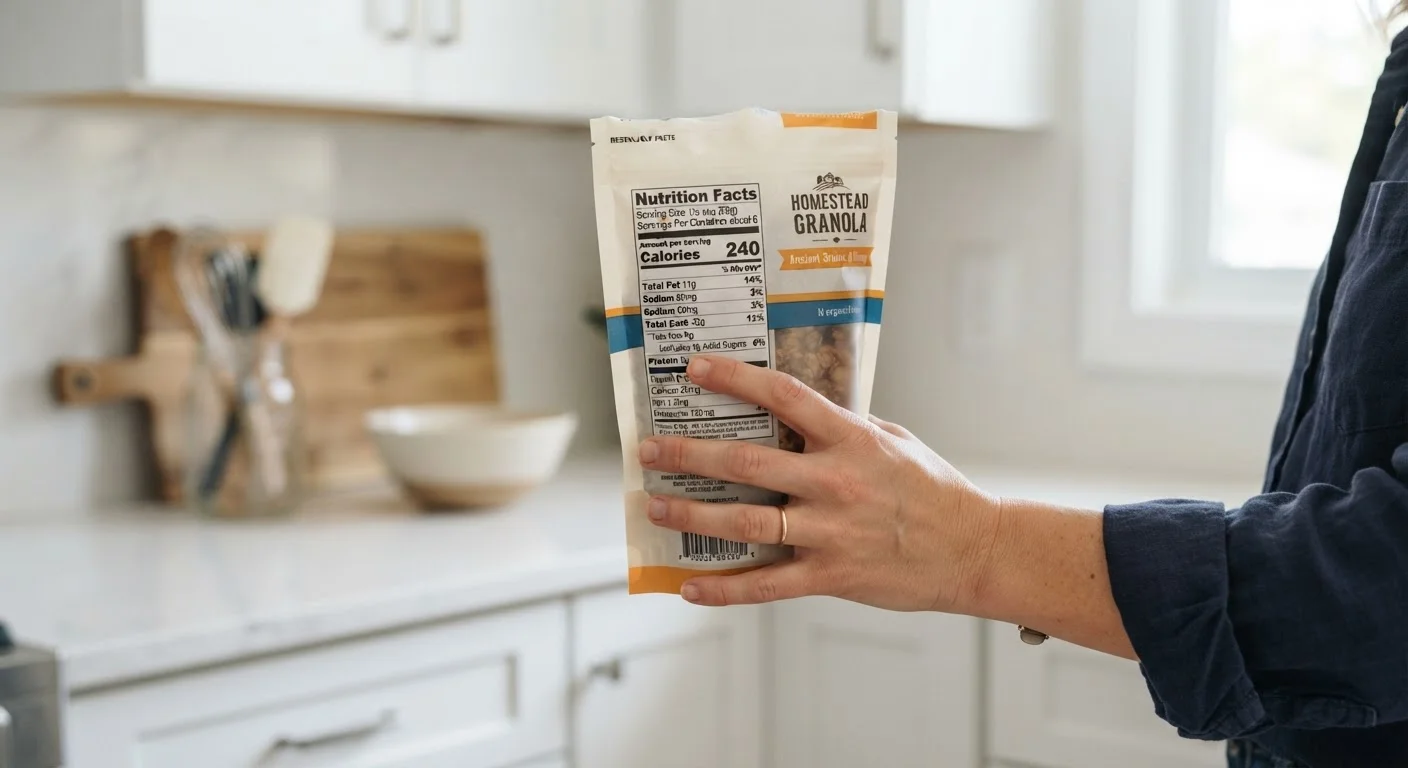
The Nutrition Facts label is a federally standardized panel required on most packaged foods sold in the United States. It was designed to give consumers consistent, comparable information regardless of brand or product category. The FDA updated the label format — most recently requiring larger serving size text and a dedicated line for added sugars — to better reflect how Americans actually eat today.
Think of the label as a data sheet, not a judgment. It doesn't tell you whether a food is "good" or "bad"; it gives you the numbers to make your own informed decision. If you're newer to nutrition concepts overall, the core concepts guide covers the foundational vocabulary — macros, micros, and portion sense — that makes the label easier to interpret.
What you will need
How to Read the Label Step by Step
Follow these steps each time you pick up a packaged product. With practice, the process takes about 30 seconds and becomes second nature.
Find the Serving Size
Every number on the label — calories, fat, sodium, everything — applies to one serving, not necessarily the whole package. The serving size is printed at the very top of the panel in larger, bolder text. Check how many servings are in the container. If a bag of chips lists 7 servings and you eat the whole bag, multiply every number by 7.
Check the Calorie Count
Calories measure the energy a food provides per serving. The number is prominently displayed just below the serving size. Remember that calories alone don't describe nutritional quality — 200 calories from lentils and 200 calories from a cookie deliver very different nutrients. For a fuller picture of how calories fit into the bigger picture, see understanding energy balance.
Scan the Nutrients to Limit
Below the calorie line you'll see total fat (broken into saturated and trans fat), cholesterol, and sodium. Most Americans consume these in amounts that exceed general dietary guidance. As a rule of thumb, a 5% Daily Value (% DV) or less is considered low; 20% DV or more is considered high. For saturated fat, trans fat, and sodium, lower percentages are generally preferable.
Look at Nutrients to Get Enough Of
Dietary fiber, vitamin D, calcium, iron, and potassium are nutrients many Americans fall short on. Here, a higher % DV works in your favor. Fiber, for example, supports digestive health and can contribute to a feeling of fullness. For a deeper look at vitamins and minerals and where to find them, the micronutrients guide is a helpful companion resource.
Check Added Sugars Separately
The label distinguishes between total sugars (naturally occurring plus added) and added sugars. Added sugars are those incorporated during processing — they provide calories without additional nutrients. Dietary guidelines suggest limiting added sugars to less than 10% of total daily calories. The % DV line for added sugars makes it straightforward to gauge a product's contribution toward that limit.
Use the Label to Compare Products
The standardized format is deliberately consistent so you can place two products side by side and compare them on equal terms. When comparing, keep serving sizes aligned — if one product's serving is 30g and another's is 55g, the raw numbers aren't directly comparable until you account for that difference. This same logic applies to whole versus processed foods: the label reveals what processing can add or remove.
The 5/20 Rule Is a Quick Shortcut
When you don't have time to analyze every line, use the 5/20 guideline: 5% DV or less means a nutrient is low in that food; 20% DV or more means it's high. Apply it to nutrients you want to limit (sodium, saturated fat, added sugars) and nutrients you want more of (fiber, calcium, iron) to make fast, informed comparisons at the shelf.
Decoding the Ingredient List
Beneath the Nutrition Facts panel you'll find the ingredient list. Ingredients are listed in descending order by weight, meaning the first ingredient is present in the largest amount. If sugar — under any of its many names, such as cane syrup, dextrose, or maltose — appears among the first three ingredients, the product likely contains a significant quantity of it.
A shorter ingredient list isn't automatically better, but it is easier to evaluate. Look for whole-food ingredients you recognize. Unfamiliar chemical names aren't necessarily harmful — many are approved preservatives or vitamins — but if you want to understand them, the skincare ingredient glossary offers a useful parallel example of how to parse complex ingredient terminology across product types.
"Natural" and "Healthy" Claims Aren't Regulated the Same Way
Front-of-package marketing terms like 'natural,' 'wholesome,' or 'made with real fruit' are not held to the same strict standards as the Nutrition Facts panel. These phrases can appear on products with significant amounts of added sugars or sodium. Always flip to the back panel for the regulated, standardized data before drawing conclusions from front-label claims.
Once you're comfortable reading labels, you can apply that knowledge directly at the store. Our weekly grocery checklist is built around nutrition fundamentals and can help you translate label-reading skills into a practical shopping routine.
This article provides general nutrition education and is not intended as medical or dietary advice. For guidance tailored to your individual health needs, consult a registered dietitian or qualified healthcare professional.