

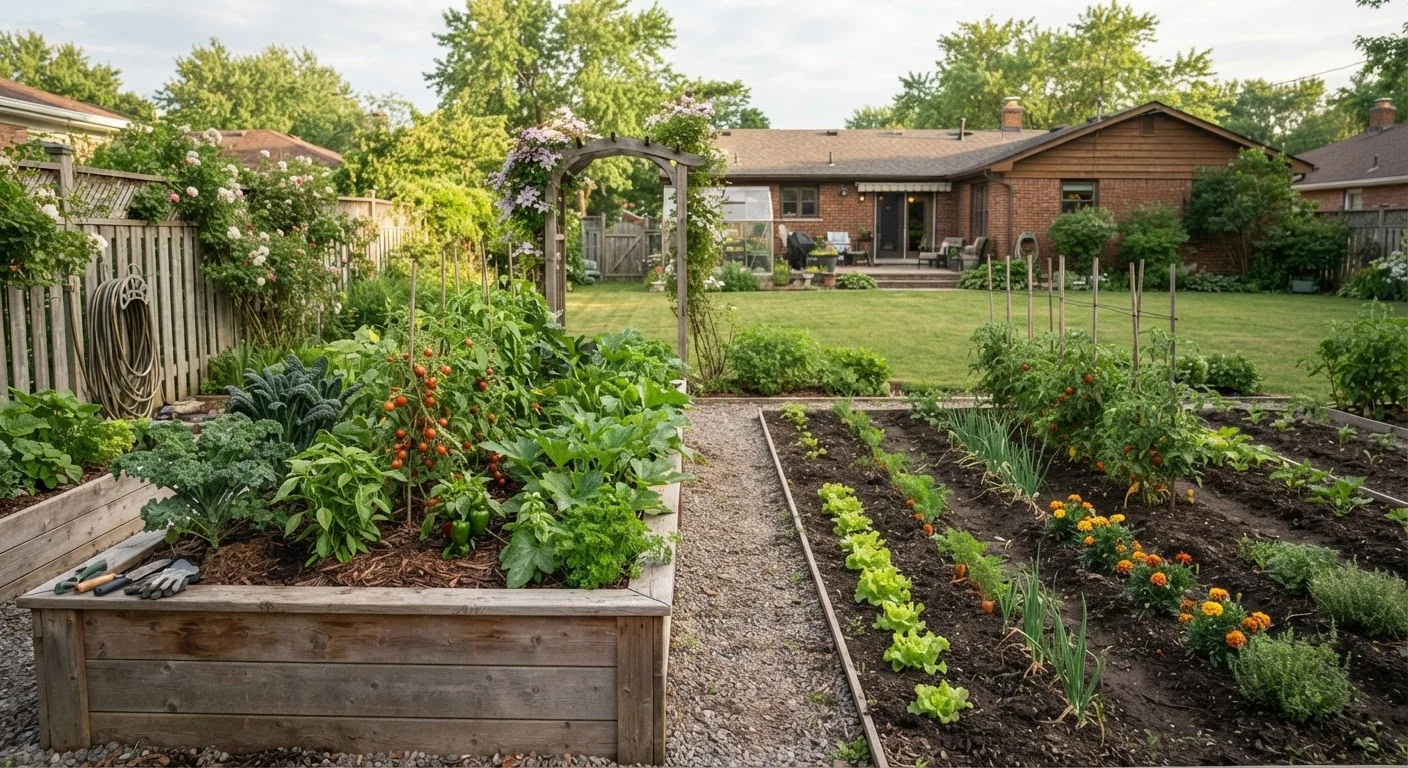
Key Takeaways
Option A
Raised Beds
The controlled, accessible growing environment.
Best for: Gardeners dealing with poor native soil, limited mobility, or who want precise control over growing conditions.
Option B
In-Ground Planting
The traditional, low-cost approach to garden growing.
Best for: Homeowners with good existing soil who want to grow large-scale plantings without significant upfront investment.
If your yard has clay-heavy, rocky, or compacted soil
Raised Beds
Raised beds let you bypass problematic native soil entirely by filling with a custom mix that drains well and supports root growth from day one.
If you're gardening on a tight budget and have decent existing soil
In-Ground Planting
In-ground plots require minimal startup materials — no lumber, no fill soil — making them the most cost-accessible entry point for new gardeners.
If you have limited mobility or back or knee discomfort
Raised Beds
A raised bed built to 24–30 inches tall eliminates the need to kneel or bend deeply, making gardening more comfortable and sustainable long-term.
If you want to grow large quantities of a single crop
In-Ground Planting
In-ground rows scale easily without the material cost of building multiple large beds, making them better suited for high-volume vegetable production.
If you're gardening in an area with weed pressure or poor drainage
Raised Beds
Raised beds with a barrier layer significantly reduce weed intrusion, and their elevated structure naturally promotes drainage in waterlogged areas.
Understanding the Core Difference
The choice between raised beds and in-ground planting comes down to one fundamental question: how much control do you need over your growing environment? In-ground planting uses the soil your yard already has. Raised beds are built structures — typically made from wood, stone, or galvanized metal — filled with a custom soil mix you bring in yourself.
Both methods can grow healthy vegetables, herbs, and flowers. But they perform differently depending on your native soil quality, available space, physical needs, and how much you want to invest upfront. Before committing either way, it helps to understand your starting conditions. Our guide to soil types can help you figure out what you're actually working with beneath your lawn.
| Criterion | Raised Beds | In-Ground Planting |
|---|---|---|
| Startup cost | Higher (materials + fill soil) | Lower (minimal materials needed) |
| Soil control | Complete — you choose the mix | Limited by native soil quality |
| Drainage | Excellent; drains freely | Varies by native soil type |
| Season extension | Warms faster in spring | Slower to warm in cool climates |
| Weed management | Easier with barrier layer | More ongoing weeding required |
| Scalability | Limited by cost and space | Easily scaled for large plots |
| Accessibility | High — adjustable bed height | Lower — requires kneeling/bending |
| Root depth potential | Limited to bed depth | Unrestricted downward growth |
Where Raised Beds Shine
Raised beds solve several common gardening problems at once. If your native soil is compacted clay, full of rocks, or drains poorly, building above it sidesteps those issues entirely. You fill the bed with a well-balanced mix — typically topsoil, compost, and an aerating material like perlite — and plants get an ideal root environment from the start.
Raised beds also warm up faster in spring, which can extend your growing season by a few weeks in cooler climates. That's a meaningful advantage for gardeners in the Upper Midwest, New England, or the Pacific Northwest. Weed pressure is also lower: a good landscape fabric or cardboard barrier beneath the bed slows weed intrusion considerably, and the defined border makes it easier to stay on top of what does appear.
Accessibility is another genuine benefit. A bed built 18–30 inches tall eliminates the need to kneel or crouch, which matters a lot for gardeners managing back pain, knee problems, or mobility limitations. If you're just getting started, our beginner's vegetable garden guide walks through how to set up your space from scratch.
6–8 in.
Minimum raised bed depth for most vegetables
Most vegetable root systems need at least 6 inches of loose, well-drained growing medium; root crops like carrots benefit from 12 inches or more.
2–4 weeks
Earlier spring planting in raised beds
The elevated soil mass in a raised bed warms faster than ground soil in spring, potentially allowing earlier planting in cooler climates.
30%
Estimated reduction in water runoff with amended in-ground soil
Adding organic matter like compost to in-ground plots improves water retention and reduces runoff, according to general soil science principles.
Where In-Ground Planting Has the Advantage
In-ground planting wins clearly on upfront cost and scalability. There's no lumber to buy, no soil to haul in, and no structure to build. If your native soil is loamy and well-draining — common in many parts of the South, Midwest, and Mid-Atlantic — digging directly into the ground and amending with compost is often all you need.
In-ground beds also support deeper root systems for crops like tomatoes, squash, winter squash, and sweet corn, which benefit from unrestricted downward growth. Large-scale plantings — a 20-foot row of green beans, for example — are far more practical in-ground than in raised beds, where the cost per square foot adds up quickly.
The long-term soil ecosystem in an established in-ground bed can also be richer. Earthworms, beneficial fungi, and soil microbes move freely through the native soil profile in ways that are harder to replicate in a contained raised bed. Pairing in-ground planting with regular composting amplifies this benefit significantly — see our composting at home guide for practical details.
Watering, Drainage, and Maintenance Considerations
Raised beds drain more freely than in-ground plots, which is an advantage in wet climates but a drawback in dry ones. In hot, arid regions like the Southwest or Southern Plains, raised beds can dry out faster and demand more frequent irrigation. Pairing raised beds with drip irrigation helps manage this efficiently — our drip irrigation vs. sprinkler systems comparison covers the trade-offs in detail.
In-ground plots generally retain moisture longer, which reduces irrigation needs in drier climates. However, they're also more prone to waterlogging in areas with heavy clay or poor drainage. For either method, how you water matters as much as the structure itself — deep, infrequent watering builds stronger root systems than frequent shallow sessions, regardless of which planting approach you choose.
Maintenance differs in character rather than volume. Raised beds need periodic topping-up of soil as it settles and decomposes — typically a few inches of compost each season. In-ground plots require more ongoing weed management and periodic deep tilling or aeration to prevent compaction.
A Note on Soil Amendments for Both Methods
Whether you garden in raised beds or in-ground, the quality of your soil is the single biggest factor in plant health. For raised beds, a mix of roughly one-third compost, one-third topsoil, and one-third coarse material (like perlite or aged bark) is a widely used starting point. For in-ground plots, a 2–3 inch layer of compost worked into the top 8–10 inches each season steadily improves structure and fertility. Neither approach delivers great results without ongoing attention to what's feeding your plants.