

Key Takeaways
Soil Type
Soil type refers to the physical composition of the ground in your yard — specifically the mix of mineral particles (sand, silt, and clay) that determines how well your soil holds water, drains, and supports plant roots. Knowing your soil type helps you choose the right plants, amendments, and watering schedule for your specific conditions.
Soil texture is classified by particle size: sand particles are the largest (0.05–2 mm), silt is medium (0.002–0.05 mm), and clay is the finest (below 0.002 mm). The USDA Soil Texture Triangle is the standard tool used to classify soils based on these proportions.
Why Soil Type Matters More Than You Think
Most lawn and garden problems — yellowing plants, poor drainage, stunted growth, persistent bare patches — trace back to soil that isn't suited to what you're asking it to do. Before you spend money on fertilizers, seeds, or amendments, it pays to understand what you're actually working with underground.
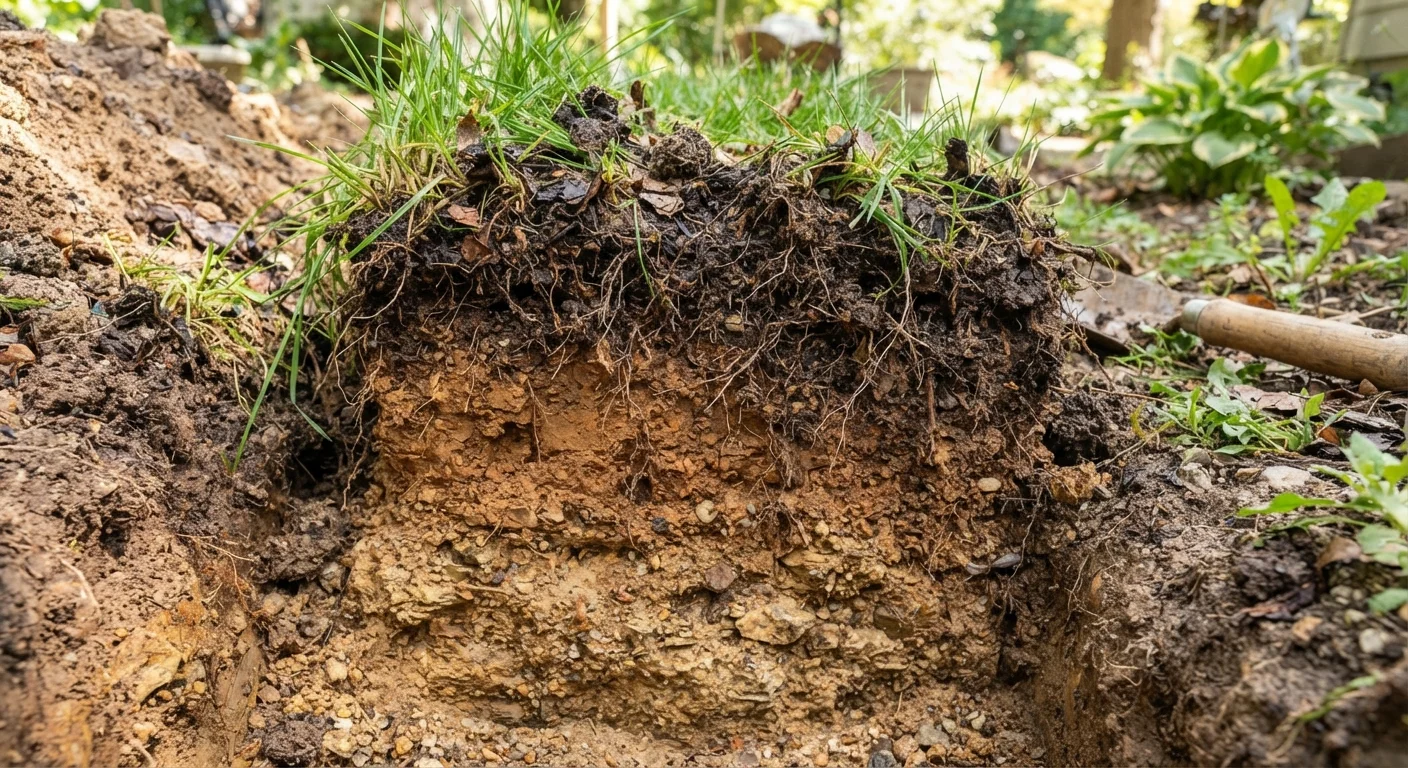
Soil is a living system made up of mineral particles, organic matter, water, air, and billions of microorganisms. The relative proportion of sand, silt, and clay particles in your soil determines its texture — and texture drives nearly everything else: how quickly water drains, how well roots penetrate, and how effectively nutrients are delivered to plants.
Whether you're planning a vegetable garden or simply trying to keep your lawn healthy, soil knowledge is your foundation. See our beginner's guide to starting a vegetable garden for how soil preparation fits into the bigger picture of growing food at home.
~25%
Healthy soil volume that should be air and water
According to USDA soil science guidance, roughly half of a healthy soil's volume is solid matter, while the other half should be pore space — split approximately evenly between air and water.
1 billion+
Microorganisms per teaspoon of healthy soil
USDA research indicates that a single teaspoon of productive garden soil can contain over one billion bacteria, in addition to fungi, protozoa, and nematodes that support plant health.
3–5 years
Typical time to noticeably improve poor soil
Soil scientists and extension educators generally suggest that consistent organic matter additions over several growing seasons produce meaningful, lasting improvements in soil structure and fertility.
The Four Main Soil Types
Clay Soil
Clay soil has the finest particles and packs together tightly. It holds moisture and nutrients well — sometimes too well. Poor drainage means roots can sit in waterlogged conditions, and clay hardens into a concrete-like crust when dry. You'll recognize clay soil by its sticky, dense feel when wet and its tendency to crack in summer. It's common across much of the Midwest and Southeast.
Sandy Soil
Sandy soil drains rapidly — sometimes so fast that water and nutrients pass through before plants can absorb them. It warms up quickly in spring, which is an advantage for early planting, but it requires more frequent watering and feeding. Sandy soil feels gritty and falls apart easily when you try to form it into a ball. It's prevalent in coastal regions and parts of the South.
Silty Soil
Silt particles are mid-sized and feel silky or floury when dry. Silty soil retains moisture better than sand and is generally fertile, but it compacts under foot traffic and can form a surface crust that impedes water absorption. River valleys and flood plains often have high silt content, making them naturally fertile but drainage-challenged.
Loamy Soil
Loam is the gardener's gold standard — a balanced mixture of sand, silt, and clay, usually with a healthy amount of organic matter. It drains well, retains enough moisture for plant roots, and stays workable across seasons. Loam feels slightly gritty but holds together when squeezed. If you have it, maintain it. If you don't, you can work toward it.
How to Identify Your Soil Type at Home
You don't need a lab to get a reliable read on your soil. Two simple tests give useful results.
- The Ribbon Test: Take a small handful of moist soil and squeeze it firmly in your palm, then press it between your thumb and index finger. Clay soil forms a long, smooth ribbon (more than 2 inches). Loam forms a shorter ribbon that breaks easily. Sandy soil won't ribbon at all — it crumbles immediately.
- The Jar Test: Fill a clear jar about one-third with soil, top it off with water, shake vigorously, and let it sit for 24–48 hours. Sand settles at the bottom within minutes, silt settles on top of the sand layer after a few hours, and clay remains suspended longer, eventually settling as the top layer. The thickness of each band tells you your approximate soil composition.
For a more complete picture — including pH and nutrient levels — consider a soil test through your local cooperative extension office. Many state extension services offer these for a nominal fee and provide region-specific amendment recommendations.
Test Before You Amend
Adding lime, sulfur, or fertilizer without knowing your soil's current pH and nutrient levels is guesswork that can do more harm than good. A basic soil test — available through most cooperative extension offices for a small fee — tells you exactly what your soil needs, so you can amend with purpose rather than trial and error.
Improving Your Soil: Practical Next Steps
Almost any soil type can be improved. The most universal strategy is adding organic matter — compost, aged manure, or leaf mold — regularly over time. Organic matter loosens clay, binds sandy particles together, and feeds the microbial communities that make nutrients available to plants.
- Clay soil: Work in compost each season and avoid tilling when wet. Consider raised beds for vegetable growing to sidestep drainage issues entirely. Our guide on raised beds vs. in-ground planting can help you weigh your options.
- Sandy soil: Add compost generously and consider mulching to slow moisture evaporation. You'll likely need to fertilize more frequently since nutrients leach quickly. Read up on common mulching mistakes to avoid before you apply.
- Silty soil: Limit foot traffic, use stepping stones in garden beds, and add organic matter to improve structure and drainage.
- Loamy soil: Maintain it with annual compost additions and avoid over-tilling, which destroys beneficial soil structure.
Improving soil is a multi-season effort, not a one-time fix. Consistency pays off — even modest annual additions of organic matter will noticeably transform a difficult soil over three to five years. For a full seasonal approach to yard health, our seasonal lawn care checklist offers a practical year-round framework.
“Soil health is not about a single input or a single season. It is the accumulation of thoughtful, consistent management decisions made year after year.”
— USDA Natural Resources Conservation Service, Federal agency overseeing soil science and conservation in the United States