

Key Takeaways
Start here
Choosing the Right Spot
Next
Understanding and Preparing Your Soil
Then
Picking the Right Vegetables to Start
Apply it
Planting, Watering, and Basic Care
Finish strong
Harvesting and What Comes Next
Choosing the Right Spot
Location is everything in vegetable gardening. Before you dig a single hole or order a single seed packet, spend a few days observing your yard. Note which areas receive full sun — meaning direct sunlight for at least six hours daily — because the vast majority of food crops require it. A shady corner that looks appealing may frustrate you all season long.
Beyond sunlight, check for level ground and good drainage. After a rainstorm, watch where water pools; avoid those spots. Proximity to a water source also matters more than most beginners expect — hauling hose across the entire yard gets old quickly.
If your outdoor space is limited, don't let that stop you. Containers and raised beds can go on patios, balconies, or narrow side yards. Start with the sunniest spot available, even if it's smaller than you'd like.
Full sun
A growing condition where a plant receives at least six hours of direct, unobstructed sunlight each day. Most vegetables require full sun to produce well.
Compost
Decomposed organic matter — kitchen scraps, leaves, grass clippings — that improves soil structure, fertility, and microbial activity when mixed into garden beds.
Last frost date
The approximate date in spring after which freezing temperatures are unlikely in your area. Warm-season vegetables should not be planted outdoors before this date.
Bolting
When a plant prematurely shifts its energy to producing flowers and seeds rather than edible leaves or roots, usually triggered by heat or long days. Bolted lettuce and spinach become bitter.
Amended soil
Native garden soil that has been improved by adding materials like compost, perlite, or other organic matter to correct drainage, texture, or nutrient content.
Mulch
A layer of material — straw, wood chips, or shredded leaves — spread on the soil surface around plants to retain moisture, suppress weeds, and regulate soil temperature.
Understanding and Preparing Your Soil
Soil is the foundation of your garden — invest time here and everything else becomes easier. Ideal vegetable garden soil is loose (so roots can penetrate easily), well-draining (so roots aren't waterlogged), and rich in organic matter. Most American backyards start with soil that needs at least some improvement.
The most universally useful amendment is compost. Working two to four inches of finished compost into your top eight to twelve inches of soil improves drainage in clay soils, boosts water retention in sandy soils, and feeds beneficial soil microbes in both. You can make your own or source it locally.
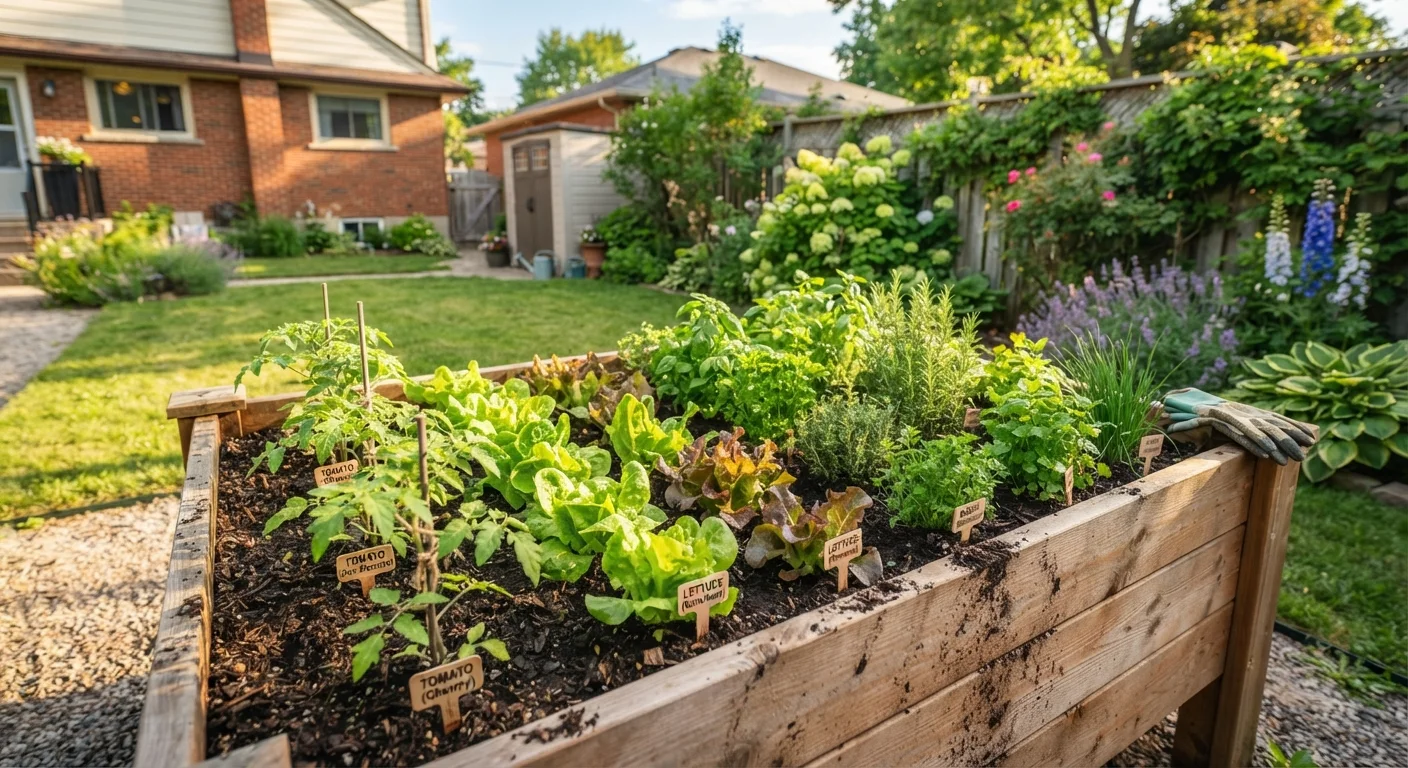
If you're building a raised bed, fill it with a blend of quality topsoil and compost rather than relying on whatever's underneath. This gives you immediate control over soil quality without needing to correct years of compaction or nutrient depletion.
Test Your Soil Before You Amend It
Your local cooperative extension office often offers inexpensive soil testing. A basic test tells you your soil's pH and nutrient levels, so you can amend purposefully rather than guessing. Most vegetables prefer a pH between 6.0 and 7.0. Knowing where you're starting saves both time and money.
Picking the Right Vegetables to Start
Choosing what to grow is where many beginners either get it right or set themselves up for disappointment. The goal in your first season is to build confidence, not to attempt every vegetable you've seen at a farmers market.
Reliable beginner crops include:
- Lettuce and salad greens — fast-growing, can be harvested repeatedly, prefer cooler weather
- Radishes — ready in as little as three weeks, great for impatient first-timers
- Bush beans — direct sow into warm soil, low-maintenance, productive
- Zucchini — vigorous growers that produce abundantly
- Cherry tomatoes — more forgiving than larger varieties, rewarding yields
Pay close attention to your region's last frost date — warm-season crops like tomatoes and beans cannot go outside until frost risk has passed. For a month-by-month planting reference tailored to all major U.S. growing zones, see The American Gardening Calendar.
Planting, Watering, and Basic Care
Read your seed packets or transplant tags carefully — spacing and depth matter more than most beginners realize. Crowded plants compete for light, water, and nutrients, and they're more vulnerable to disease. When in doubt, give plants a bit more room than the minimum suggested.
Water is often either overdone or underdone by new gardeners. The goal is consistent moisture at root depth, not a wet surface. Watering deeply two to three times per week (adjusting for heat and rainfall) is generally more effective than light daily watering. Morning watering is preferable since it allows foliage to dry during the day, reducing fungal disease risk.
Weeding is an ongoing task but becomes manageable with a two-inch layer of organic mulch — straw, wood chips, or shredded leaves — laid around your plants. Mulch also helps retain soil moisture and moderates soil temperature, which benefits plant roots during summer heat.
Don't Overwater — Root Rot Is Common
Soggy soil deprives roots of oxygen and encourages root rot and fungal disease. If the top inch of soil still feels moist, hold off on watering. Well-draining soil and a consistent — not excessive — watering schedule are your best defenses.
Harvesting and What Comes Next
Many first-time growers wait too long to harvest, assuming bigger is always better. Most vegetables taste best picked young and tender — overgrown zucchini becomes seedy and bland, and lettuce left too long bolts and turns bitter. Check plants every two to three days as the season peaks.
Harvest regularly to encourage continued production. Beans and tomatoes, in particular, stop producing vigorously if ripe fruit is left on the vine too long.
Once your first season wraps up, take notes: what thrived, what struggled, which spots were shadier than expected, and what you'd plant more or less of. This kind of seasonal reflection is how good gardeners develop their instincts over time. Managing your first garden — like managing a new budget — is largely about building habits through small, consistent actions.
Next season, you can expand your plot, add a new crop, or try starting seeds indoors. For now, celebrate what you've grown. A first harvest, however modest, is a genuine achievement.
USDA Plant Hardiness Zone Map
Find your official U.S. growing zone to understand your frost dates, climate range, and which crops are best suited to your region.
Cooperative Extension Service (via local land-grant university)
Every U.S. state has a cooperative extension service offering free, research-backed gardening guides, soil testing, and region-specific planting calendars.
The American Gardening Calendar
A month-by-month planting reference covering all major U.S. growing zones — from seed starting indoors to fall cleanup and winterizing.