

Key Takeaways
Why Watering Frequency Changes Root Behavior
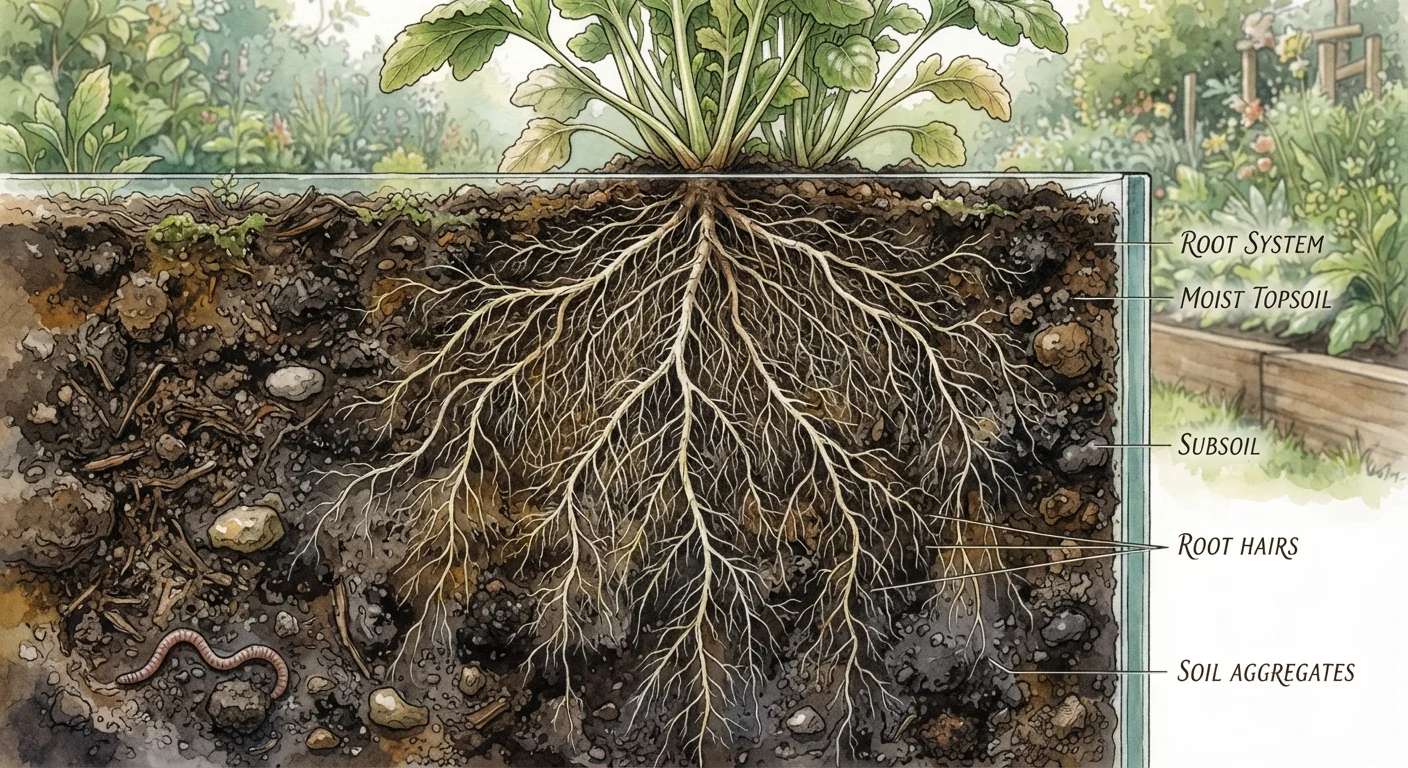
The way you water your garden doesn't just affect the soil — it actively shapes your plants' root architecture. When water is applied in small, frequent doses, it moistens only the top inch or two of soil. Roots naturally follow moisture, so they cluster near the surface where the water consistently appears. This produces shallow, dense root mats that dry out quickly when the weather turns hot or you skip a day of watering.
Deep, infrequent watering works on the opposite principle. By saturating the soil to a depth of six to twelve inches — or more, depending on the plant — you draw roots downward into cooler, more stable layers. Those deeper roots can access residual moisture and a broader range of nutrients even during short dry spells, building plants that are genuinely more resilient.
Understanding this distinction is foundational to growing a healthier garden, whether you're tending lawn grass, vegetable beds, or established perennials. See our guide to perennials vs. annuals for context on how root depth varies by plant type.
Best Practices for Deep, Effective Watering
Applying these principles to your own yard doesn't require expensive equipment — mostly it requires patience and a shift in routine.
Water slowly and thoroughly to encourage deep soil penetration.
Fast-running water runs off before it can soak in, especially on slopes or compacted soil. A slow, steady application gives water time to move downward through the soil profile, reaching the root zone rather than evaporating from the surface.
Water in the early morning to minimize evaporation loss.
Temperatures are cooler and wind is generally calmer in the morning, so water reaches the soil rather than evaporating mid-air. Foliage also has time to dry before nightfall, reducing the risk of fungal disease.
Allow the top inch of soil to dry between watering sessions.
Constantly wet soil starves roots of oxygen and creates conditions for root rot. A brief dry period between waterings encourages roots to search deeper for moisture rather than relying on a perpetually moist surface layer.
Calibrate your watering schedule to your specific soil type.
Water behaves differently in sandy, loamy, and clay soils. Treating all soils identically wastes water in fast-draining ground and risks waterlogging in dense soils, both of which harm root development.
Use a soil probe or trowel to verify actual moisture depth after watering.
Visual inspection of the surface tells you very little about what's happening six or eight inches down. Measuring actual penetration depth helps you confirm that your watering duration is genuinely reaching the root zone.
If you're weighing irrigation options, our comparison of drip irrigation and sprinkler systems breaks down the trade-offs in efficiency and cost.
Reading Your Soil and Plants for Watering Cues
No single watering schedule works for every yard. Sandy soils drain quickly and may need slightly more frequent watering even when you're watering deeply; heavy clay soils hold moisture longer but can become waterlogged if watered too aggressively. A simple finger test — pushing your index finger two inches into the soil — tells you a great deal: if it's dry at that depth, it's time to water.
Plant signals matter too. Slight wilting in the early morning (before the day heats up) often indicates genuine water stress, while midday wilting in full sun is frequently a temporary response to heat rather than a sign of dry soil. Learning to distinguish the two prevents you from over-watering, which is just as damaging as under-watering.
Pairing deep watering with a layer of organic mulch dramatically extends soil moisture between sessions. Mulch applied correctly — two to three inches deep, pulled back from plant stems — can cut surface evaporation significantly and moderate soil temperature at the same time.
Whether you're growing in traditional garden beds or in raised planters, deep watering remains the right approach. Our article on raised beds vs. in-ground planting explains how drainage differences between the two setups can further influence your watering strategy.
60–70%
Outdoor water use from residential irrigation
The U.S. Environmental Protection Agency estimates that a majority of residential outdoor water use goes to landscape irrigation, much of which is applied inefficiently.
50%
Irrigation water lost to evaporation or runoff
According to the EPA's WaterSense program, approximately half of outdoor irrigation water is wasted due to overwatering or poor watering methods.