

Key Takeaways
Option A
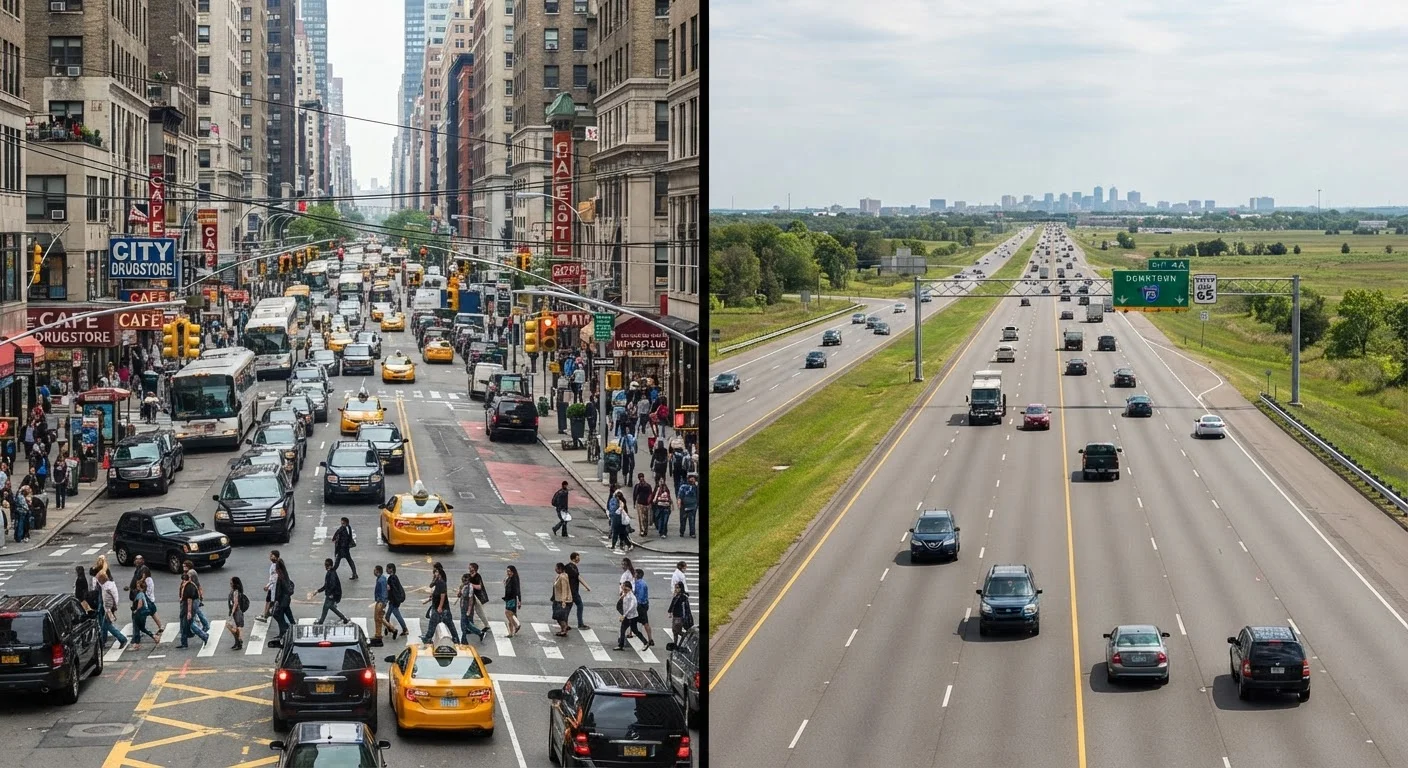
Highway Driving
High-speed, long-distance travel with sustained focus demands.
Best for: Drivers covering long distances who need to manage speed, spacing, and fatigue over extended periods.
Option B
City Driving
Low-speed, high-complexity navigation through dense, unpredictable environments.
Best for: Drivers navigating frequent stops, intersections, pedestrians, and cyclists in urban or suburban areas.
If you're a new driver building foundational habits
City Driving (prioritize first)
Urban environments force active scanning, signaling, and yielding decisions that build core awareness quickly — skills that translate directly to highway safety.
If you drive long commutes or road trips regularly
Highway Driving
Understanding fatigue management, proper following distance, and merge technique is essential for anyone spending significant time at highway speeds.
If you want to lower your overall crash risk
City Driving (focus area)
Urban environments account for a large share of crash incidents due to complexity and unpredictability — sharpening those skills pays dividends.
What Makes Each Environment Genuinely Different
Most drivers move between highways and city streets without consciously shifting gears mentally — yet each environment places very different demands on attention, reaction time, and decision-making. Recognizing those differences is the first step to driving more safely in both.
On the highway, threats tend to develop over longer distances and at higher speeds. A vehicle braking suddenly 400 feet ahead gives you seconds to respond — but at 70 mph, those seconds evaporate faster than most people expect. City driving flips that dynamic: speeds are lower, but hazards appear from more directions simultaneously. Pedestrians step off curbs, cyclists merge, and drivers ahead brake without warning, all within a compressed space.
Neither setting is inherently more dangerous, but the type of risk differs substantially. Awareness habits that erode over time can affect both environments — understanding which habits matter most for each is what gives drivers a real edge.
| Criterion | Highway Driving | City Driving |
|---|---|---|
| Typical speed range | 55–80 mph | 15–45 mph |
| Primary risk type | High-speed rear-end, fatigue | Intersection crashes, pedestrian conflicts |
| Key attention demand | Sustained, long-range scanning | Rapid, multi-directional scanning |
| Following distance needed | 3+ seconds (longer at speed) | 2–3 seconds, with frequent stops |
| Merge/lane change frequency | Moderate, high consequence | Frequent, lower speed |
| Fatigue risk | Higher (monotony, distance) | Lower, but stress accumulates |
| Pedestrian/cyclist exposure | Minimal | High and constant |
Highway Driving: The Skills That Matter Most
Highway driving can create a false sense of ease. Traffic moves in one direction, lanes are wide, and exits are infrequent. That predictability, however, is exactly what makes fatigue and inattention so dangerous at speed.
Following Distance
The standard guidance of a three-second gap between your vehicle and the one ahead becomes even more critical at highway speeds. At 65 mph, three seconds translates to roughly 285 feet — a distance that closes rapidly if you're not actively tracking it. Following distance rules are widely misunderstood, and underestimating them is one of the leading contributors to rear-end crashes on interstates.
Merging and Lane Changes
Entering a highway requires matching the speed of existing traffic before merging — not stopping at the end of the ramp and waiting for a gap. Poor merge technique forces other drivers to brake sharply, creating chain-reaction risk. When changing lanes, signal early, check mirrors, and always check the blind spot with a physical head turn before moving.
Managing Fatigue
Long highway segments at constant speed are cognitively dulling. Studies on driver fatigue consistently point to signs like lane drifting, missing exits, and slower reaction times as early indicators. If you notice these, pulling off to rest is the right call — not pushing through. Nighttime highway driving compounds this risk significantly.
~50%
Urban share of all U.S. traffic fatalities
According to NHTSA data, roughly half of all traffic fatalities in the U.S. occur in urban areas, reflecting the complexity of city driving environments.
3 sec
Minimum recommended following distance
Traffic safety organizations consistently recommend a minimum three-second gap, increasing to four or more seconds in adverse conditions or at highway speeds.
~100 ft
Stopping distance at 60 mph on dry pavement
General estimates suggest a vehicle traveling at 60 mph needs approximately 300 feet total to stop — combining reaction time and braking distance.
City Driving: The Skills That Matter Most
Urban and suburban environments demand a different kind of mental energy — not sustained focus over distance, but rapid, repeated processing of overlapping hazards from all directions.
Intersection Awareness
Intersections are where a large share of urban crashes occur. Running a stale green light, misjudging a left turn across oncoming traffic, or failing to check cross-traffic when a light changes are common failure points. Building safer habits around intersections means treating every crossing as a genuine decision point, not a formality.
Scanning for Vulnerable Road Users
Pedestrians and cyclists have legal right-of-way in many situations, but more importantly, they are at much greater risk in any collision. City drivers should scan crosswalks before moving on a green light, check for cyclists in bike lanes before turning right, and anticipate that pedestrians — especially children — may act unpredictably.
Distraction Management
Stop-and-go traffic can feel like it invites phone use during red lights. It doesn't — reaction demands resume the instant traffic moves. Phone-free driving strategies are especially relevant in dense urban environments where the next hazard rarely announces itself.
Weather adds another layer to both environments. How rain, snow, and fog change vehicle handling applies whether you're on an interstate or a city block — but the margin for error shrinks faster in urban settings.
Switching Contexts: Adjusting Your Mindset
A common mistake experienced drivers make is carrying one environment's habits into another. Driving with highway spacing habits in stop-and-go city traffic creates excessive gaps that frustrate other drivers and disrupt flow. Conversely, applying city-style short following distances on the highway leaves almost no time to react to sudden stops.
When transitioning from a highway to city streets, consciously shift your scanning wider — check mirrors more frequently, reduce speed earlier than you think necessary, and expect pedestrian activity near exits and ramps. When entering a highway from city driving, prioritize speed-matching and give yourself a mental reset on spacing expectations.
Teen drivers entering solo driving often struggle with this context-switching. The early months of independent driving carry elevated risk in part because the habit of adjusting mentally between environments hasn't yet become automatic.
Treating highway and city driving as genuinely distinct challenges — each with its own set of active skills — is one of the most effective things any driver can do to lower risk over time.