

Key Takeaways
Start here
Why the First Months Matter Most
Understand the risks
The Conditions That Raise Risk
Build good habits
Habits That Make a Measurable Difference
Family support
How Families Can Stay Involved
Know your vehicle
Vehicle Basics Every New Driver Needs
Why the First Months Matter Most
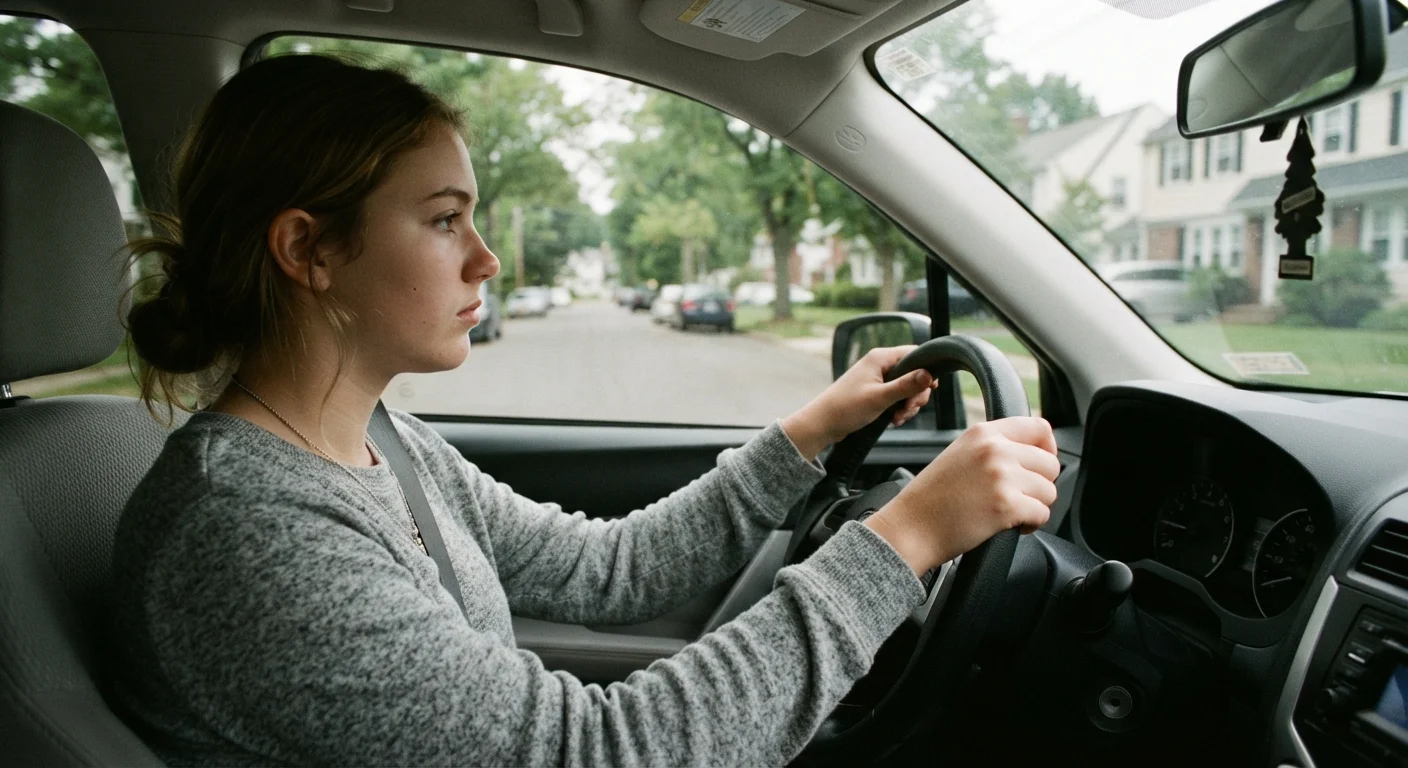
Getting a driver's license is one of the biggest milestones in a teenager's life. It's also the beginning of the highest-risk period they'll face on the road. Traffic safety data consistently shows that crash rates for teen drivers are significantly elevated in the first 6 to 12 months after licensure — not just compared to experienced adults, but compared to older teens who have been driving longer.
The core issue isn't recklessness in most cases. It's inexperience. New drivers haven't yet built the automatic responses and situational awareness that come from thousands of hours behind the wheel. They're still consciously processing things experienced drivers handle without thinking — lane positioning, following distance, scanning intersections — which leaves less mental bandwidth for handling the unexpected.
Understanding this window clearly is the first step toward getting through it safely.
Graduated Driver Licensing (GDL)
A system most U.S. states use that gives new drivers a license in stages — starting with a learner's permit, then a restricted license, then full privileges — to limit exposure to high-risk conditions while experience builds.
Following distance
The gap between your vehicle and the one ahead of you, measured in time (seconds) rather than car lengths. A minimum of three seconds is generally recommended under normal conditions.
Situational awareness
The ability to track everything happening around your vehicle — nearby cars, pedestrians, road conditions, signals — and anticipate how things might change. It develops with practice over many miles.
Distracted driving
Any activity that diverts a driver's attention from the road, including phone use, eating, adjusting controls, or interacting with passengers. Even brief distractions at driving speed can have serious consequences.
Hazard perception
The skill of identifying potential dangers — a car pulling out, a pedestrian near the curb, a slick road surface — before they become emergencies. New drivers typically develop this more slowly than other skills.
The Conditions That Raise Risk
Not all miles are equally risky. Several specific conditions account for a disproportionate share of teen crashes, and knowing them helps families make informed decisions about when and where a new driver builds experience.
- Nighttime driving: Reduced visibility and glare from headlights make nighttime conditions challenging even for experienced drivers. For a new driver still developing judgment and reaction speed, the stakes are higher. Night driving considerations covers the key factors in detail.
- Peer passengers: Having friends in the car is one of the most significant distraction factors for teen drivers. Even a single teenage passenger increases crash risk; multiple passengers raise it further. Most graduated licensing laws restrict this for good reason.
- Phone use and distraction: Glancing at a phone for a few seconds at highway speeds covers the length of a football field. Teens generally understand this rule — the challenge is consistent enforcement and habit.
- High-speed and unfamiliar roads: Highway driving requires merging, maintaining speed, and reading traffic flow at a different scale than city or suburban driving. Highway and city driving demand different skills, and new drivers benefit from building experience on each separately.
Don't Underestimate Passenger Risk
It's easy for families to focus on phone use and forget about passengers — but research consistently identifies peer passengers as one of the highest-risk factors for teen drivers. A new driver carrying friends is managing social dynamics and pressure on top of the demands of operating a vehicle. Stick to state GDL passenger restrictions and consider extending them if there's any doubt.
Habits That Make a Measurable Difference
The good news is that safe driving is largely habitual. Behaviors practiced consistently in the early months tend to stick — which means this period is also the best opportunity to build a strong foundation.
- Following distance: Maintaining at least three seconds of space from the vehicle ahead gives a new driver time to react. In poor weather or at higher speeds, four or more seconds is appropriate.
- Eyes moving, not fixed: Experienced drivers continuously scan — mirrors, ahead, road edges. New drivers often fixate on the car immediately in front. Practicing deliberate scanning builds the habit faster.
- No multitasking: Navigation, music, and conversation all compete for attention. New drivers should set up GPS before starting, keep audio at a manageable volume, and keep non-driving tasks out of their hands entirely while moving.
- Consistent pre-drive checks: Mirrors adjusted, seat positioned, phone on silent or in do-not-disturb mode — done before pulling out of the driveway, every time. These small rituals build structure.
Habits formed in the first year are often the ones that persist long-term — for better or worse. Some habits quietly erode driver awareness, and being aware of that early makes a difference.
Practice Graduated Exposure Intentionally
Even after getting a full license, teens benefit from gradually expanding the complexity of conditions they drive in. Start with familiar daytime routes, then add highways, then unfamiliar areas, then nighttime driving — rather than encountering all of these at once. Building experience in layers reduces the chance of being overwhelmed in a high-stakes situation.
How Families Can Stay Involved
A teen getting their license doesn't mean parental involvement is over. Research and practical experience both suggest that ongoing family engagement — without hovering — significantly improves outcomes during this period.
A simple driving agreement can clarify expectations around curfews, passenger limits, and check-in procedures. The specifics matter less than having the conversation openly and revisiting it as the teen gains experience and earns expanded privileges.
Occasional supervised drives — even after full licensure — give parents a direct view of how their teen is handling real conditions. It also signals that driving is a shared responsibility, not just a solo privilege.
When something goes wrong, whether it's a minor fender bender or a traffic citation, the most productive response is a calm, specific review of what happened and what to do differently. Shame or punishment alone rarely produces the behavioral change that a constructive conversation can.
Vehicle Basics Every New Driver Needs
Safe driving isn't only about what happens behind the wheel — it also means understanding the vehicle itself. A teen who doesn't know how to recognize a tire pressure warning, check engine oil, or respond to an unfamiliar dashboard light is less prepared than one who does.
The basics aren't complicated, but they require someone to teach them deliberately. Our guide on car maintenance for new drivers covers exactly what a new driver is responsible for in plain terms. For teens who've recently joined the household as car users, the broader picture of what to do in the first 90 days of car ownership is also worth a read.
The early months of independent driving are challenging, occasionally stressful, and genuinely important. Approached with the right awareness, they're also the best possible time to establish the habits and judgment that will serve a driver for decades.