

| Red warning lights | Stop driving — immediate attention required |
| Amber warning lights | Schedule service soon — not immediately dangerous |
| Flashing check engine light | Treat as urgent — reduce speed, seek service promptly |
| Tire pressure check location | Driver's door jamb sticker — not the tire sidewall |
| Oil pressure warning response | Stop engine immediately to prevent engine damage |
| OBD-II code reader availability | Many auto parts stores offer free basic diagnostic scans |
The Three Tiers of Dashboard Warnings
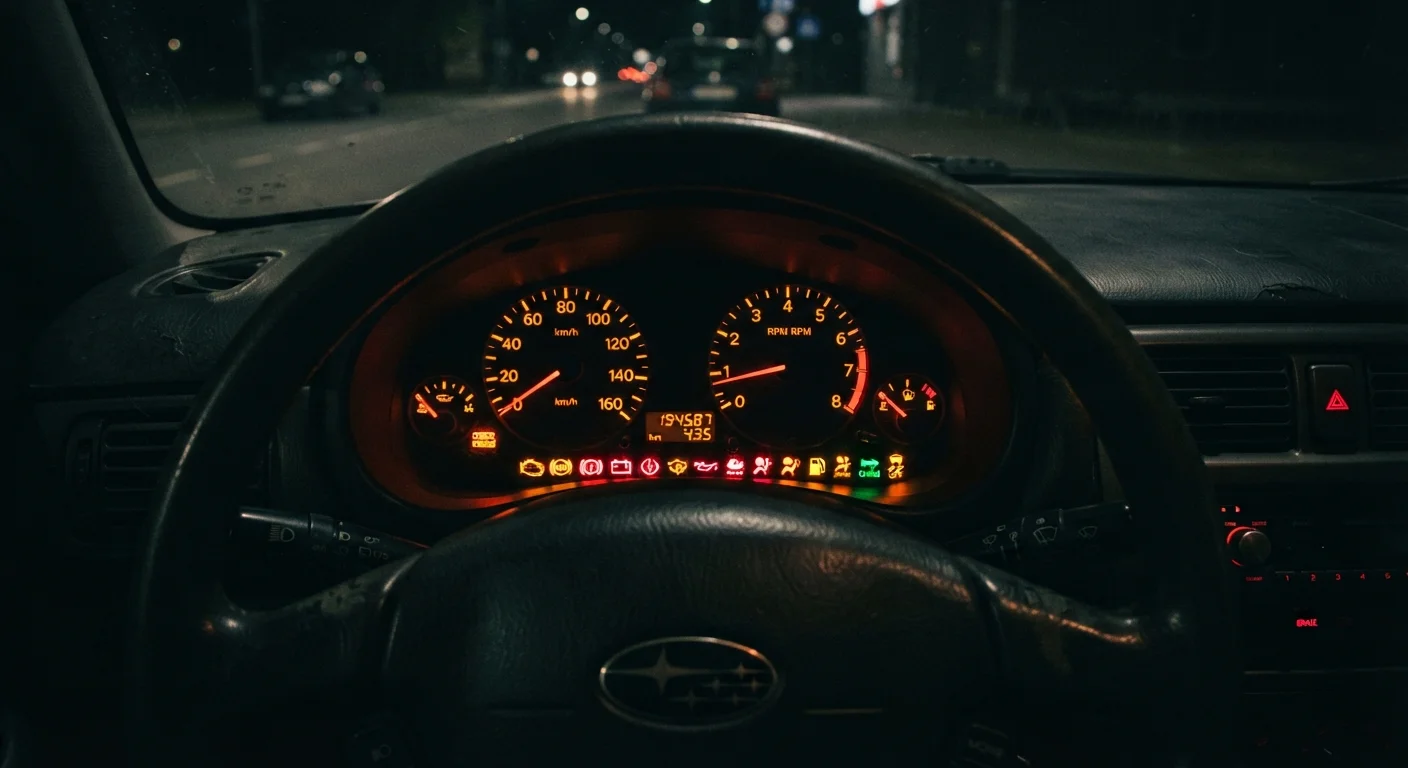
Dashboard warning lights aren't all created equal. Most vehicles use a three-color system to signal how urgently you need to act:
- Red lights signal a serious problem — stop driving as soon as it's safe to do so and investigate immediately.
- Amber or yellow lights indicate something needs attention soon, but you're not necessarily in immediate danger.
- Green or blue lights are informational — they confirm a system is active, like high beams or cruise control.
Think of it like a traffic signal for your vehicle's health. Red means stop. Yellow means proceed with caution and get it checked. Green is simply a status update.
Being able to read these cues is a core part of routine vehicle responsibility — especially for newer drivers still building their automotive instincts.
TPMS
Tire Pressure Monitoring System. A sensor-based system that alerts you when one or more tires drops below safe pressure thresholds.
Check Engine Light (CEL)
An amber dashboard indicator that signals the vehicle's onboard diagnostic system has detected a fault. The specific cause must be identified with a diagnostic scanner.
OBD-II Fault Code
A standardized code stored by your car's computer when a fault is detected. Mechanics and scan tools read these codes to pinpoint the source of a warning light.
Oil Pressure
The force at which oil is circulated through the engine. Low oil pressure means engine components aren't being properly lubricated, which can cause rapid and severe damage.
Charging System
The combination of the alternator, battery, and wiring that keeps your car's electrical systems powered while the engine runs. A fault here triggers the battery warning light.
Stability Control
An electronic safety system that helps prevent skidding by automatically reducing engine power or applying individual brakes when it detects loss of traction.
Lights That Demand Immediate Action
Certain warning lights should prompt you to pull over promptly and safely. Continuing to drive with these active risks serious engine damage, brake failure, or worse.
| Red warning lights | Stop driving — immediate attention required |
| Amber warning lights | Schedule service soon — not immediately dangerous |
| Flashing check engine light | Treat as urgent — reduce speed, seek service promptly |
| Tire pressure check location | Driver's door jamb sticker — not the tire sidewall |
| Oil pressure warning response | Stop engine immediately to prevent engine damage |
| OBD-II code reader availability | Many auto parts stores offer free basic diagnostic scans |
Engine Temperature (Red Thermometer)
Your engine is overheating. Pull over, turn off the engine, and let it cool before opening the hood. Do not remove the radiator cap while the engine is hot. This situation is closely tied to your coolant level — learn more in our guide to car fluids every driver should know about.
Oil Pressure Warning (Red Oil Can)
Low oil pressure can cause catastrophic engine damage within minutes. Stop safely, shut off the engine, and check the oil level. If the level is fine and the light stays on, have the car towed — don't risk driving it.
Battery Warning (Red Battery Symbol)
This light typically means the charging system has failed, not necessarily the battery itself. Your car is running on reserve power. Limit electrical use, avoid turning the engine off, and get to a mechanic promptly. See our deeper look at car battery basics for context.
Brake Warning Light (Red Exclamation in Circle)
If your parking brake is off and this light is on, it could signal low brake fluid or a fault in the braking system. Have it inspected before driving further. Brake issues can also show up as sounds — squealing brakes are worth understanding.
Amber Lights: Important, But Not Always Urgent
Yellow or amber lights give you more runway, but they shouldn't be ignored for weeks on end.
Check Engine Light (Amber Engine Outline)
This is the most misunderstood light on any dashboard. It can mean dozens of things — from a loose gas cap to a misfiring cylinder. If it's flashing, treat it as urgent and reduce speed. If it's steady, schedule a diagnostic scan soon. A mechanic can read the stored fault code in minutes.
Tire Pressure (TPMS — Horseshoe with Exclamation Mark)
One or more tires is below the recommended pressure. Check all four tires and inflate to the level shown on the sticker inside your driver's door jamb — not the number on the tire sidewall.
Traction Control / Stability Warning
If this flashes during acceleration on slippery roads, it's doing its job. If it stays on, the system may be disabled or have a fault worth checking. Good awareness of your vehicle's systems complements defensive driving habits on unpredictable roads.
Low Fuel Warning
Straightforward — but repeatedly running near empty can stress your fuel pump over time. Refuel soon.
What to Do When a Light Comes On
Here's a simple, practical response framework:
- Stay calm. A light turning on doesn't automatically mean the car is about to fail.
- Note what color it is and whether it's steady or flashing.
- Check your owner's manual. Every vehicle has one — physical or digital — and it lists every warning light specific to your model.
- For red lights: pull over safely when you can and do not continue driving until the cause is identified.
- For amber lights: reduce stress on the vehicle and schedule a checkup within a few days.
- For recurring lights: get a diagnostic scan. Many auto parts stores offer basic code reads at no charge.
Understanding what's going on under your hood makes it easier to have an informed conversation with a mechanic — and harder to be caught off guard.