

Key Takeaways
What's Actually Making That Noise?
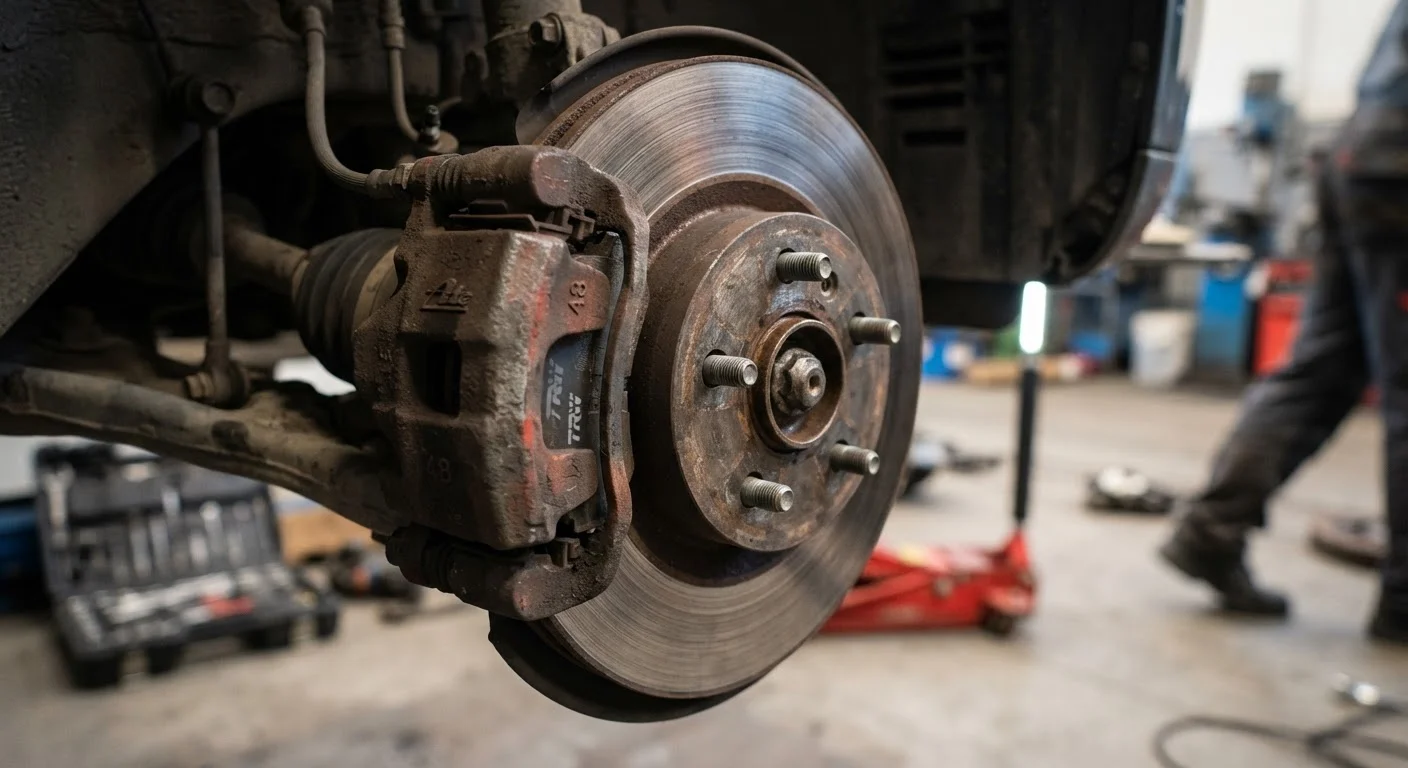
Brake squeal happens when vibration occurs between your brake pad and rotor — the large metal disc your brakes clamp down on to slow the vehicle. That vibration produces sound at a frequency your ears can easily detect. The critical question isn't just what is making the noise, but why.
Some causes are genuinely harmless. Light surface rust can build up on rotors overnight or after rain, producing a brief squeal during your first few stops of the morning. That typically clears within a block or two. Low-dust or semi-metallic brake pad formulations — common on many newer vehicles — can also produce a mild squeal during normal braking, especially when cold.
But the most important cause to know about is the wear indicator. Most modern brake pads include a small metal tab specifically engineered to contact the rotor and squeal once the friction material wears down to a safe minimum threshold. Think of it as a built-in alarm. When that alarm goes off consistently — every time you brake, regardless of temperature or conditions — it's telling you the pads need replacing soon.
Understanding these distinctions is what separates a driver who responds wisely from one who either panics unnecessarily or ignores a real problem. See also our guide on reading dashboard warning lights for related signals your car may be sending.
Common Mistakes Drivers Make When Brakes Squeal
The pattern of errors most drivers fall into follows a predictable path — dismissal, delay, and then a costly repair that could have been smaller. Recognizing these mistakes is the first step toward avoiding them.
Assuming all brake squeal is harmless and ignoring it entirely.
Why it happens: Morning squeal from surface rust clears up quickly, so drivers assume all squeal will do the same. When it doesn't, the habit of ignoring it persists.
Waiting until the brakes grind before taking action.
Why it happens: Drivers often delay service because there's no immediate loss of braking performance during the squeal phase, making the urgency feel low.
Applying lubricants or sprays directly to the brake pads or rotors to silence the noise.
Why it happens: It's an instinctive fix — if something squeaks, oil it. This approach is fine on a door hinge, but dangerous on brakes.
Confusing brake squeal with other vehicle noises and misdiagnosing the problem.
Why it happens: Worn wheel bearings, loose heat shields, and even tire noise can sound similar to brake squeal, especially at certain speeds.
Skipping regular brake inspections because the brakes feel fine.
Why it happens: Without visible symptoms, brake wear can feel imperceptible until pads are dangerously thin. Drivers understandably prioritize problems they can feel.
~20%
Vehicles with dangerously worn brake pads
Vehicle inspection data compiled by the Car Care Council has found that roughly 1 in 5 vehicles inspected show brake components in need of service.
2–3x
Cost increase when rotors need replacement vs. pads alone
Industry repair estimates consistently show that replacing pads and rotors together costs roughly two to three times more than a pad-only replacement.
When to Pull Over — and When to Schedule Service
Not every squeal demands an emergency stop, but certain combinations of symptoms do. If squealing is accompanied by a grinding or metal-on-metal sound, your pads have likely worn completely through and the caliper or backing plate is now contacting the rotor directly. That is a stop-driving situation.
Similarly, if your vehicle pulls to one side during braking, or if the brake pedal feels soft, spongy, or sinks closer to the floor than usual, those are signs of potential brake system failure. Do not continue driving; have the vehicle towed to a qualified mechanic. Compromised brakes affect your ability to respond to hazards — a situation not unlike losing traction in a skid, where reaction time is everything.
For a squeal that is consistent but not accompanied by grinding, pulling, or pedal changes, schedule a brake inspection within a week or two — don't put it off for months. Most shops can visually check pad thickness quickly, and many do so at no charge. The peace of mind alone is worth the trip.
Grinding, Pulling, or a Soft Pedal: Stop Driving
If brake squeal is accompanied by grinding sounds, the vehicle pulling to one side, or a brake pedal that feels soft or sinks to the floor, do not continue driving. These symptoms indicate a potentially serious brake system failure. Have the vehicle inspected by a qualified mechanic immediately — tow it if necessary.
This article is for general informational purposes only. Always consult a qualified mechanic for diagnosis and repair of your vehicle's brake system.