

Key Takeaways
Car Tune-Up
A tune-up is a scheduled maintenance service designed to keep your engine running efficiently. In older vehicles, it meant adjusting ignition timing and replacing distributor parts. On modern cars, it typically refers to replacing spark plugs, inspecting filters, and using diagnostic tools to check engine performance. The exact work involved depends heavily on your vehicle's age, make, and mileage.
Most modern engines use electronic ignition and fuel injection, eliminating many mechanical adjustments that once defined a tune-up. Today, the term is largely informal and not standardized across the industry.
How the Definition Has Changed
Ask someone what a tune-up means, and you'll probably get different answers depending on when they learned to drive. For decades, a tune-up was a specific mechanical procedure: replacing points, condenser, and distributor cap; adjusting ignition timing; and setting the carburetor mixture. These tasks required hands-on mechanical skill and regular attention.
That world largely disappeared with electronic fuel injection and computerized ignition systems, which became standard across most vehicles by the late 1980s and early 1990s. Today, there are no points to replace, no distributor to adjust, and no carburetor to tune. The term has survived, but the work behind it has changed completely.
Many shops still use "tune-up" as shorthand for a general engine maintenance service, but what's included varies from one shop to the next. That lack of standardization is worth knowing before you book an appointment or ask for a quote.
What a Modern Tune-Up Typically Covers
While no universal definition exists, a legitimate tune-up on a contemporary vehicle usually includes the following:
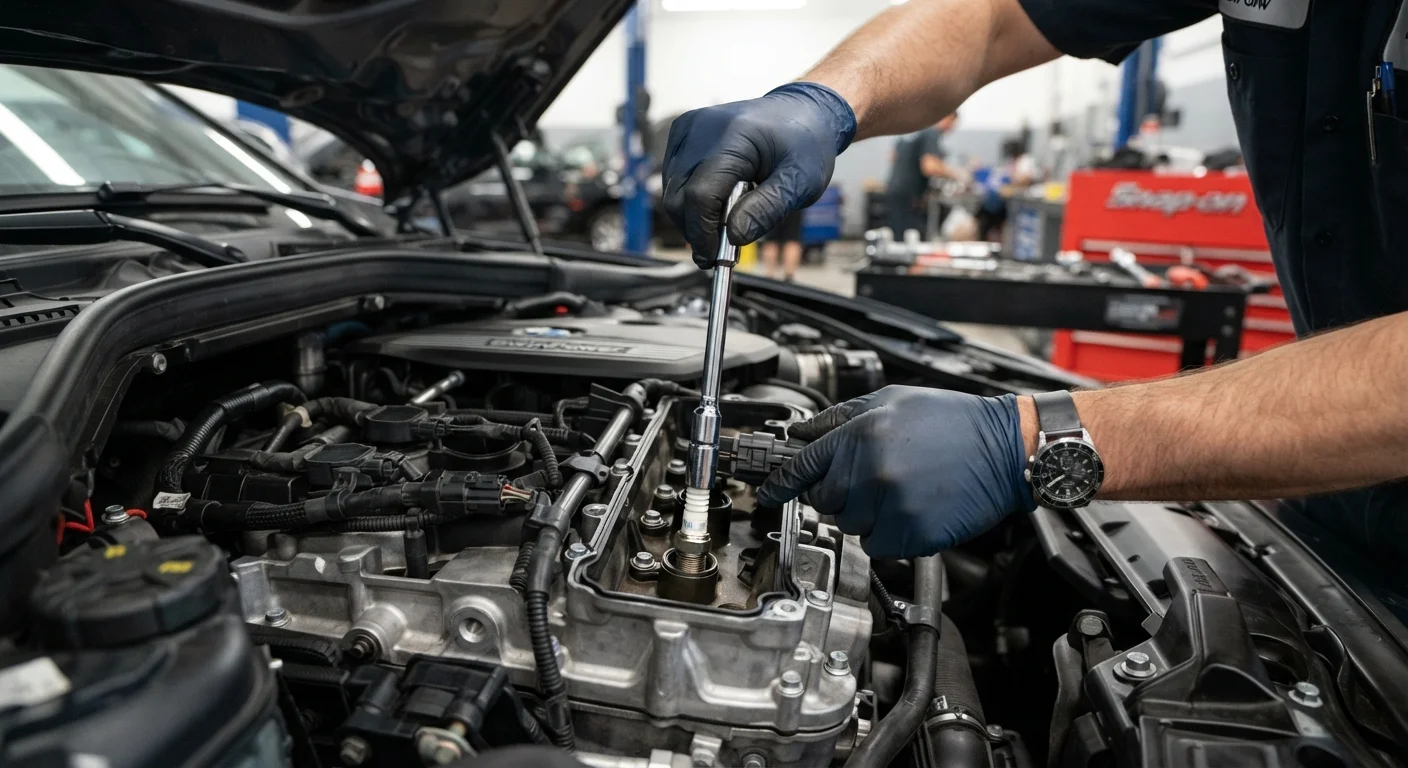
- Spark plug replacement: Spark plugs ignite the air-fuel mixture in each cylinder. Worn plugs cause misfires, rough idling, and reduced fuel efficiency. Modern platinum and iridium plugs often last 60,000 to 100,000 miles, so replacement intervals are far longer than they used to be.
- Air filter inspection or replacement: A clogged air filter restricts airflow to the engine. This is one of the simplest components to inspect and is often a straightforward replacement.
- Cabin air filter check: Separate from the engine air filter, this affects the quality of air inside the vehicle. It's sometimes included in a tune-up service.
- OBD-II diagnostic scan: Modern vehicles store fault codes that a technician can read with a diagnostic scanner. This step helps identify underlying issues that aren't yet causing obvious symptoms.
- Fuel system inspection: Some tune-up services include checking the fuel filter, fuel injectors, and throttle body for buildup or wear.
A thorough technician may also inspect belts, hoses, the battery, and fluid levels — not always labeled as a "tune-up" but often part of a broader maintenance check. For a plain-English guide to what each component under the hood actually does, see our engine bay overview.
30,000–100,000 mi
Typical spark plug replacement interval
Modern iridium and platinum spark plugs last significantly longer than the copper plugs used in older vehicles, per most manufacturer service schedules.
~1 in 5
Vehicles with a misfiring cylinder on the road
Industry estimates from vehicle inspection data suggest a notable share of vehicles show signs of ignition-related issues at any given time.
What a Tune-Up Won't Fix
One common misconception is that a tune-up is a catch-all solution for any engine problem. It isn't. Persistent check-engine lights, overheating, transmission issues, or significant oil consumption require separate diagnosis — a spark plug swap won't resolve them.
Similarly, a tune-up won't address worn brakes, suspension problems, or failing sensors. If you're experiencing a specific symptom, describe it clearly to your mechanic rather than simply requesting a tune-up. This helps avoid paying for a service that doesn't address the actual problem. For a look at how misleading maintenance assumptions can cause real harm, see common car maintenance myths.
Describe Symptoms, Not Service Names
When you visit a mechanic, describe what you're experiencing — rough idling, poor acceleration, a dashboard warning light — rather than simply asking for a tune-up. This gives the technician the information needed to diagnose the actual cause and recommend only what's necessary.
Using Your Owner's Manual as the Real Guide
The single most reliable source for your vehicle's maintenance needs isn't a shop's recommended schedule or a general rule of thumb — it's your owner's manual. Manufacturers specify exactly when spark plugs, filters, and other components should be serviced based on your specific engine design and real-world testing.
Generic advice like "get a tune-up every 30,000 miles" may be too frequent for some cars or too infrequent for others. Following the manufacturer's schedule helps you avoid unnecessary spending and ensures critical items don't get overlooked. Reading your owner's manual is one of the most overlooked habits in car ownership.
If you're unsure whether to handle any of this work yourself or take it to a shop, our guide on DIY vs. professional maintenance walks through the trade-offs honestly. And if you're wondering what happens when routine maintenance gets delayed, the hidden costs of skipping maintenance covers exactly that.