

| Casual Daytime Base | Tinted moisturizer or sheer foundation |
| Office Eye Intensity | Neutral eyeshadow, single thin liner or none |
| Evening Lip Weight | Bold, pigmented color — matte or satin |
| Best Setting Tool for Events | Setting spray over powder for longevity |
| Key Variables to Adjust | Base coverage, eye intensity, lip weight |
| Lighting Consideration | Matte formulas photograph better; shimmer reads well in person |
The Core Idea: Think in Levels, Not Separate Looks
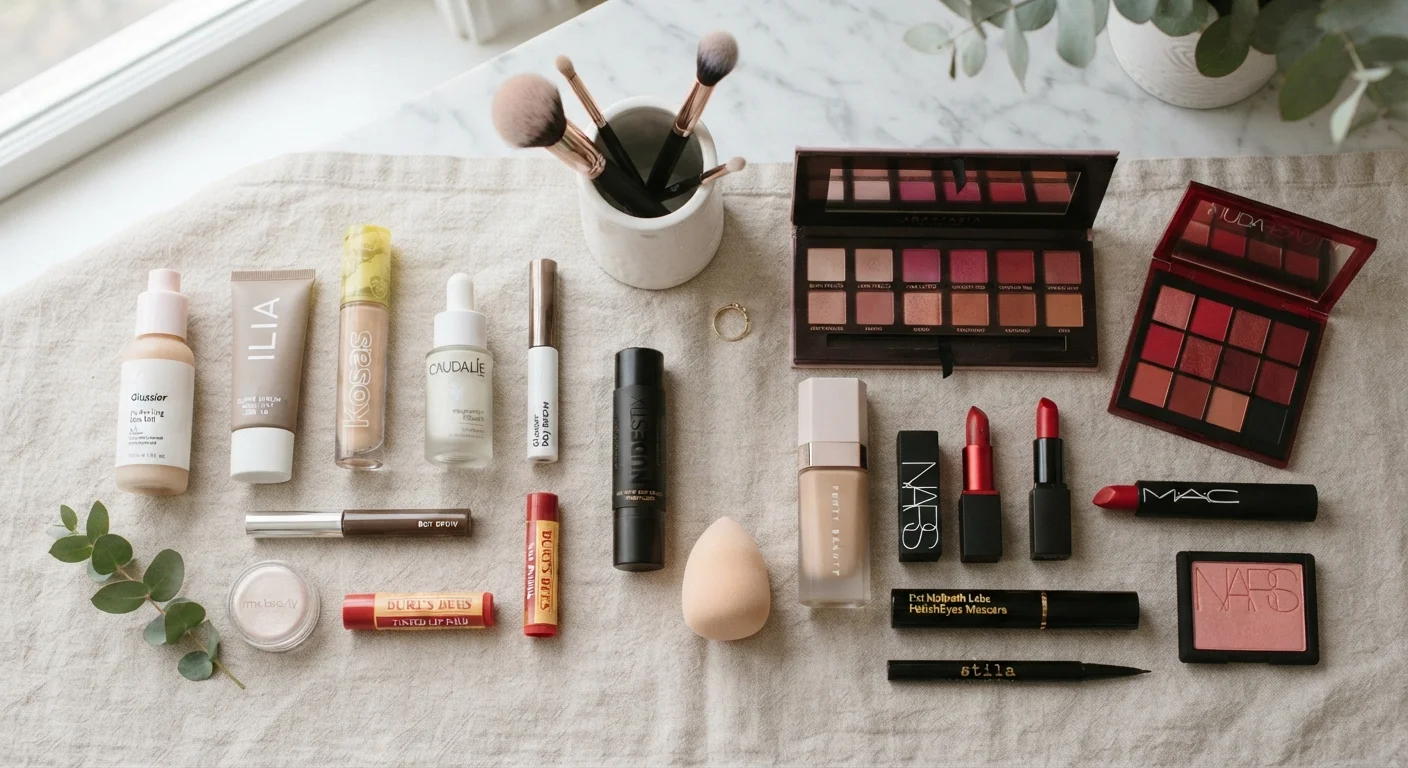
Matching your makeup to an occasion doesn't require a completely different routine each time — it's really about adjusting coverage, color intensity, and finish along a sliding scale. Think of your everyday base as the foundation layer everything else builds on, then add or subtract elements depending on where you're headed.
Before any of that works well, your skin prep needs to be solid. Check out this pre-application skin prep checklist to make sure your canvas is ready — hydrated, primed skin holds every look longer and more evenly, no matter the setting.
| Casual Daytime Base | Tinted moisturizer or sheer foundation |
| Office Eye Intensity | Neutral eyeshadow, single thin liner or none |
| Evening Lip Weight | Bold, pigmented color — matte or satin |
| Best Setting Tool for Events | Setting spray over powder for longevity |
| Key Variables to Adjust | Base coverage, eye intensity, lip weight |
| Lighting Consideration | Matte formulas photograph better; shimmer reads well in person |
The three variables to adjust across occasions are: base coverage (sheer to full), eye intensity (bare to dramatic), and lip weight (tinted balm to bold color). Shifting even one of these meaningfully changes the overall read of a look.
Occasion-by-Occasion Breakdown
Casual Daytime (errands, coffee, low-key plans)
Keep it light and breathable. A tinted moisturizer or light-coverage foundation evens out skin without looking done. A single coat of mascara, groomed brows, and a sheer lip tint are usually all that's needed. Cream products blend easily with fingers and give a natural, flushed look — see how different blush formulas compare if you want a low-effort flush of color.
Office or Workplace
Aim for polished but not distracting. A medium-coverage base, softly defined brows, neutral or dusty-rose eye shadow, and a matte or satin lip in a close-to-natural shade reads professional across most industries. Keep liner subtle — a thin line or tightline only. If eyeliner tends to migrate by midday, here's what might be causing it and how to fix it.
Daytime Events (bridal showers, garden parties, daytime weddings)
You can afford more color here while staying fresh. A fuller-coverage base, a defined eye in warm neutrals or soft mauves, sculpted brows, and a statement lip — berry, coral, or a classic nude — work beautifully in natural light. A setting spray helps everything stay put through outdoor elements.
Evening and Formal Events
This is where you can reach for drama. Full-coverage base, contour if you like it, a deeper or more complex eye look, and a bold lip all work together under evening lighting. Smoky or layered eye looks are especially effective — you don't need a full brush kit to blend well. Matte formulas tend to photograph better; shimmer reads more naturally in person.
Coverage
The degree to which a base product (foundation, tinted moisturizer, concealer) evens out or conceals the skin. Ranges from sheer (minimal coverage, skin still visible) to full (most imperfections concealed).
Finish
The surface appearance of a product once applied — matte (no shine), satin (slight glow), or dewy (visible luminosity). Different finishes suit different settings and lighting conditions.
Tightlining
Applying eyeliner to the upper waterline — the inner rim of the upper lash line — to define the eyes subtly without a visible liner stripe on the lid.
Setting Spray
A fine mist applied over finished makeup to help it last longer and resist humidity, oil, and movement. Some formulas also melt powder finishes into a more natural-looking texture.
Undertone
The subtle, underlying hue of the skin — typically described as cool (pink or blue), warm (yellow or golden), or neutral (a mix of both). Undertone differs from surface skin tone and affects how makeup shades appear once applied.
Choosing Colors That Actually Work for Your Skin
Occasion-appropriate intensity only gets you halfway there — the shades also need to harmonize with your complexion. Understanding your skin undertones (whether you run cool, warm, or neutral) helps you pick lip colors, blushes, and eyeshadows that feel cohesive rather than jarring.
As a general reference: cool undertones tend to suit berry, plum, and pink-based shades; warm undertones often glow with peach, bronze, and terracotta; neutral undertones can move comfortably across both families. These aren't rigid rules — experimentation is always encouraged — but they're a reliable starting point when you're uncertain.
Your outfit is also worth factoring in. For more guidance on coordinating your overall look from clothing to beauty, see this running guide to occasion dressing for context on what's appropriate when.
This article is for general informational and educational purposes only. Individual results may vary based on skin type, product formulation, and personal preference.