

Key Takeaways
Our Verdict
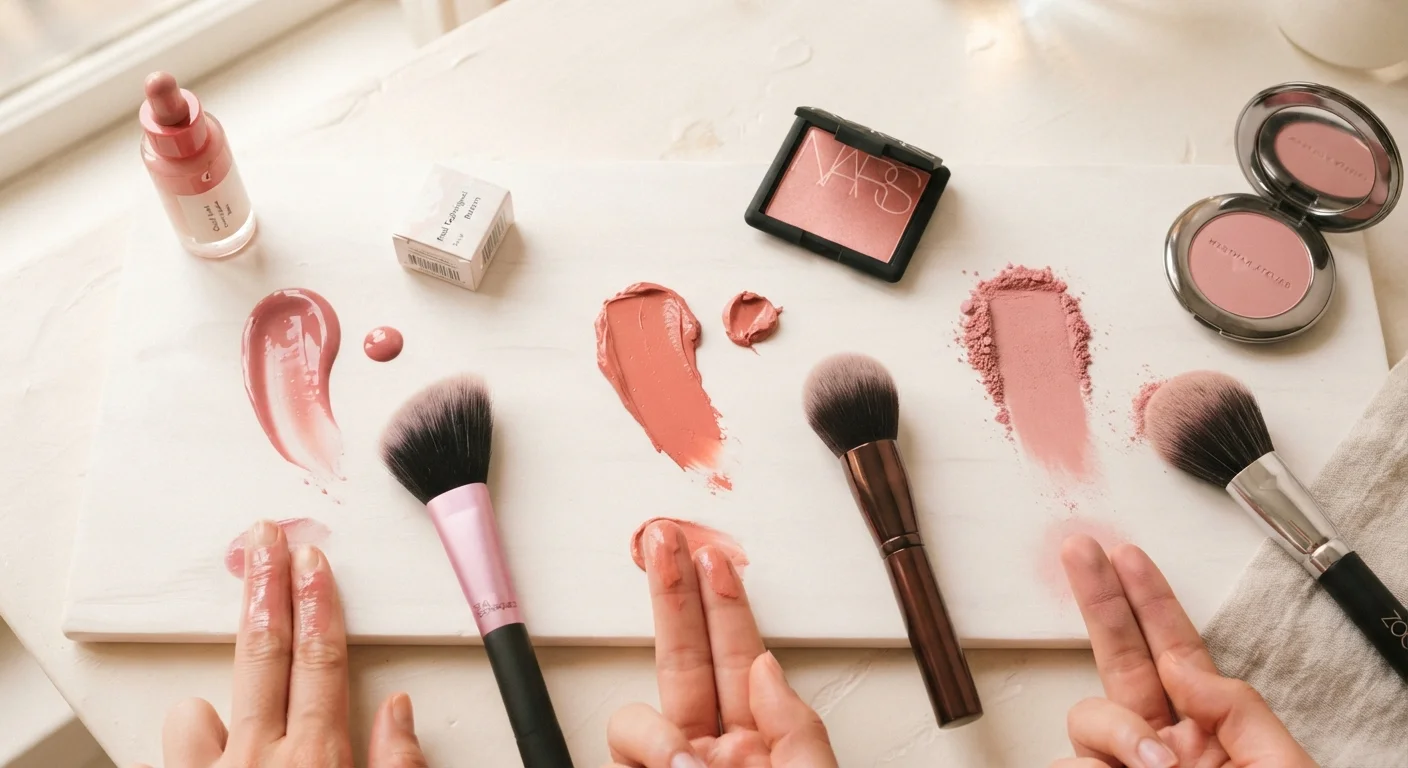
No single blush formula wins outright — the right choice depends on your skin type, preferred finish, and how much time you have. Powder suits oily skin and busy routines; cream rewards those who want a natural, buildable flush; and liquid is a powerhouse for long-lasting, dewy color. Many makeup enthusiasts find that owning two formulas covers every scenario.
| Best for | Recommended |
|---|---|
| Oily or combination skin types | Powder blush |
| Dry skin or a natural, skin-first finish | Cream blush |
| Long wear and maximum color payoff | Liquid blush |
| Beginners building a simple routine | Cream blush |
Why Blush Formula Actually Matters
Blush color gets all the attention, but formula is what determines how it feels, how long it lasts, and whether it looks natural or cakey by noon. Choosing a shade in the wrong texture for your skin type or base makeup is one of the most common reasons a blush looks great in the store and disappointing in the mirror. Understanding how each formula behaves — before you commit — saves frustration and money.
Your skin type sets the foundation. So does the rest of your makeup: a dewy, moisturizer-heavy base and a powder blush, for example, can be a recipe for patchiness. Knowing your skin undertone also helps you narrow down shades once you've settled on a formula.
| Powder Blush | Cream Blush | Liquid Blush | |
|---|---|---|---|
| Best skin type | Oily / combination | Dry / normal | All types |
| Finish | Matte to shimmer | Satin / natural glow | Dewy / glassy |
| Application tool | Fluffy brush | Fingers or sponge | Fingertips |
| Staying power | Moderate | Moderate (set with powder) | High |
| Beginner-friendliness | High | High | Moderate — very pigmented |
| Works over dewy base | Can look patchy | Yes | Yes |
| Layering with other formulas | Apply last | Apply before powder | Apply before powder |
Powder Blush: Classic, Forgiving, and Versatile
Powder blush is the most widely available formula and tends to be the easiest starting point for most people. It's applied with a fluffy or domed brush after foundation and setting powder, which means it sits on top of the skin's surface rather than melding into it.
Best for: Oily and combination skin types. The powder helps absorb excess sebum and keeps the look fresh longer. It's also excellent for mature skin that doesn't need extra hydration layered on.
Finish options: Powder blush comes in matte, satin, and shimmer finishes — the widest range of any formula.
Technique tip: Tap off excess product before applying and use a light hand with circular or sweeping motions on the apples of the cheeks, blending upward toward the temples. Building gradually prevents over-application, which is harder to fix with powder than with other formulas.
Limitations: On dry or flaky skin, powder blush can cling to texture and look uneven. It can also appear flat or sit on top of a dewy base rather than integrating with it.
Cream Blush: Skin-Like and Beginner-Friendly
Cream blush has surged in popularity because it mimics the look of natural flush — the kind of color that appears to come from within the skin rather than sitting on top of it. It's applied before setting powder, directly onto bare skin or a liquid/cream foundation base.
Best for: Dry to normal skin. The creamy texture melts into skin and plays nicely with hydrating bases. It's also ideal for anyone who prefers a minimal, skin-first makeup style.
Finish options: Most cream blushes deliver a satin or natural glow. Some are formulated with a subtle shimmer, but ultra-matte cream options are less common.
Technique tip: Fingers are genuinely the best tool here — body heat helps the product blend seamlessly. A damp makeup sponge works beautifully too. Apply a small amount and tap or press (rather than drag) onto the cheekbones, blending edges until there's no visible boundary.
Limitations: Cream blush can migrate on oily skin and may need a light dusting of translucent powder on top to lock it in place. It's also more prone to picking up other products if you're not careful about application order — always refer to a correct layering sequence for your base.
Lock Cream Blush In Place
If you love the finish of cream blush but struggle with fading or movement throughout the day, try pressing a very light layer of translucent setting powder directly over it once it's blended. This seals the product without dulling the glow. Avoid rubbing — a gentle press with a sponge or powder puff keeps the texture intact.
Liquid Blush: Pigmented, Long-Lasting, and a Little Intimidating
Liquid blush is the most concentrated of the three formulas. A single drop — sometimes literally — can deliver bold color, so it rewards a patient, measured approach. It blends quickly and dries to a transfer-resistant finish, making it a strong option for events or long days. For occasion-specific looks, pairing liquid blush with the rest of your makeup is worth thinking through — see our guide to occasion makeup for ideas.
Best for: All skin types, but particularly normal to oily skin that benefits from its staying power. The dewy, lit-from-within finish also flatters dry skin when applied on top of a hydrating base.
Finish options: Typically dewy or glassy. Matte liquid blushes exist but are less common.
Technique tip: Apply with fingertips immediately after foundation while skin is still slightly tacky — this helps it blend rather than streak. Work quickly; liquid formulas set fast. Start with less than you think you need and layer up only if necessary.
Limitations: The intensity can be unforgiving for beginners. Once it sets, blending out edges is very difficult. Color payoff varies widely between formulas, so what looks subtle in the bottle may be vivid on skin.
Mixing Formulas: A Simple Way to Add Dimension
You don't have to pick just one. Layering a cream blush underneath a coordinating powder blush is a technique makeup artists use to extend wear and add depth. The cream acts as an anchor, and the powder locks it in while adding its own texture on top.
Similarly, a drop of liquid blush blended into the high points of the cheeks before a dusting of powder gives a glow that reads as genuinely luminous rather than glittery. The key rule: always apply the most hydrating or liquid-based formula first, then build drier or powder formulas on top — the same logic that governs skincare layering.
Experimenting with combinations is low-stakes. Blush is one of the most forgiving makeup steps to play with, and getting comfortable with all three formulas expands your options considerably no matter the occasion or season.
This article is for general informational and educational purposes only. Individual results may vary based on skin type, product formulation, and application technique.