

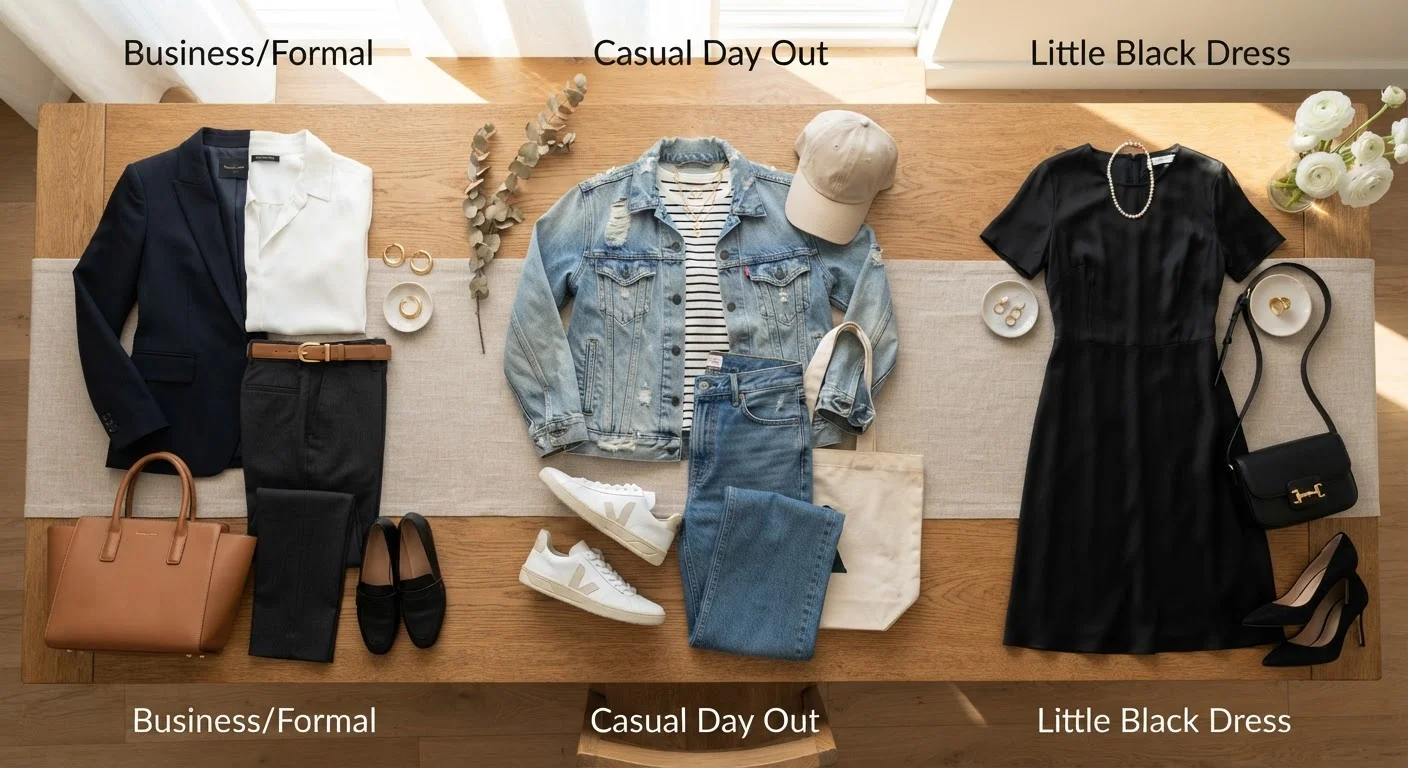
Why Occasion Dressing Matters (and Why It's Not About Rules)
Dressing appropriately for an occasion isn't about following rigid fashion laws — it's about communicating respect, awareness, and a bit of self-expression all at once. The goal is to feel confident in what you're wearing while reading the room correctly. Once you understand the logic behind occasion dressing, it becomes second nature rather than a source of stress.
Think of this guide as a running reference — something to return to whenever you're standing in front of your closet asking what do I even wear to this? For a deeper grounding in the principles that make any outfit work, see our guide to dressing well on any budget.
Occasion-by-Occasion Breakdown
Weddings
Unless the invitation specifies otherwise, aim for cocktail attire — a midi dress, a tailored jumpsuit, or dress trousers with a blouse. Avoid white, ivory, or anything that competes with the couple. For outdoor summer weddings, breathable fabrics and block-heeled shoes help navigate uneven terrain. For a full breakdown of what formality levels mean, Dress Codes Decoded covers every tier confidently.
Funerals and Memorial Services
The traditional expectation is subdued, respectful clothing — typically darker neutrals like black, charcoal, navy, or deep gray. Avoid bold prints, bright colors, or anything overly casual. Comfort matters here too; you may be sitting or standing for extended periods.
First Dates
Dress one notch above the setting. Coffee shop? Elevated casual — dark jeans, a crisp top, clean sneakers or loafers. Dinner out? Smart casual or cocktail depending on the restaurant. The aim is to look intentional without looking uncomfortable in your own skin.
Job Interviews
Research the company culture before choosing an outfit. A creative agency may welcome smart casual; a law firm expects business formal. When in doubt, err slightly more polished than you think is necessary — it signals effort and self-awareness.
Casual Fridays and Workplace Gatherings
Casual at work still means professional-adjacent. Dark, well-fitting jeans, a neat polo or structured top, and clean footwear are safe anchors. Avoid anything with large logos, rips, or clothing better suited for the gym.
Garden Parties and Outdoor Daytime Events
Florals, linen, and lighter fabrics work beautifully here. Think breezy but put-together — a sundress, a linen blazer over a simple tee, or linen trousers with a patterned shirt. Practical footwear (wedges, loafers, or block heels) beats stilettos on grass.
When the Dress Code Isn't Clear
If an invitation doesn't specify a dress code, look for context clues: the venue, the time of day, and the host's usual style. Daytime events generally call for lighter, less formal choices than evening events. When genuinely uncertain, a quick, polite message to the host is always appropriate — it shows consideration, not ignorance.
Holiday Gatherings and Family Events
These can range from ultra-casual to surprisingly formal depending on your family. When uncertain, smart casual is almost universally appropriate — it reads as thoughtful without being overdressed.
Pulling the Look Together: Beyond Clothing
Occasion dressing doesn't stop at your outfit. Hair and makeup should be calibrated to the same setting. Occasion Makeup: Matching Your Look to the Setting is a practical companion guide for getting makeup intensity right across different events. For broader hair and beauty inspiration by occasion, the Hair & Makeup hub is a great starting point.
Accessories, bag choice, and footwear all carry weight in how an outfit is read. A well-chosen belt, a structured bag, or polished shoes can elevate basics into occasion-appropriate dressing without a wardrobe overhaul. If you're weighing whether to invest in versatile pieces that serve multiple occasions, Buying Smart offers practical guidance on evaluating purchases thoughtfully.
Finally, remember that occasion dressing and personal style aren't mutually exclusive. Meeting a dress code doesn't mean abandoning who you are — it means expressing yourself within a context. Signature Style vs. Trend-Chasing explores how a consistent personal style can actually make occasion dressing easier, not harder.
Cocktail Attire
A semi-formal dress code typically calling for knee- to midi-length dresses, tailored separates, or dressy jumpsuits. It sits between smart casual and black tie on the formality scale.
Smart Casual
A relaxed but intentional level of dress — think neat, well-fitting everyday clothing without athletic wear or overly casual items like graphic tees or flip-flops.
Business Formal
The most polished professional standard: suits, tailored dresses, or coordinated separates in neutral or conservative colors, with formal footwear.
Dress Code
A set of expectations — sometimes explicitly stated on an invitation, sometimes implied by context — that signals the appropriate formality level for an event.
Elevated Casual
Casual clothing chosen and styled with care — for example, dark fitted jeans paired with a structured top and clean leather shoes, rather than sweats or athletic wear.