

Key Takeaways
Option A
Brand Name Products
The established, heavily marketed choice with a recognized identity.
Best for: Categories where formulation, purity standards, or proven efficacy genuinely affect the outcome.
Option B
Generic Products
The value-focused alternative built on identical or comparable ingredients.
Best for: Commodity categories where the active ingredients and specifications are standardized by regulation or industry norms.
If you're buying over-the-counter medications like pain relievers or antihistamines
Generic Products
Federal law requires generic drugs to contain identical active ingredients at the same dosage and strength. You're paying only for the brand when you choose the name version.
If you're purchasing specialty skincare with patented delivery systems or unique formulations
Brand Name Products
Proprietary ingredient combinations and clinical testing behind established skincare lines can justify the premium, since generics may use similar but not identical formulas.
If you're stocking up on pantry staples, cleaning supplies, or basic hardware
Generic Products
These categories are highly commoditized. Ingredients and specifications are standardized, and private-label versions are often manufactured in the same facilities.
If you're choosing infant formula or products for individuals with specific medical needs
Brand Name Products
Formulation differences can matter more for vulnerable populations. Always consult a qualified healthcare professional before substituting in this category.
If you're weighing long-term household purchases like appliances or tools
Brand Name Products
Warranty support, parts availability, and documented reliability data often favor established brands for products you'll depend on for years.
Why This Question Deserves a Real Answer
The brand-vs.-generic debate gets oversimplified in both directions. Budget advocates say generic is always the smart play. Brand loyalists argue you get what you pay for. Neither is reliably correct — the answer depends almost entirely on the category and what drives the price gap in the first place.
Price premiums on brand-name products fall into roughly two buckets: those that reflect real, measurable differences in formulation or performance, and those that reflect marketing expenditure, packaging design, and decades of consumer conditioning. Learning to tell the difference is one of the highest-leverage consumer skills you can develop. For a broader framework on evaluating true value, see our structured comparison shopping guide.
Where Generic Wins — and Why
The clearest win for generics is over-the-counter pharmaceuticals. In the U.S., the FDA requires that generic drugs contain the same active ingredients, in the same dosage form and strength, as their brand-name counterparts. They must also meet the same standards for purity and manufacturing quality. The price difference — often 30% to 80% less — reflects lower marketing costs, not a weaker product.
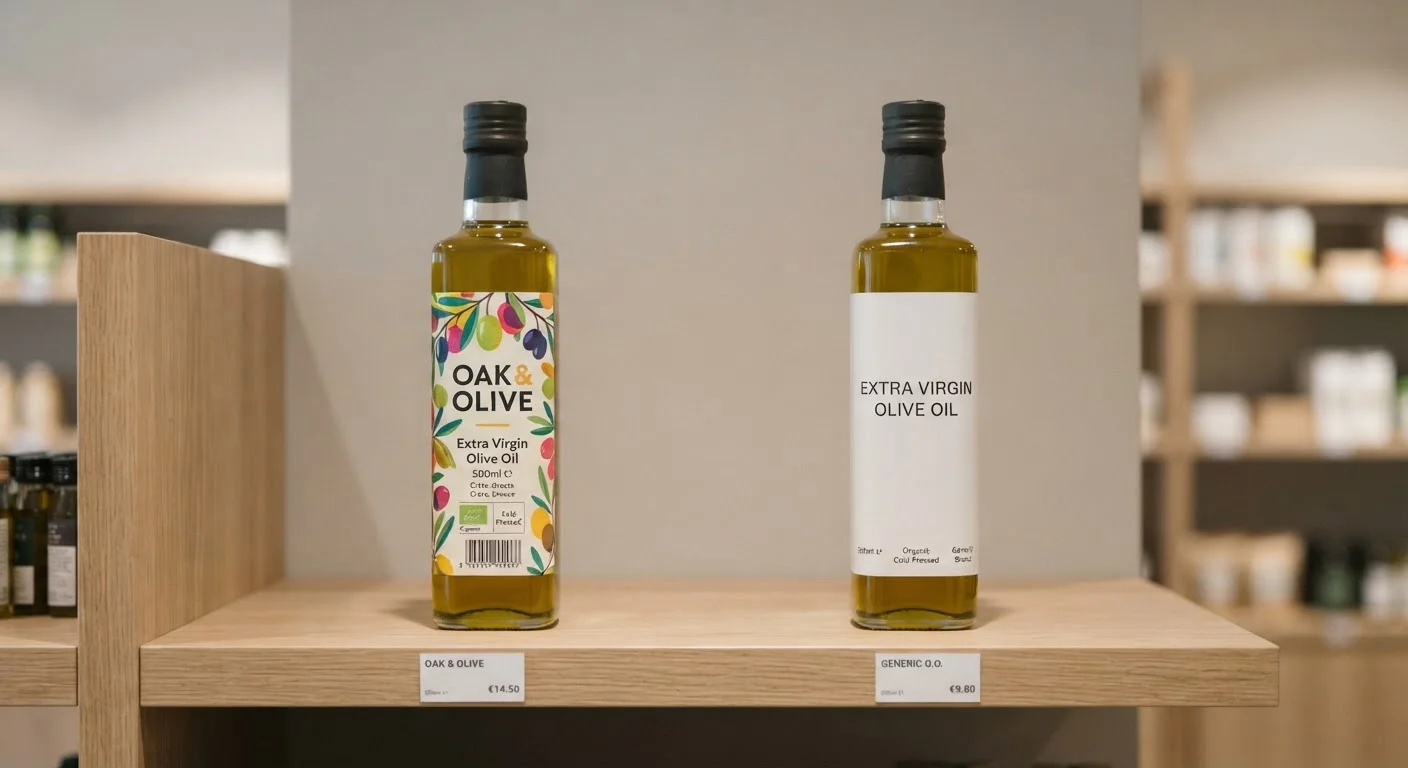
Grocery staples tell a similar story. Flour, sugar, canned tomatoes, and cooking oils are commodity goods with publicly available specifications. Store-brand versions are frequently produced in the same facilities as national brands, then packaged differently. The same logic applies to many household cleaners, basic paper goods, and standard fasteners or batteries.
| Criterion | Brand Name | Generic |
|---|---|---|
| OTC Medications | Same active ingredient, higher price | FDA-mandated equivalence, lower cost |
| Grocery Staples | Established label, premium markup | Often same source, significant savings |
| Specialty Skincare | Clinical testing, proprietary formulas | Similar but not identical formulations |
| Power Tools & Appliances | Better warranty, parts availability | Lower upfront cost, variable support |
| Household Cleaners | Brand recognition, same active agents | Equivalent performance, lower price |
| Medical/Infant Nutrition | Documented formulation history | Minor differences may matter for some |
As our quality comparison guide for store brands explains, the gap between private-label and national brand products has narrowed considerably over the past two decades as retailers have invested in manufacturing standards.
Where Brand Names Hold a Real Edge
Not every category commoditizes neatly. Several areas exist where formulation specificity, proprietary research, or controlled manufacturing genuinely differentiate brand-name products:
- Complex skincare and dermatological products: Active concentrations, pH balance, and delivery systems can vary meaningfully between a branded product and a generic alternative. Clinical testing behind established formulas isn't automatically replicated.
- Power tools and appliances: Motor quality, tolerances, and long-term parts availability tend to be better documented for established brands, which matters more when a product is expected to last a decade.
- Infant and medical nutrition products: Minor formulation differences can have outsized effects on specific populations. This is a category where consulting a healthcare professional before switching to a generic is strongly advisable.
- Adhesives, sealants, and specialty coatings: Proprietary polymer formulations can produce meaningfully different performance in demanding applications.
80%
Generic drug price savings vs. brand name
The FDA reports that generic drugs cost on average 80–85% less than their brand-name equivalents while meeting the same manufacturing and quality standards.
90%+
Share of U.S. prescriptions filled as generics
According to FDA data, generics account for more than 90% of prescriptions dispensed in the United States, reflecting widespread pharmacist and physician confidence in equivalence.
~40%
Grocery shoppers who switched to store brands
Consumer research from the Private Label Manufacturers Association has found that a significant share of U.S. shoppers increased store-brand purchases due to price considerations.
The common thread in these categories: the active mechanism is complex, not fully standardized, or tied to manufacturing precision that isn't guaranteed in the generic supply chain.
A Framework for Deciding
Before defaulting to habit, run the category through three quick filters:
- Is it regulated? If a regulatory body mandates ingredient and quality equivalence (as the FDA does for generics), the brand premium is almost purely a marketing charge.
- Is the mechanism simple or complex? Acetaminophen relieves pain through a well-understood, standardized pathway. A multi-peptide eye cream with a patented encapsulation system is a different matter.
- What's the cost of failure? For a box of cereal, a disappointing generic is a minor inconvenience. For a tool you rely on for safety-critical work, or a supplement you take daily, the stakes shift the math.
This connects directly to the broader principle explored in our guide on total cost of ownership: the lowest sticker price and the best long-term value aren't always the same number. And as we note in our piece on smart savings, buying cheaper only counts as saving money when quality holds up.
Apply this framework category by category and you'll find that the right answer isn't brand name or generic — it's whichever one earns its price based on what the product actually delivers.
A Note on Medical and Health Decisions
This article provides general consumer information, not medical or health advice. For any decisions involving medications, supplements, infant nutrition, or products used by people with specific health conditions, consult a qualified healthcare professional. Generic substitution for prescription drugs should always be discussed with your prescribing provider or pharmacist.