

Key Takeaways
Why Mulch Advice Goes Wrong
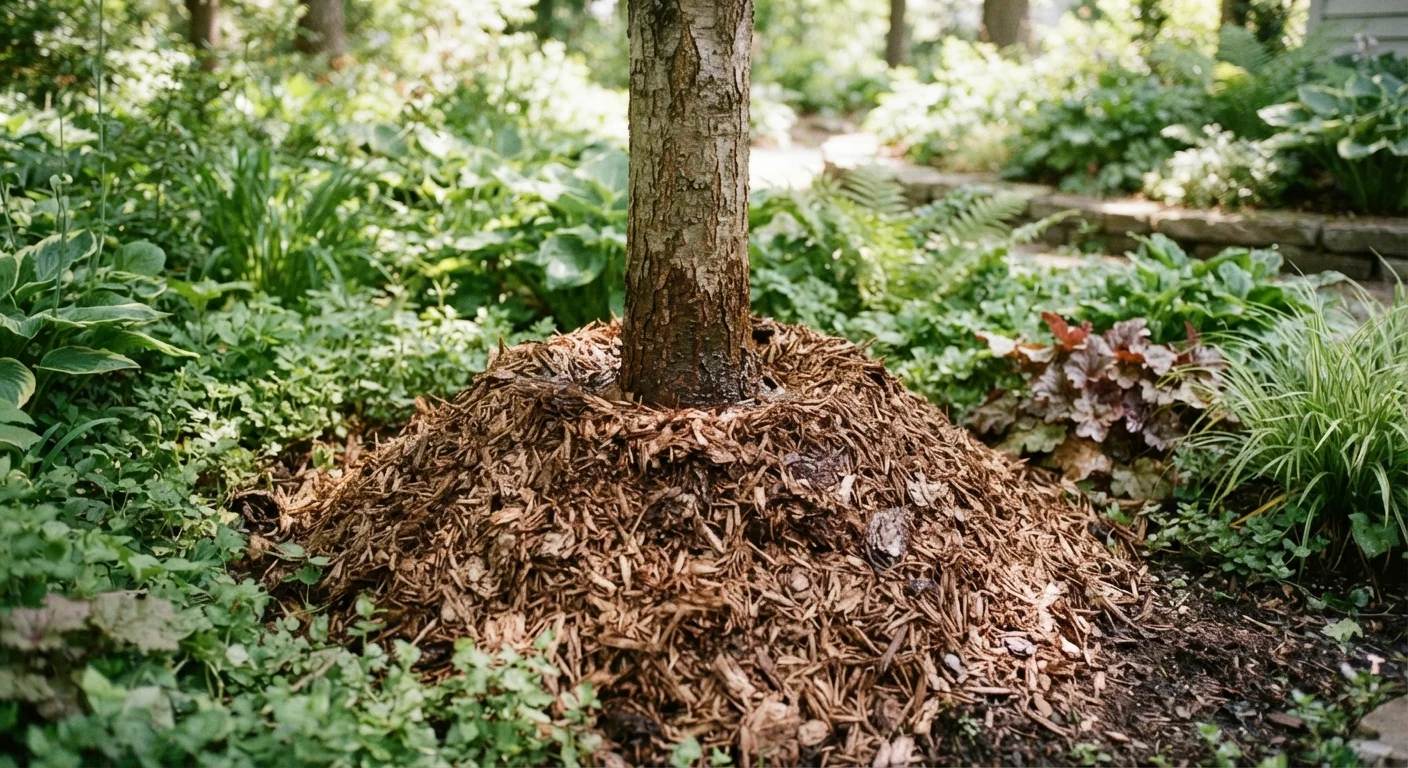
Walk through almost any American neighborhood in spring and you'll see the same scene: freshly delivered mulch mounded into cones around every tree in the yard. It looks tidy. It signals effort. And according to arborists and extension horticulturists, it's quietly doing real harm to the plants it's supposed to protect.
Mulch mythology is persistent because it's rooted in a half-truth — mulch genuinely is one of the most beneficial things you can add to a garden bed. It suppresses weeds, moderates soil temperature, and conserves moisture. But the way many homeowners apply it undermines every one of those benefits. Understanding what mulch actually does at the soil level makes it much easier to use it correctly. For a deeper look at what's happening beneath the surface, see our guide to soil types — your mulch strategy should match your underlying soil.
Myth
Piling mulch high against a tree trunk protects it, especially in winter.
Fact
Volcano mulching traps moisture against bark, promotes fungal rot, and creates habitat for rodents that gnaw through the cambium layer.
The cambium is the thin living tissue just beneath tree bark that transports water and nutrients. When mulch stays in constant contact with it, the perpetual dampness breaks down bark cells and invites pathogens. Voles and mice also nest in warm mulch piles and feed on bark through winter, sometimes girdling young trees entirely. Keep mulch pulled back two to three inches from any trunk or stem — the root flare (where the trunk widens at ground level) should always be visible.
Myth
The more mulch you add, the better your plants will do.
Fact
Layers deeper than four inches can suffocate roots by blocking oxygen and repelling rainfall rather than absorbing it.
Soil roots require gas exchange — oxygen in, carbon dioxide out. An overly thick mulch layer, particularly when it becomes compacted, acts as a barrier rather than a buffer. Heavy rainfall on a dense mulch mat can run off the surface rather than soaking through to roots. University cooperative extension programs consistently recommend a two-to-four inch depth as the practical range for most ornamental beds and trees.
Myth
Fresh wood chip mulch steals nitrogen from the soil and starves your plants.
Fact
Nitrogen draw-down from wood chips occurs primarily at the soil surface interface and has minimal effect on established plant roots below.
The nitrogen tie-up concern refers to microbial decomposition: bacteria breaking down high-carbon wood material temporarily consume soil nitrogen. However, this process is most active at the mulch-soil boundary, not deeper where roots feed. Established trees and shrubs are largely unaffected. If you're mulching around shallow-rooted annuals or newly seeded areas, mixing a small amount of compost into the soil beforehand provides a nitrogen buffer — but wholesale avoidance of wood chips is unnecessary.
Myth
Rubber mulch is low-maintenance and chemically safe for garden beds.
Fact
Rubber mulch provides no organic benefit, can leach compounds into soil over time, and may raise soil temperatures to levels that stress roots.
Recycled rubber mulch is sometimes marketed on the basis of longevity and weed suppression. While it does last longer than organic options, it contributes nothing to soil biology and does not break down into humus. Research has raised questions about leaching of zinc and other compounds, particularly in vegetable beds. Rubber also absorbs and radiates heat, which can be harmful in hot climates. For food gardens especially, organic mulches are the more prudent choice.
Myth
Any mulch material works equally well regardless of what you're growing.
Fact
Mulch choice should match the plant's needs — acid-loving plants, vegetable beds, and perennial borders each benefit from different materials.
Pine needle mulch (pine straw) is well suited to acid-loving plants like azaleas, blueberries, and camellias because it maintains a lower soil pH as it breaks down. Fine-textured compost or straw works better in vegetable gardens where you want quick breakdown and active soil feeding. Coarser wood chips are ideal for tree and shrub beds where you want a stable, long-lasting layer. Using a single material across every bed in the garden ignores the different requirements of the plants growing there.
Getting Mulch Right: Practical Application
Correcting these myths translates directly into better results in the garden. Apply organic mulch — shredded bark, wood chips, leaf mold, or straw — in a layer between two and four inches deep. Pull it back two to three inches from any trunk, stem, or crown. Spread it wide rather than deep; a broad, shallow ring delivers far more benefit than a concentrated pile.
Refresh the layer annually by raking and loosening existing mulch before adding a thin top-up, rather than layering new material on top of old. This prevents the compacted, water-repellent mat that develops when mulch is left undisturbed for years. Correct mulching pairs naturally with smart watering habits — our deep vs. frequent watering guide explains how root depth and moisture management work together.
2–4 inches
Recommended mulch depth for most garden beds
Cooperative extension programs across the U.S. consistently cite this range as the evidence-backed optimum for moisture retention without root suffocation.
3 inches
Minimum gap between mulch and tree trunk
Arboricultural guidance widely recommends keeping mulch pulled back at least this far from any trunk to prevent bark rot and pest damage.
If you're choosing a mulch material, prioritize locally available organic options. They break down over time, feeding soil organisms and improving structure — benefits no synthetic product can replicate. When in doubt about quantities or application for large trees, a certified arborist can provide site-specific guidance.