

Key Takeaways
Our Verdict
Neither perennials nor annuals win outright — the smartest gardens use both. Perennials provide the structural backbone that grows stronger each year, while annuals fill gaps with vivid, sustained color. Understanding how each type works lets you invest strategically and reduce the effort required season after season.
| Best for | Recommended |
|---|---|
| Homeowners wanting a low-maintenance, self-renewing garden | Perennials |
| Gardeners who love bold, continuous season-long color | Annuals |
| Most American homeowners balancing effort, cost, and curb appeal | A mixed planting strategy |
What Actually Separates Perennials from Annuals
The distinction is straightforward but frequently misunderstood. Annuals complete their entire life cycle — germination, flowering, seed production, and death — within a single growing season. Perennials die back to their root system each fall (in most climates) and regrow from those same roots the following spring.
This difference shapes everything: cost, bloom timing, labor, and long-term garden design. Annuals tend to bloom almost nonstop because their biological goal is to produce seed before they die. Perennials, by contrast, typically bloom for a defined window of two to six weeks, then spend the rest of the season storing energy in their roots.
A third category — biennials — completes its cycle over two years, blooming in the second. Foxglove and hollyhock are common examples. They're less common in home gardens but worth knowing about if you encounter them at a nursery.
Your USDA Plant Hardiness Zone determines which perennials will survive your winters. A plant labeled "perennial" in Georgia may behave as an annual in Minnesota. Always check the zone range before purchasing. See The American Gardening Calendar for a month-by-month breakdown of what to plant by zone.
The Real Costs: Time, Money, and Effort Over Multiple Seasons
Annuals carry a lower per-plant price tag at the nursery — often $2–$5 per six-pack — but that expense repeats every single year. Perennials cost more upfront, sometimes $8–$20 per plant, but a healthy clump can last a decade or more and be divided to multiply your supply for free.
| Perennials | Annuals | |
|---|---|---|
| Lifespan | Return each year from roots | Complete cycle in one season |
| Upfront cost | Higher per plant ($8–$20) | Lower per plant ($2–$5) |
| Long-term cost | Decreases as plants multiply | Repeats every year |
| Bloom duration | 2–6 weeks per season | Continuous until frost |
| Maintenance level | Higher in year one, lower after | Consistent every season |
| Design flexibility | Fixed location; slow to rearrange | Easy to change annually |
| Zone sensitivity | Must match hardiness zone | Generally not a concern |
Labor follows the same pattern. Annuals require annual soil preparation, replanting, and often more frequent watering and fertilizing to sustain that heavy bloom load. Perennials demand more attention in their first year as they establish, but by year two or three they largely take care of themselves, particularly if mulched well.
Deep, infrequent watering supports perennial root development far better than frequent shallow irrigation — a habit that pays off as plants mature.
Designing for Year-Round Color: How to Layer Both
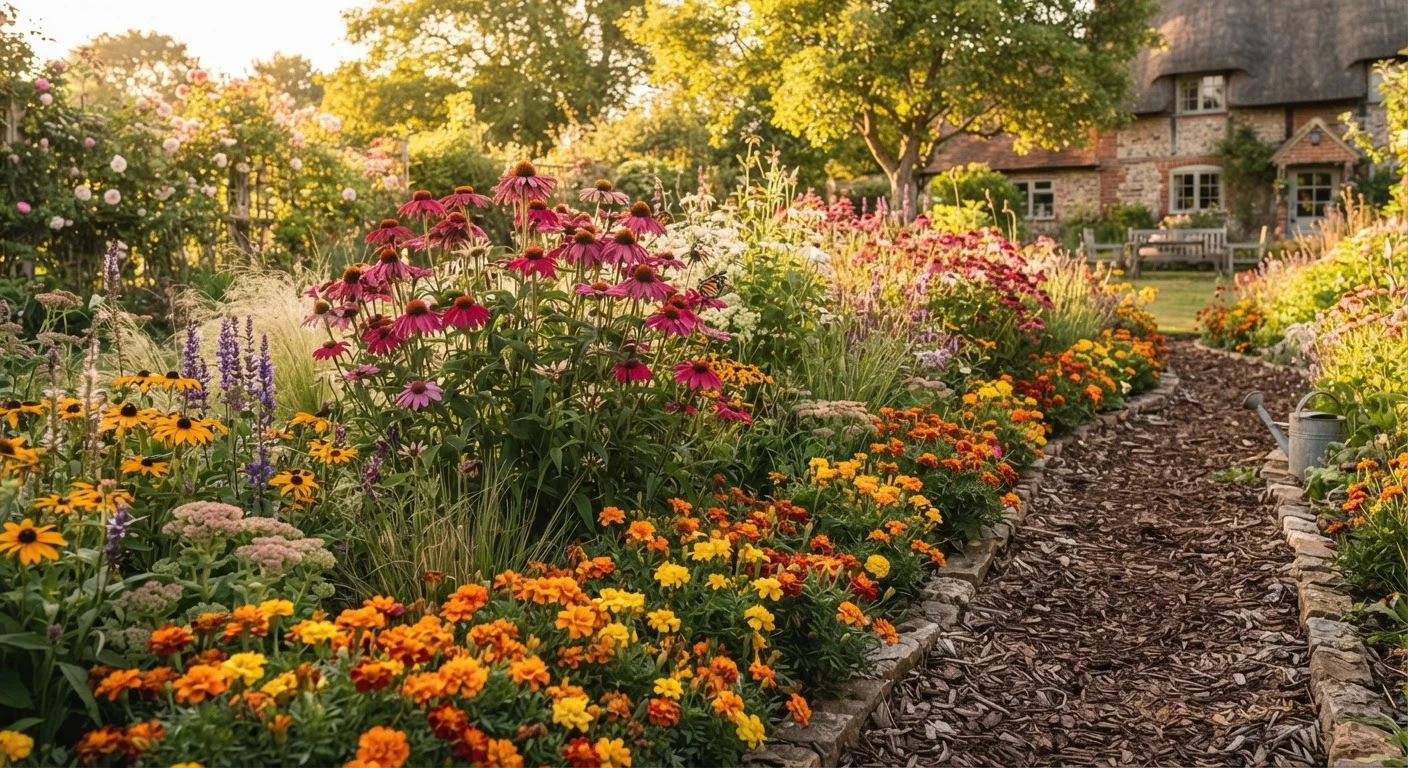
The most effective home gardens treat perennials as the skeleton and annuals as the flesh. Start by selecting perennials that bloom in succession across the season — early bulbs and peonies in spring, coneflowers and black-eyed Susans in summer, sedums and asters in fall. This creates a reliable, repeating color calendar that anchors your yard.
Then use annuals to fill the gaps between those bloom windows or to add density in the first year or two while perennials establish. Zinnias, petunias, and impatiens are workhorses that keep containers and border edges vivid from late spring through frost.
Start Small, Then Expand
New gardeners often overbuy in their first season and feel overwhelmed by the upkeep. Start with one or two well-prepared beds rather than transforming your entire yard at once. As perennials establish and multiply over two to three seasons, you'll have free divisions to fill new areas without significant additional cost.
Consider native perennials as a practical starting point. They're adapted to regional soil and rainfall patterns, often require less supplemental watering, and support local pollinators — a meaningful ecological benefit alongside the aesthetic one.
When planning beds, think in drifts rather than single plants. Three to five plants of one species read as intentional; one plant of many different species can look cluttered. This principle matters more for perennials, which grow and spread, than for annuals planted fresh each year.
Practical Tips for Getting Started
If you're starting from scratch, a 60/40 ratio — sixty percent perennials, forty percent annuals — gives you a resilient base with enough flexibility to experiment each season. Adjust over time as you learn what thrives in your specific conditions.
- Prepare soil thoroughly the first year. Perennials live in the same spot for years, so improving drainage and organic matter upfront pays dividends long-term. See raised beds vs. in-ground planting if you're deciding how to structure your beds.
- Divide perennials every three to four years. Most clump-forming perennials — hostas, daylilies, coneflowers — benefit from division. It keeps plants vigorous and gives you free plants to expand beds or share.
- Plant annuals after your last frost date. This varies significantly by region. Planting too early risks loss; waiting too long shortens your bloom season.
- Deadhead annuals consistently. Removing spent flowers prevents seed set and keeps plants blooming. Most perennials benefit from deadheading too, though some, like coneflowers, produce seed heads that feed birds in fall and winter.
A well-designed garden becomes easier to manage each year, not harder. That's the core promise of building around perennials — and it's one that annuals, for all their brilliance, simply can't match on their own.