
Whole Foods vs. Processed Foods: What the Difference Really Means for Your Diet

Key Takeaways
Option A
Whole Foods
Foods as close to their natural state as possible.
Best for: People looking to maximize nutrient density and minimize additives in their everyday diet.
Option B
Processed Foods
Foods altered from their original form to varying degrees.
Best for: Understanding the wide spectrum of food modification — from minimally processed staples to ultra-processed convenience items.
If you want to maximize fiber and micronutrient intake
Whole Foods
Whole foods retain their natural fiber, vitamins, and minerals largely intact, making them the most nutrient-dense foundation for an everyday diet.
If you need affordable, time-saving staples without sacrificing much nutrition
Processed Foods
Minimally processed options like canned beans, frozen vegetables, and plain yogurt offer solid nutrition with added convenience and often lower cost.
If you are managing sodium, sugar, or calorie intake
Whole Foods
Whole and minimally processed foods generally contain far less added sodium and sugar than ultra-processed alternatives, giving you more control over intake.
If you are building a practical, sustainable long-term eating pattern
Whole Foods
Research consistently links diets centered on whole and minimally processed foods with better long-term health outcomes across multiple population studies.
Defining the Terms: What 'Whole' and 'Processed' Actually Mean
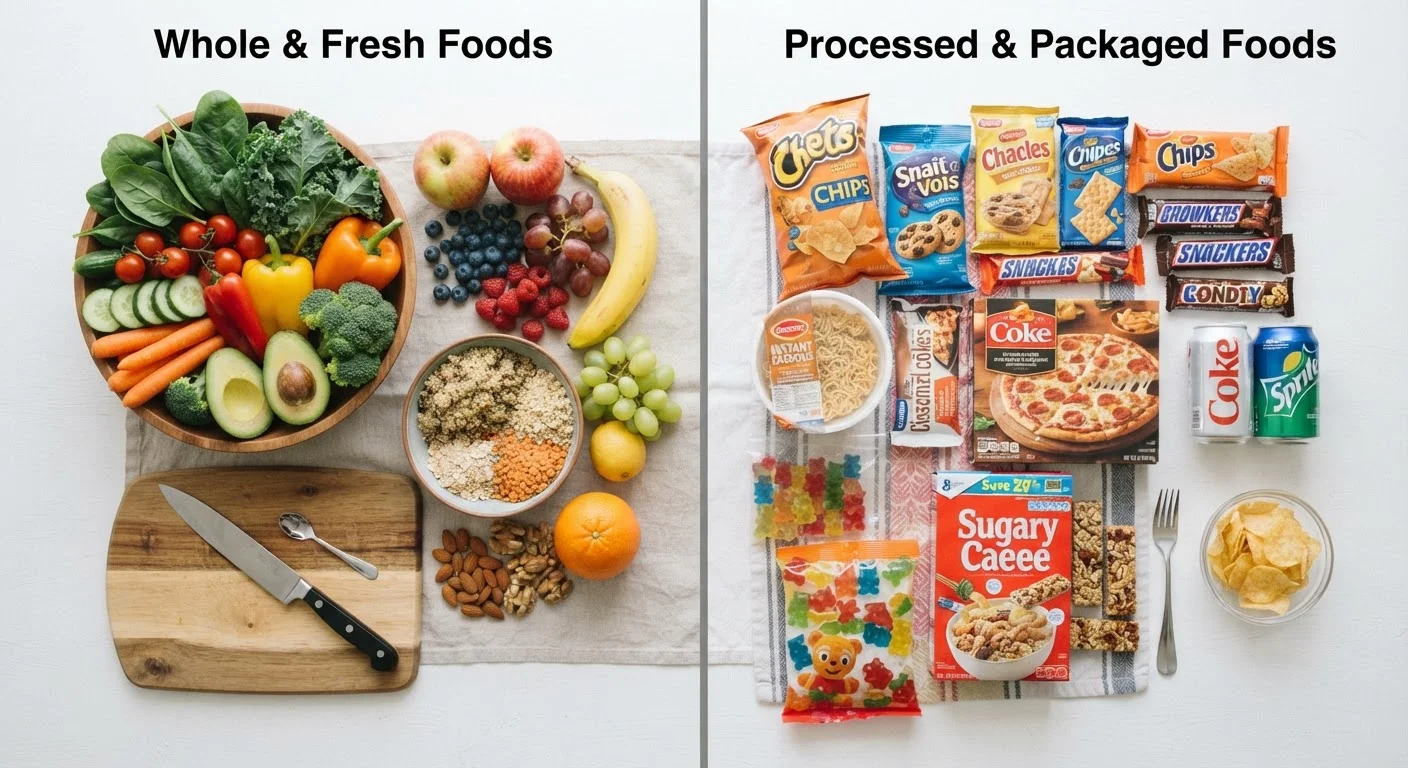
The phrase whole foods refers to foods that are eaten in — or very close to — their natural form, with little to no industrial alteration. Think fresh apples, dried lentils, plain oats, or a raw chicken breast. Nothing has been added or removed in any meaningful way.
Processed foods, on the other hand, cover an enormous range. The term simply means a food has been changed from its raw state in some way — which includes actions as basic as pasteurizing milk, freezing peas, or adding salt to nuts. Most foods people eat daily have undergone at least some processing.
Nutrition researchers often use a classification system called NOVA, which groups foods into four categories: unprocessed or minimally processed foods, culinary ingredients (like oils and flours), processed foods, and ultra-processed foods. This framework helps make sense of why frozen broccoli and a packaged snack cake are technically both "processed" yet behave very differently in the body. Reading nutrition labels is one practical skill that helps you identify where a product sits on this spectrum.
How Processing Affects Nutritional Quality
The degree of processing matters far more than the simple fact that a food was processed at all. Here is how nutritional content typically shifts across the spectrum:
- Fiber: Refining grains — such as turning whole wheat into white flour — strips away the bran and germ, removing most of the fiber and many B vitamins.
- Added sugars and sodium: Ultra-processed products frequently contain substantial amounts of both to enhance flavor and shelf life. Understanding added versus natural sugars is essential context here.
- Micronutrients: Heat, light exposure, and certain processing methods can reduce levels of vitamins like C and B-complex vitamins. Manufacturers sometimes add synthetic versions back in, a process called fortification.
- Additives: Preservatives, emulsifiers, artificial colors, and flavor enhancers appear almost exclusively in processed and ultra-processed products. Research on their long-term effects is still emerging and should not be overstated.
| Criterion | Whole Foods | Ultra-Processed Foods |
|---|---|---|
| Fiber content | Naturally high | Often very low |
| Added sugars | None or negligible | Frequently high |
| Sodium levels | Naturally low | Often elevated |
| Micronutrient retention | High | Variable; often fortified |
| Additives and preservatives | None | Common |
| Convenience and shelf life | Limited shelf life | Long shelf life |
| Cost per serving | Variable; can be higher | Often lower |
Minimally processed foods — plain frozen vegetables, canned tomatoes with no added salt, unsweetened nut butters — often retain most of their nutritional value and can be practical building blocks of a healthy diet.
What the Evidence Actually Says
A substantial body of observational research links high consumption of ultra-processed foods with elevated risks of certain chronic conditions, including cardiovascular disease and type 2 diabetes. However, it is important to note that observational studies cannot establish direct causation, and diet is just one factor among many that influence health outcomes.
57%
Share of US calories from ultra-processed foods
A nationally representative study published in the BMJ estimated that ultra-processed foods account for more than half of calories consumed by US adults.
4x
Difference in fiber: whole grain vs. refined grain
Whole grains like oats and brown rice can contain roughly four times the dietary fiber of their refined-grain equivalents, according to USDA nutrient data.
What research does consistently support is that overall dietary patterns matter more than any single food choice. Diets rich in vegetables, whole grains, legumes, and lean proteins — regardless of minor processing — tend to be associated with better health markers across large populations. Eating patterns that show up consistently in healthy diet research provides a broader look at this evidence.
If you are comparing protein choices within this framework, protein sources side by side covers how animal and plant options compare in practical terms.
Minimally Processed Foods Are Not the Enemy
Canned beans, plain frozen vegetables, and pasteurized dairy are all technically processed, yet they remain nutritious and accessible options. The concern in nutrition research centers primarily on ultra-processed products — those with long ingredient lists full of additives — not on every food that has been altered from its raw state. A balanced approach treats minimally processed foods as useful allies, not foods to avoid.
This article is for general informational and educational purposes only and is not a substitute for professional medical or dietary advice. Consult a qualified healthcare professional or registered dietitian for guidance tailored to your individual needs.