

Key Takeaways
Cabin Social Dynamics
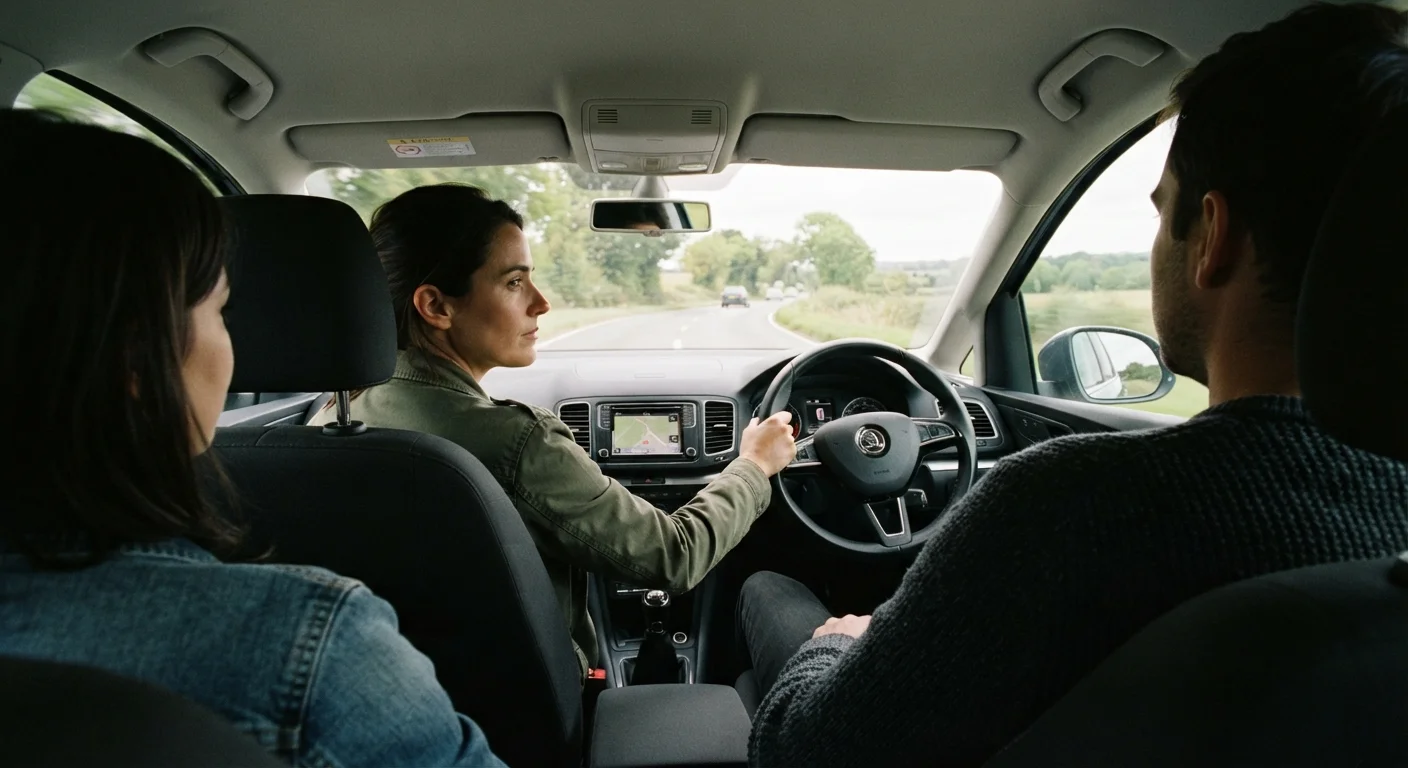
Cabin social dynamics refers to how the presence and behavior of passengers influences a driver's attention, decisions, and risk-taking while behind the wheel. It covers everything from conversation and noise levels to social pressure and emotional atmosphere inside the vehicle. Research consistently shows that these dynamics can either reduce or increase crash risk depending on who is in the car and how they interact.
Studies in traffic psychology distinguish between cognitive distraction (mental load from conversation) and social influence (peer pressure affecting speed and gap acceptance), both of which operate independently of manual distractions like phone use.
The Passenger Effect: Two Sides of the Same Coin
Most drivers think of passengers as simply along for the ride — but the people in your cabin actively shape how you drive. The relationship between passengers and driver safety is not straightforward: the same car full of people can make a trip safer or more hazardous depending on age, relationship dynamics, and what's happening inside the vehicle.
Traffic safety researchers have studied this for decades. The broad finding is that the passenger effect cuts both ways. For experienced adult drivers, having a calm, attentive passenger often correlates with more careful behavior. For newer or younger drivers, passengers — particularly peers — are reliably associated with elevated crash risk.
Understanding why these patterns exist is more useful than simply being told "passengers are distracting." The mechanisms are social, cognitive, and emotional — and they're worth knowing.
3x
Teen crash risk increase with peer passengers
Research published in traffic safety literature indicates that teenage drivers' crash risk approximately triples when carrying multiple peer passengers compared to driving alone.
4x
Cognitive impairment from phone vs. passenger talk
Studies in cognitive distraction research suggest hands-free phone conversations create significantly greater cognitive load than equivalent in-person passenger conversations, in part because phone callers lack shared road context.
~50%
Fatal teen crashes involving passengers
The National Highway Traffic Safety Administration (NHTSA) has reported that a substantial share of fatal crashes involving teen drivers occur when passengers are present in the vehicle.
Why Teen Drivers Are Especially Vulnerable
The connection between teenage drivers and passenger-related crash risk is one of the more robust findings in traffic safety research. Studies have repeatedly shown that crash rates for teen drivers increase with the number of peer passengers in the vehicle. The risk is not just about distraction — it's about social dynamics.
When teens drive with friends, several pressures converge simultaneously. There's a documented tendency to drive faster, follow other vehicles more closely, and take gaps in traffic that a solo driver would decline. These behaviors aren't necessarily conscious decisions. They emerge from the social environment: the desire to appear competent, cool, or in control in front of peers.
The early months of independent driving already carry elevated risk due to limited experience. Adding peer passengers compounds that vulnerability significantly. Many states address this through graduated driver licensing (GDL) laws that restrict the number of passengers a new driver can carry — a policy approach backed by crash data.
Parents can reinforce this by having direct conversations about passenger limits, not just legal ones, but personal ones the driver sets for themselves.
Adult Passengers: When Company Improves Safety
The passenger-risk story looks quite different for experienced adult drivers. Research suggests that having an adult passenger — particularly one who is also a driver — can function as a mild safety buffer. Adults in the passenger seat tend to share situational awareness with the driver: they notice the car braking ahead, they instinctively brace before a turn, and they often naturally reduce conversation when the road gets complex.
This is meaningfully different from a phone conversation. When you're talking hands-free with someone who isn't in the car, that person has no shared context with the road environment. They keep talking through the tricky merge or the sudden stop ahead. A co-present passenger, almost automatically, does not.
That distinction matters because it reframes the common comparison between phone use and passenger conversation. Phone-related distraction patterns and in-cabin conversation are genuinely different phenomena, even if both involve talking while driving. The social and spatial presence of a passenger changes how the interaction works.
Use Your Passenger as a Co-Pilot
An alert adult passenger can genuinely improve safety by watching for hazards you might miss, helping with navigation, or simply noting when your speed is climbing. Ask them directly — most passengers are happy to help when given a clear role. This works best when framed as a shared responsibility rather than a sign that you're struggling as a driver.
Subtle Influences: Speed, Spacing, and Decision-Making
Even when no one is saying a word, passengers influence driver behavior. Research in behavioral traffic psychology has identified several subtle mechanisms at work.
- Speed creep: Drivers tend to travel slightly faster with passengers than alone, even controlling for road type and trip purpose.
- Following distance compression: Social comfort in the cabin can reduce the mental urgency that keeps drivers from following too closely.
- Gap acceptance changes: Drivers are more likely to accept smaller gaps when merging or turning if passengers appear impatient or the social energy in the car is hurried.
These patterns reflect a core principle: driving is not a purely technical task. It happens inside a social context, and that context shapes behavior in ways drivers rarely notice in the moment. Habits that erode awareness often develop through exactly this kind of gradual, socially-influenced drift.
Practical Habits for Managing Cabin Dynamics
Awareness of these dynamics is the first and most important step. Once you recognize that your cabin environment actively influences your driving, you can make deliberate choices about it.
A few practical habits make a real difference:
- Set expectations before you leave: Letting passengers know that you may need quiet during complex driving situations — merging onto a busy highway, navigating unfamiliar roads, driving in poor visibility — is reasonable and effective. This is especially useful with younger passengers or in group settings.
- Control audio deliberately: Keeping music or podcasts at a volume where you can still hear sirens, horns, and road sounds is a simple but meaningful safeguard. It also reduces cognitive load during demanding driving.
- Recognize emotionally charged conversations: Conflict, strong emotion, or stressful discussions in the cabin can impair attention just as much as a loud audio distraction. It's acceptable to ask to continue a difficult conversation after the trip.
- Use passengers as co-pilots: An attentive adult passenger can watch for hazards, track navigation, or monitor blind spots. Framing it as a shared responsibility rather than a burden makes it easier to ask.
Managing your cabin environment isn't about controlling other people — it's about recognizing that driving is a task that deserves the full resources of the driver's attention, regardless of who else is along for the ride. Conditions outside the car also shape risk, and being aware of both your cabin and your environment — particularly in challenging weather — gives you the best margin of safety. See how weather conditions change vehicle handling for more on external risk factors.