

Key Takeaways
Why Car Maintenance Myths Stick Around
Car maintenance advice has a long memory. Tips that made sense for carburetored engines from decades past still circulate as gospel truth — passed down from parents, shared in parking lots, and reinforced by service shops with a financial interest in extra work. The result: millions of drivers spending money on services they don't need, or worse, following habits that quietly damage their vehicles.
Separating myth from fact isn't about being contrarian. It's about making better decisions with your time and money. Whether you drive a brand-new sedan or a high-mileage workhorse, understanding what your car actually needs — based on its design, not automotive folklore — is the foundation of smart ownership. For new drivers especially, building correct habits early pays dividends for years. See our guide for new drivers for a solid starting point.
Myth
You need to change your oil every 3,000 miles, no exceptions.
Fact
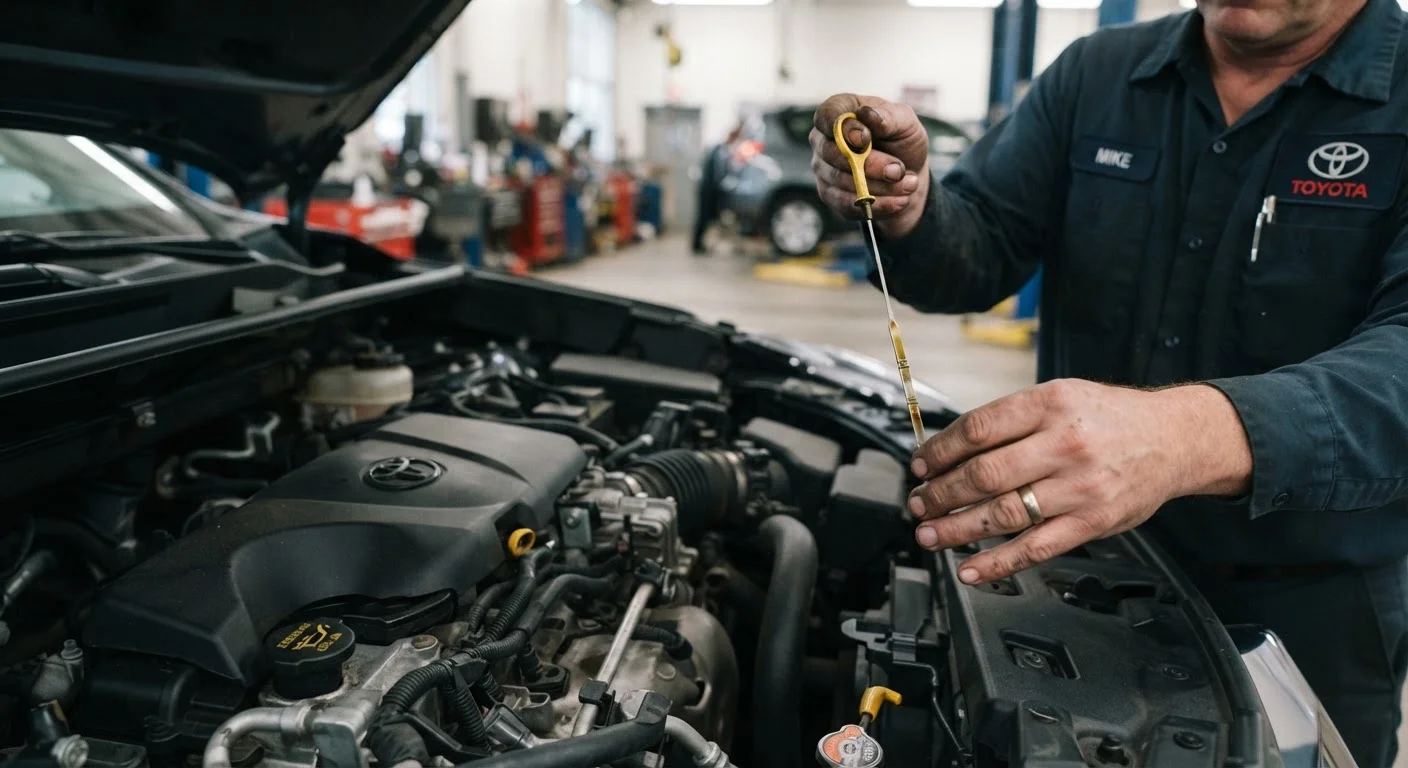
Most modern vehicles with conventional oil can go 5,000 to 7,500 miles between changes, and those using full synthetic oil often 10,000 miles or more — per manufacturer specifications.
The 3,000-mile rule made sense for older engines and older oil formulations. Today's motor oils and engine tolerances have advanced considerably. Your owner's manual specifies the correct interval for your specific vehicle. Following it — rather than the sticker a quick-lube shop puts on your windshield — is the accurate approach. For a deeper dive into oil types and intervals, see our engine oil guide.
Myth
You should let your engine idle for several minutes to warm it up before driving in cold weather.
Fact
Modern fuel-injected engines reach optimal operating temperature faster by driving gently than by idling, and extended idling can cause oil dilution and carbon buildup.
Extended cold-weather idling was sound advice for carbureted engines, which needed time to stabilize fuel mixture. Fuel-injected engines — standard since the late 1980s — rely on coolant temperature sensors to manage fuel delivery automatically. A brief 30-second idle to let oil circulate, followed by gentle driving, is all that's needed. Prolonged idling wastes fuel and can deposit unburned fuel residue in the engine over time.
Myth
Premium gasoline is better for your engine, even if your car doesn't require it.
Fact
Using premium fuel in an engine designed for regular provides no performance or longevity benefit — you're simply paying more for no gain.
Premium fuel has a higher octane rating, which resists engine knock under high compression. Engines specifically engineered to require it — typically high-performance or turbocharged — genuinely need it. Engines designed for regular-grade fuel have no mechanism to take advantage of higher octane. Your owner's manual will say "required" or "recommended" for premium; if it says regular, that's what the engine is calibrated for. Using premium in those engines is money spent for no engineering reason.
Myth
You must use the dealership for all maintenance or your warranty is voided.
Fact
Under federal law (the Magnuson-Moss Warranty Act), manufacturers generally cannot require you to use dealer service for routine maintenance to keep your warranty valid, as long as the work is performed correctly.
This is one of the most persistent myths in car ownership, and it often keeps drivers paying dealership rates for routine work. You can have your oil changed, tires rotated, and filters replaced at any qualified shop or even do some tasks yourself — provided you keep records showing the work was done with appropriate parts and fluids. The DIY vs. shop guide walks through which tasks lend themselves to each approach. Always consult your warranty documentation and, if in doubt, a legal or consumer rights resource for your specific situation.
Myth
Tire pressure doesn't matter much as long as the tires look inflated.
Fact
A tire can be significantly underinflated and still appear full to the eye. Incorrect pressure affects fuel economy, handling, and tire wear — and can increase blowout risk.
A tire can lose a substantial portion of its recommended pressure and still look nearly normal from the outside. The correct pressure for your vehicle is on a sticker inside the driver's door jamb — not on the tire sidewall, which shows maximum pressure. Checking pressure with a gauge monthly and before long trips takes under five minutes and directly affects safety and fuel costs. Temperature drops also reduce tire pressure, making cold-season checks especially important.
Myth
If the car is running fine, you don't need to follow a maintenance schedule.
Fact
Many maintenance items — coolant condition, brake fluid moisture content, transmission fluid degradation — show no outward symptoms until they cause a breakdown or costly failure.
"Running fine" describes what you can perceive from the driver's seat. It doesn't reflect the condition of fluids, belts, or components that degrade silently over time. A timing belt failure, for instance, can cause catastrophic engine damage with no prior warning. Scheduled maintenance catches wear before it becomes failure. This is particularly relevant for high-mileage vehicles, where the margin for neglect is narrower.
What Your Owner's Manual Is Actually Telling You
The single most underused resource in car maintenance is sitting in your glove box right now. Your owner's manual specifies oil change intervals, fluid types, tire rotation schedules, and service milestones based on the actual engineering of your vehicle — not industry averages or marketing. Yet most drivers never open it.
Following the manual's maintenance schedule protects your warranty, keeps your car running as designed, and helps you avoid paying for services before they're genuinely needed. When a shop recommends a service not in your schedule, it's worth asking why. Some recommendations are legitimate; others are routine upsells. Skipping necessary maintenance, however, carries real costs — as detailed in our piece on the hidden costs of skipping routine maintenance.
5,000–10,000 mi
Typical modern oil change interval
Most vehicle manufacturer manuals specify oil change intervals well beyond the 3,000-mile rule, varying by oil type and driving conditions.
~26%
U.S. vehicles with significantly underinflated tires
The National Highway Traffic Safety Administration has estimated that a substantial share of vehicles on U.S. roads are driven with at least one underinflated tire.
If you're managing an older vehicle, the calculus can shift. Keeping a high-mileage car reliable often means sticking closer to conservative service intervals — but it still starts with knowing what the manual says, not what a myth dictates.