

Key Takeaways
Start here
Why a Minimal Kit Actually Works Better
Next
The Core Products Every Beginner Needs
Then
Tools That Make a Real Difference
Apply it
How to Apply Each Product Simply
Keep going
Building Confidence and Going Further
Why a Minimal Kit Actually Works Better
Walking into a beauty store as a total beginner can feel like being dropped into a foreign country with no map. Dozens of product categories, hundreds of shades, layered application steps — it's a lot. The good news: a small, well-chosen collection of products genuinely outperforms a cluttered one, especially when you're still learning.
A minimal kit keeps your routine manageable, reduces decision fatigue, and helps you actually understand what each product does. When something goes wrong (and it will, because that's just how learning works), fewer variables make it easier to figure out why. Think of your first kit as a starting vocabulary, not the complete dictionary.
Before any product goes on your face, your skin prep matters enormously. A solid pre-makeup checklist — cleanser, moisturizer, primer in the right order — sets everything else up for success.
Non-comedogenic
A label indicating that a product is formulated to avoid blocking pores — useful for anyone prone to breakouts or oily skin.
Setting powder
A fine powder applied over liquid or cream base products to help them stay in place longer and reduce shine.
Primer
A product applied after moisturizer and before foundation that helps makeup adhere more evenly and last longer throughout the day.
Coverage
How much a base product conceals the skin's natural texture and discoloration — ranging from sheer (very light) to full (more opaque).
Blending
The technique of working a product into the skin so there are no visible edges or harsh lines between covered and uncovered areas.
The Core Products Every Beginner Needs
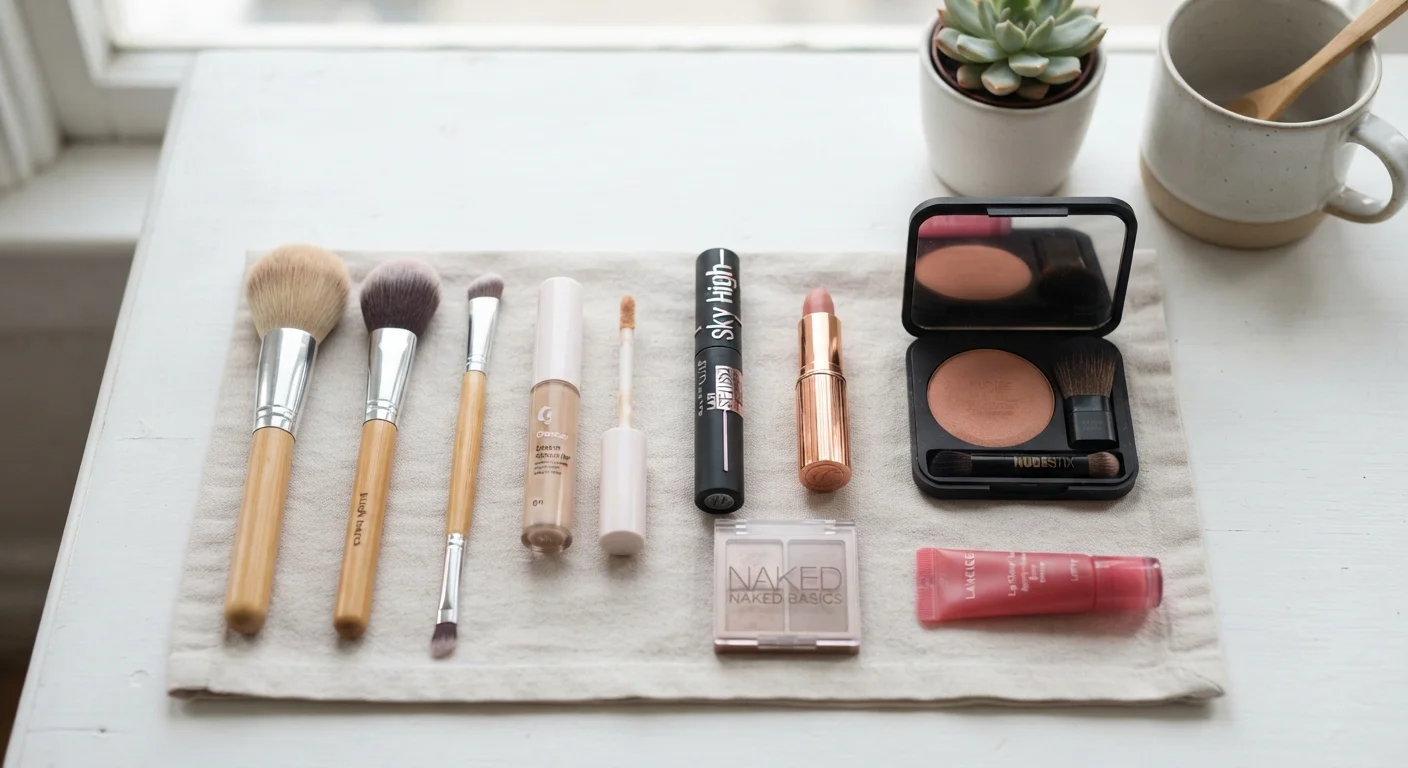
These six product types form a capable starter kit for most skin tones and skin types:
- Concealer: Covers blemishes, dark circles, and uneven spots. A creamy formula blends easily with a fingertip or sponge.
- Tinted moisturizer or light foundation: Evens out your overall skin tone without feeling heavy. Lighter coverage is more forgiving while you're learning to blend.
- Setting powder: A translucent powder prevents your base from sliding around, especially around the nose and under the eyes.
- Mascara: Opens up the eyes with very little technique required. Black or brown-black works for most looks.
- Blush or bronzer: A sweep of blush adds warmth and dimension. Cream formulas tend to be more beginner-friendly than powder.
- Tinted lip product: A balm with a hint of color or a sheer lipstick is low-maintenance and completes a look without precision application.
When choosing products, pay attention to your skin type. Oily skin generally does better with lightweight, non-comedogenic (won't clog pores) formulas. Dry skin benefits from hydrating bases. If you're evaluating options, our practical buying tips can help you avoid common purchasing mistakes.
Match Products to Your Skin Type First
Before selecting a shade, check whether a formula is designed for dry, oily, or combination skin — this detail affects both how it feels and how long it lasts. Cream blushes tend to suit drier skin better, while powder formulas often work well for oilier complexions. Starting with the right formula for your skin type reduces a lot of early frustration.
Tools That Make a Real Difference
You don't need a professional brush roll to get started. A short list of tools covers almost everything in a beginner's kit:
- Makeup sponge (damp): One of the most versatile beginner tools. Dampen it before use and press — not drag — foundation or concealer into skin for a seamless finish.
- Fluffy powder brush: Sweeps setting powder and blush lightly across the face without disturbing the base underneath.
- Small eyeshadow brush: Packs color onto the lid and is easy to control. For blending eyeshadow with minimal tools, two or three brushes are genuinely enough.
- Clean fingertips: Genuinely underrated. Warmth from your fingers melts cream products into skin naturally.
Keep tools clean — a weekly rinse with mild soap prevents product buildup and keeps application smooth.
How to Apply Each Product Simply
Order matters in makeup. Follow this sequence and each product will work with the ones around it rather than against them:
- Moisturize and prime — let your skin absorb moisture fully before applying anything else.
- Concealer — dab onto blemishes or under eyes, then press gently to blend edges.
- Tinted moisturizer or foundation — apply to the center of the face and blend outward toward the hairline and jaw.
- Setting powder — press lightly onto areas that tend to get shiny (T-zone, under eyes).
- Blush or bronzer — smile softly and sweep blush onto the apples of the cheeks; dust bronzer along the temples and jawline for warmth.
- Eye makeup — mascara alone transforms the eye area; add a neutral eyeshadow if you'd like a little more definition.
- Lip product — finish with your tinted balm or sheer lipstick.
Practicing the same sequence consistently helps it become muscle memory faster than switching up the order each time.
Less Product Is Usually More
A common beginner mistake is applying too much of each product at once. Start with a small amount — you can always add more — because excess product is harder to correct once it's on your skin. Thin, buildable layers give you more control and a more natural result.
Building Confidence and Going Further
Getting comfortable with a minimal kit is the most efficient path to actually enjoying makeup. Once these products feel second nature, adding one new item at a time — an eyeliner, a setting spray, a second eyeshadow shade — keeps things exciting without creating chaos.
Good skin underneath your makeup will always make the biggest difference. If your skincare routine is still taking shape, building a simple skincare routine from scratch is the most valuable investment you can make alongside your makeup practice. And if budget is a real consideration, knowing where to focus your skincare spending helps stretch every dollar further.
When you feel ready to adapt your look for different settings — a casual weekend run versus a dinner out — matching your makeup to the occasion is a practical next step. For now, though, keep it simple: a small kit, a consistent routine, and a willingness to practice is everything you need.
Pre-Application Skin Prep Checklist
A step-by-step walkthrough of exactly what your skin needs before foundation goes on — cleanser, moisturizer, primer, and in what order.
Blending Eyeshadow Without a Dozen Brushes
Practical guidance on building a seamless eye look with just two or three brushes, designed specifically for beginners who don't own a full kit.
Occasion Makeup: Matching Your Look to the Setting
Learn how to adjust your makeup intensity for different settings — from a casual errand run to a formal evening event — without overhauling your whole routine.