

Key Takeaways
On Sale
When a retailer labels something 'on sale,' it typically implies the item is temporarily priced below its normal selling price. In practice, 'sale' is a broad, loosely regulated marketing term that can mean anything from a genuine markdown to a price that was briefly inflated just to be 'discounted.' There is no universal legal definition that requires a retailer to prove a price was ever regularly charged before calling something a sale.
The FTC has guidelines discouraging fictitious pricing — advertising a 'former price' that was never genuinely offered — but enforcement is complaint-driven and inconsistent across states.
How Retailers Use the Word 'Sale'
Walk through any store or scroll a retail website and you'll see the word 'sale' applied to everything from a 5% markdown to a 60% clearance cut. Retailers aren't legally required to use the term in a consistent or standardized way, which means the label itself tells you almost nothing about whether the discount is real.
The most common forms of retail sale pricing include:
- Promotional sales: Temporary price reductions tied to a season, holiday, or marketing calendar. The item typically returns to its regular price afterward.
- Clearance: Genuine inventory reduction. The retailer wants the product gone and won't restock it. These tend to reflect steeper, more honest markdowns.
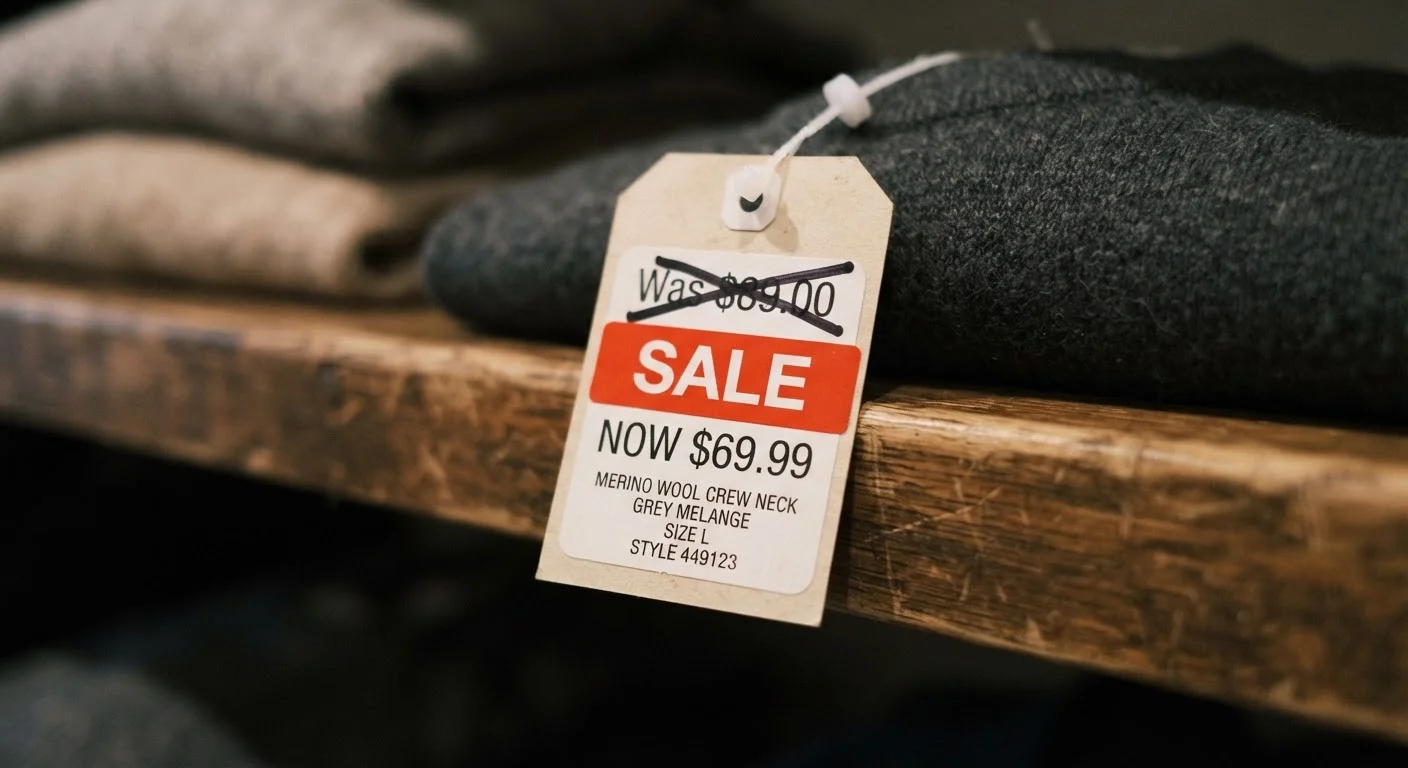
- Reference pricing: The 'was $X, now $Y' format. The 'was' price is only meaningful if it reflected what the item genuinely sold for — not an artificially inflated anchor.
- 'Compare at' pricing: A claim that other retailers charge more. This is sometimes based on a manufacturer's suggested retail price rather than actual market prices.
Understanding which type of sale you're looking at is the first step to evaluating whether the price is worth acting on. For a deeper read on decoding price tags and markdown signals, including color codes and number endings, explore that breakdown separately.
State Laws on Reference Pricing Vary
Several states — including California and New York — have enacted specific regulations requiring that a 'former price' be one at which a meaningful number of sales actually occurred. However, the rules differ and aren't uniformly enforced. Shoppers should not assume that a displayed 'was' price has been verified by any authority.
The Fictitious Pricing Problem
One of the most common tactics behind misleading 'sales' is fictitious pricing — setting an artificially high reference price so the discounted figure looks dramatic by comparison. An item priced at $40 all year might be temporarily listed at $80, then 'marked down' to $50, creating the appearance of a $30 saving when the actual difference from normal is just $10.
The FTC has long-standing guidance discouraging this practice, but because enforcement is complaint-driven and inconsistent across jurisdictions, it remains common. Some states have stricter reference pricing laws than others, but shoppers generally can't rely on regulation alone to protect them.
~87%
Shoppers influenced by sale labels
Consumer behavior research consistently shows that 'sale' framing and reference prices significantly influence purchase likelihood, even when the actual discount is minimal.
Up to 37%
Products with inflated reference prices
Academic research on retail pricing has found that a substantial share of 'sale' reference prices reflect prices the item rarely or never sold at in practice.
The practical defense is price history. Tools that track a product's price over time let you verify whether the 'original' price was ever real. If the item spent most of its history at or near the sale price, the markdown is largely cosmetic. For a full framework on evaluating this, see how to assess a deal using price history and context.
When 'On Sale' Doesn't Mean What You Think
Several common sale formats deserve extra scrutiny:
Perpetual Sales
Some retailers run near-continuous promotions, meaning nothing is ever really at full price. If a store is always having a 'weekend sale' or 'member discount event,' those prices are effectively the regular prices. Treat perpetually promoted prices as the baseline, not a discount from it.
Bundled Discounts
Buy-one-get-one and multi-buy deals create apparent savings but only if you need the quantity. Purchasing three units of something you'll use one of isn't saving money — it's spending more. Buying cheaper isn't the same as saving money — a concept that applies directly to bundle traps.
Manufactured Urgency
Countdown timers and 'today only' labels can be real or fabricated. Many e-commerce platforms reset these timers automatically or apply the same 'limited time' label to evergreen promotions. For a clear-eyed look at when urgency actually signals a genuine opportunity, see signals that a limited-time deal is worth acting on.
How to Evaluate Any Sale Before You Spend
A simple framework helps cut through sale-label noise before you commit to a purchase:
- Verify the reference price. Use a price history tracker to confirm the 'original' price was real and the current price is genuinely lower than typical.
- Compare across retailers. The same item at a different store may be cheaper — or already at the same 'sale' price without the promotional framing.
- Separate need from nudge. Ask whether you would have bought this item this week without the sale label. If not, the urgency is the retailer's, not yours.
- Read the fine print. Some sale items carry altered return policies or final-sale designations that reduce your options if the item doesn't work out.
If you're heading into a major promotional event — a holiday weekend, an annual clearance cycle — the pre-purchase checklist for major sale events offers a structured way to avoid impulse-driven overspending. And if you want to understand your rights when something goes wrong after a sale purchase, the consumer rights hub covers returns, warranties, and fraud protections in detail.
Use Price History Tools Before Any Major Purchase
Free browser extensions and websites allow you to see a product's full price history across major retailers. Before treating a sale price as a deal, check whether that price — or lower — was available in recent months. A few seconds of research can prevent a purchase decision based on an inflated reference price.