

Key Takeaways
Why 'X% Off' Tells You Almost Nothing
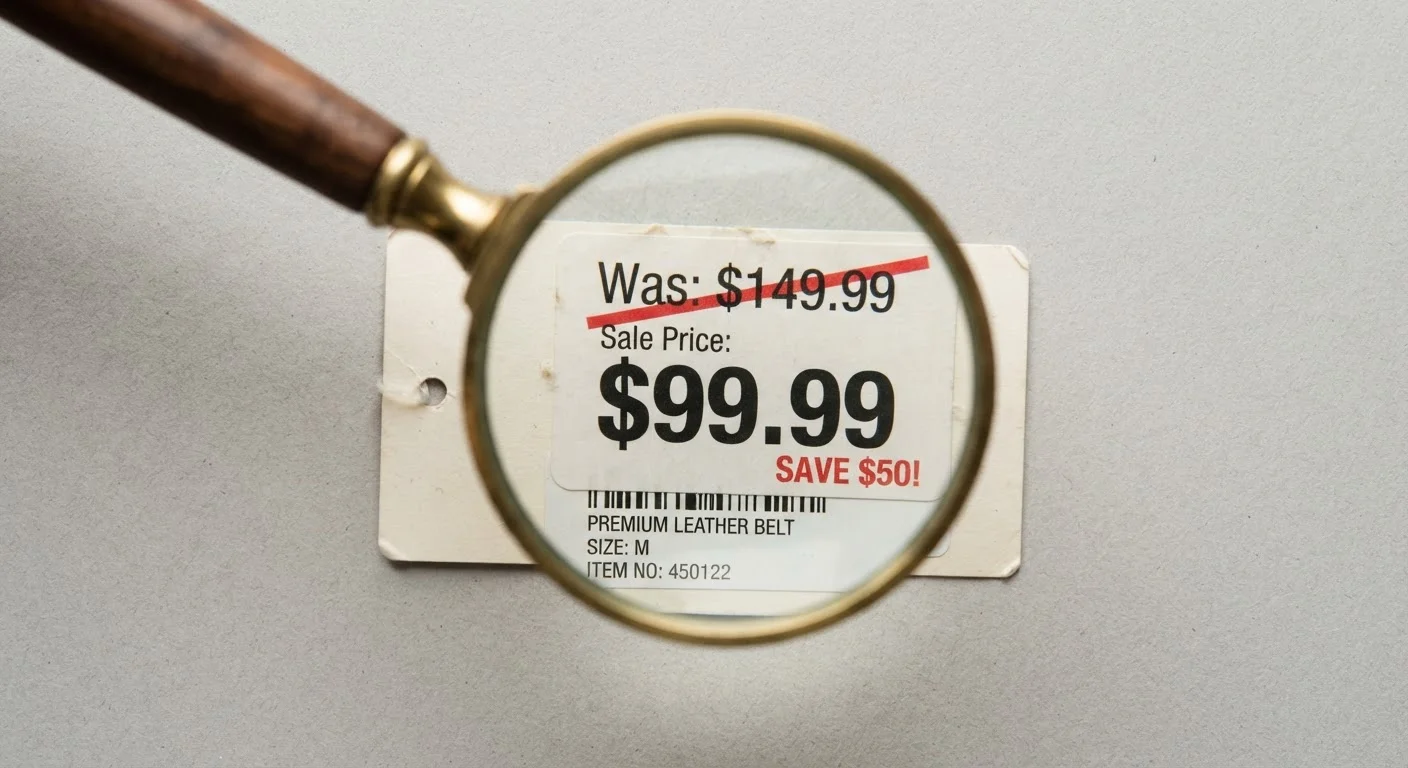
A sign reading '40% off' feels like information. In practice, it's closer to a suggestion. The percentage only means something if the number it's calculated from — the so-called 'original' or 'regular' price — reflects what people actually paid for the item in normal market conditions.
Retailers are legally permitted in most US states to use a reference price as long as it was offered in good faith for a reasonable period, but the specifics vary widely by jurisdiction. A price held for a single week months ago may legally qualify as an 'original' price in some markets. This creates real room for the discount figure to overstate actual savings.
Understanding this gap is the foundation of smart deal evaluation. As the full breakdown of what 'on sale' actually means explains, the word 'sale' carries no standardized legal definition in US retail. Treating a percentage discount as the starting point of your analysis — not the conclusion — puts you in control.
Reference Prices Are Not Regulated Uniformly
In the US, rules governing what qualifies as a 'regular' or 'original' price for advertising purposes vary significantly by state, and federal guidelines set a relatively low bar. This means a displayed discount percentage can be technically legal while still being misleading. Always verify against independent price history rather than trusting the retailer's stated reference price.
How Retailers Set Reference Prices
There are several common methods retailers use to establish a 'compare at' or 'was' price, and knowing them helps you spot when a reference price inflates the apparent savings.
- Manufacturer's Suggested Retail Price (MSRP): This is a wholesale pricing guideline, not a reflection of what consumers typically pay. Products sold consistently below MSRP can still display MSRP as the reference price.
- Temporary high-price anchoring: A product is listed at an elevated price briefly before a planned sale, establishing a technical 'original' price without ever selling meaningfully at that level.
- Cross-retailer comparisons: 'Compare at $X' may reference a competitor's price — one that may itself be inflated or for a slightly different product configuration.
None of these practices are necessarily illegal, and not all retailers engage in them. But they do mean the stated discount percentage can't be taken at face value without additional verification.
Using Price History to Verify a Deal
Price history tools track how a product's price has moved over time at a specific retailer or across multiple retailers. They provide the ground truth that a sale tag cannot.
Several browser extensions and websites aggregate this data for major US online retailers, showing charts of price fluctuations over 30, 90, or 365-day windows. Before purchasing during any promotion, check whether the current 'sale' price is actually lower than the product's typical selling price over recent months.
Set a price alert for any item you plan to buy within the next 30–60 days, then check whether a sale event actually beats your alert threshold — most don't.
Price history tools consistently show that many 'sale event' prices match or exceed the item's typical selling price over the prior 90 days, making alerts a more reliable savings mechanism than reactive sale shopping.
When you see a price history chart with a sharp spike immediately before a sale window, treat the entire promotion skeptically — the real discount is likely smaller than advertised.
Pre-sale price increases are a documented retail pricing tactic that inflates percentage-off figures without delivering proportional savings to the consumer.
Key things to look for in price history data:
- Floor price: The lowest price the item has sold for historically. If the current sale price is above the historical floor, there may be a better opportunity ahead.
- Average price: The typical price over a 90-day window is often a more honest 'regular' price than the stated reference.
- Pre-sale spike: A sudden price increase immediately before a sale period is a red flag. It may indicate the 'discount' is artificially constructed.
Before checking out during a major sale event, reviewing price history is one of the most useful steps in the pre-purchase checklist for sale events.
Timing: When Prices Actually Drop
Genuine price reductions tend to follow predictable patterns tied to product category, retail calendar, and inventory cycles. Recognizing these patterns helps you anticipate real deals rather than react to manufactured urgency.
General patterns worth tracking:
- End-of-season clearance: Apparel, outdoor furniture, and seasonal goods are reliably marked down as retailers clear inventory — typically after peak season, not during it.
- Model-year transitions: Consumer electronics, appliances, and vehicles often see real price drops when newer models are announced, as retailers and dealers reduce prior-generation inventory.
- Post-holiday windows: The weeks following major gift-giving holidays often see genuine markdowns on unsold stock, not just promoted sale events.
- Category-specific cycles: Bedding, cookware, and tools have documented seasonal sale periods that tend to reflect genuine inventory clearing rather than promotional theater.
This is distinct from high-pressure 'limited time' framing. Knowing the difference between seasonal timing and artificial urgency is addressed in depth in the article on signals that distinguish genuine urgency from manufactured pressure.
Context: The Questions That Complete the Picture
Price history and timing are two legs of deal evaluation. The third is market context — the broader environment that tells you whether a price is genuinely competitive.
~33%
Sale prices that beat historical low
Analysis of major US retail sale events has indicated that roughly one-third or fewer of 'sale' prices represent a genuine historical low for the item.
90 days
Recommended price history window
Consumer advocates generally recommend reviewing at least 90 days of price history before treating a sale price as genuinely discounted.
Useful contextual questions to ask before purchasing:
- Is this the item you actually need?
- A low price on the wrong product isn't a deal. As covered in why buying cheaper isn't the same as saving money, cost-per-use and fit-for-purpose matter more than sticker price.
- What do comparable products cost?
- Checking a category across multiple retailers — not just the one running the sale — establishes whether a price is genuinely below market or just below that specific retailer's inflated anchor.
- What's driving the discount?
- Overstock, model changeover, minor cosmetic damage, and discontinued items are all legitimate reasons for deep discounts. Promotional calendar events, by contrast, often produce shallower actual savings than advertised.
- What's the retailer's pricing reputation?
- Some retailers operate on a near-permanent 'sale' model. Knowing a retailer's typical pricing behavior helps calibrate how much any given discount claim means.
Putting It All Together
A real deal satisfies three conditions simultaneously: the reference price is credible, the current price is meaningfully below typical market pricing (confirmed by history), and the item fits a genuine need at this moment.
When you apply this framework, the evaluation process becomes straightforward. Check price history before acting on any sale promotion. Understand what category timing suggests about whether better pricing is likely soon. And situate the price within the broader market rather than treating the retailer's own 'original' price as the benchmark.
The Buying Smart hub collects the practical tools and frameworks that support this kind of systematic evaluation across product categories. Developing the habit of asking these questions — rather than responding to discount percentages — is what separates genuine savings from the feeling of savings.
This article is for general informational purposes only and does not constitute financial or legal advice. Pricing practices and consumer protection laws vary by state and retailer. Consult applicable state consumer protection resources for guidance specific to your situation.