

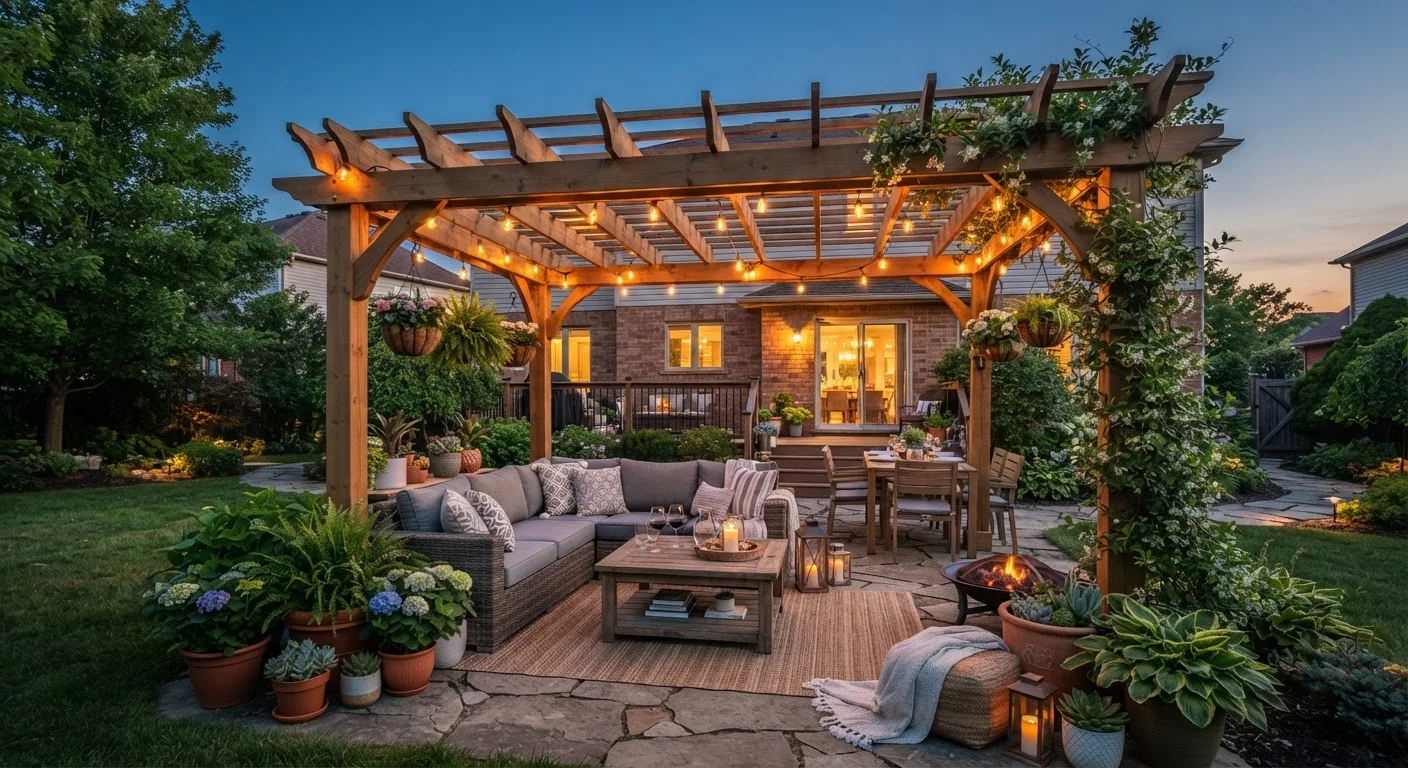
Key Takeaways
Why Most Backyards Go Unused
The pattern is familiar: a homeowner invests in patio furniture, arranges it optimistically in spring, and by July the chairs sit empty under blazing sun while everyone stays inside. The problem is rarely a lack of space or budget — it's a failure to design around actual behavior.
Outdoor spaces become habitual when they solve real discomforts: too-hot afternoons, no place to set a drink, nowhere to sit that doesn't feel exposed. Addressing those friction points is the foundation of any outdoor living plan that gets regular use. Aesthetics follow function — not the other way around.
79%
Homeowners who want more outdoor living use
According to an American Institute of Architects survey, outdoor living spaces consistently rank among the most requested home features.
36°F
Temperature difference shade can create
Research from the U.S. Department of Energy indicates shaded surfaces can be significantly cooler than unshaded ones on hot summer days.
3–4 hrs
Extended usable time with good lighting
Outdoor lighting is widely cited by landscape designers as the single feature that most extends daily use of a backyard space.
Zoning Your Space for How You Actually Live
Before choosing a single material or piece of furniture, map how you intend to use the space. Most active backyards serve two or three distinct functions: dining, lounging, and a play or activity zone. Treating the entire yard as one undifferentiated area is a common planning mistake.
Start by sketching rough zones based on your household's routines. A dining area generally benefits from proximity to the kitchen door. A lounging zone works best away from the primary traffic path. Children's play areas should maintain sightlines from the main seating space. Even in modest yards, a low planter edge, a change in surface material, or a simple gravel border can visually define zones without construction.
The same principles that interior designers use to build layered, functional rooms apply outdoors. See how those ideas translate indoors in our guide to building depth in any space.
Before buying anything, spend a full weekend observing your yard: note where sun and shadow fall at different hours, where wind comes from, and which areas feel naturally sheltered. That observation is worth more than any design plan.
Most outdoor spaces underperform because they're designed from photographs rather than from lived experience of the specific site's conditions.
Define at least one zone for dining and a separate one for lounging, even if they're close together. The visual separation alone encourages the space to be used for different activities at different times.
Landscape designers consistently find that named, bounded zones see more regular use than open, undifferentiated outdoor areas.
Shade, Shelter, and Climate Comfort
Thermal comfort is the single biggest reason outdoor spaces go unused. Without adequate shade, most Americans will avoid their backyards between late morning and early evening for much of the summer. Shade planning should begin with sun tracking: note where direct sun falls in your seating areas between 10 a.m. and 4 p.m., which represents peak heat hours in most regions.
Structural shade options include pergolas (open-lattice overhead frameworks), shade sails (tensioned fabric panels), and solid-roof covered patios. Each has different costs and permit implications — check with your local building department before installing any attached structure, as many jurisdictions require permits for permanent overhead additions.
Natural shade from trees is the most energy-efficient long-term solution. Deciduous trees placed on the west and southwest sides of a seating area block afternoon sun in summer while allowing winter light through bare branches. For faster-growing privacy and wind buffering at the perimeter, consider regionally appropriate native shrubs. Our article on native plants for American home gardens highlights low-maintenance options by region.
Surface Materials: What Goes Underfoot
The ground surface beneath an outdoor living space shapes how the area feels, how much it costs to maintain, and how comfortable it is across seasons. Common options each carry trade-offs worth understanding before committing.
- Concrete pavers: Durable and widely available in varied sizes and finishes. Lighter colors retain less heat than dark concrete slabs — an important consideration in sunny climates.
- Natural stone: Attractive and long-lasting, but typically more expensive to install and may require re-leveling over time as ground shifts with freeze-thaw cycles in northern regions.
- Composite decking: Splinter-free and low-maintenance compared with untreated wood. Quality varies considerably by product; inspect for heat retention characteristics if your deck receives direct afternoon sun.
- Decomposed granite and gravel: Lower cost, good drainage, and a casual aesthetic. Requires edging to prevent spread and periodic replenishment.
- Lawn turf: Works as a primary surface only where foot traffic is light and regular maintenance is feasible. Pair it with a hard-surface patio for furniture placement.
Whatever surface you choose, ensure water drains away from your home's foundation — a slope of roughly one inch per eight feet away from the structure is a commonly cited general guideline, though local codes and conditions should inform any grading work.
Furniture Placement and Scale
Outdoor furniture is frequently purchased without measuring, leading to spaces that feel either cramped or sparsely furnished. As a general guideline, allow at least 36 inches of clear walking path around any dining set and at least 18 inches between a coffee table and a sofa in a lounge grouping — similar principles to indoor furniture arrangement.
Weight and durability matter significantly outdoors. Lightweight aluminum frames are easy to move and rust-resistant; however, they can shift in wind unless anchored with heavier cushions or weighted bases. Cast iron and concrete are stable but may require permanent placement. Teak and other dense hardwoods offer a middle ground: heavy enough to stay put, naturally weather-resistant, and visually warm.
Grouping furniture to create enclosure — with the back of a sofa facing outward or a pair of chairs angled toward each other — signals to the eye that a space is defined and inviting. Wide-open arrangements with furniture pushed to the edges of a patio tend to feel empty rather than spacious.
Lighting and Planting for Ambiance
Lighting is what turns an outdoor space from a daytime-only feature into a room you use after dinner. Low-voltage path lights, string lights suspended between posts, and wall-mounted lanterns near entry points are the most practical starting points for most homeowners. Solar-powered options have improved in reliability and brightness but still underperform hard-wired fixtures in cloudy climates.
For electrical work beyond basic plug-in string lights — especially any wiring run underground or connected to a circuit — consult a licensed electrician. Outdoor electrical work is regulated and typically requires permits in most jurisdictions.
Plants contribute in ways no hardscape element can: fragrance near seating areas, seasonal color along borders, and screening for privacy. Mixing perennials with a few well-chosen annuals gives you year-round structure with seasonal variety. Our guide to planning a garden with perennials and annuals explains how to balance both for low-effort, lasting results. Thoughtful lighting choices also mirror indoor decorating principles explored in our piece on decorating around natural and artificial light.
Maintaining What You Build
The most beautifully designed outdoor space will go unused if maintenance becomes burdensome. Build maintenance expectations into every decision. Stone and paver surfaces need periodic re-sanding of joints and weed management. Wood decks typically require annual cleaning and periodic sealing depending on wood species and climate. Fabric cushions benefit from storage during heavy-weather months.
Lawn areas adjacent to hardscape benefit from a clear edge treatment — a metal or plastic edging strip — to reduce the frequency of manual edging. Maintaining the turf itself is its own discipline; our seasonal lawn care checklist covers mowing, aeration, and fertilizing across all four seasons.
A backyard that is actually used is one that rewards you rather than demands from you. Keep the maintenance bar honest when you're planning, and you'll spend your time outdoors relaxing — not managing a space that's gotten away from you.