

Key Takeaways
Our Verdict
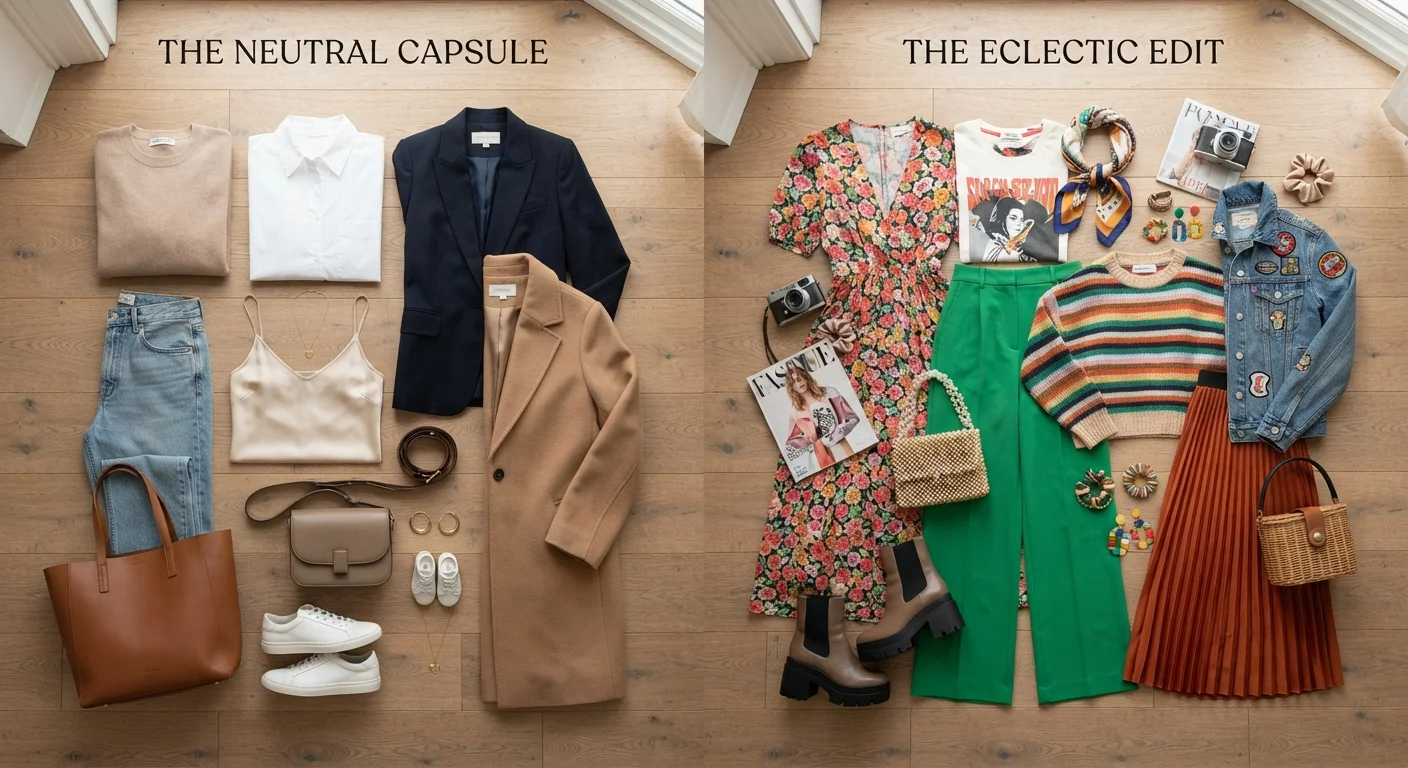
Signature style offers clarity, cost-efficiency over time, and a strong sense of self-expression — but it can feel limiting if your life or tastes change. Trend-chasing is energizing and social, but it demands more spending and mental bandwidth. For most everyday Americans, a hybrid approach — a dependable core wardrobe with occasional trend-forward pieces — delivers the best of both worlds.
| Best for | Recommended |
|---|---|
| Those who want simplicity and low daily decision-making | Signature Style |
| Those who find joy in fashion as a creative, evolving hobby | Trend-Chasing |
| Those working within strict time or cost constraints | Signature Style |
| Those who enjoy social fashion moments and seasonal refreshes | Trend-Chasing |
What Each Approach Actually Means
Before choosing sides, it helps to define the terms clearly. A signature style is a deliberate, consistent visual identity — recurring colors, silhouettes, or garment types that make your wardrobe feel cohesive and unmistakably yours. Think of it as your personal uniform, built around what genuinely fits your life and makes you feel confident.
Trend-chasing, on the other hand, means actively keeping up with what's new and seasonally relevant — picking up pieces that reflect current runways, social media cycles, or retail windows. It's a more reactive approach, shaped by what's popular rather than by a fixed personal aesthetic.
Neither label implies vanity or laziness. Both are legitimate ways of relating to clothing. The question is which one actually serves you — and that depends on factors like your budget, lifestyle, how much you enjoy shopping, and what you want your clothes to communicate. For a deeper look at what goes into building a wardrobe that feels right, this end-to-end guide walks through the full process.
The Real Benefits of a Signature Style
The strongest case for dressing consistently is cognitive: fewer choices mean less fatigue. When you know your palette and your go-to silhouettes, getting dressed becomes faster and less stressful. There's research in behavioral psychology suggesting that repeated low-stakes decisions can deplete mental energy over the course of a day — eliminating them through a consistent wardrobe is one practical workaround.
Financially, a signature style often makes more sense over time. Because you're buying pieces that work with what you already own, you're less likely to accumulate items that don't get worn. Pieces chosen to coordinate tend to have longer active lifespans in your closet. This aligns well with the ideas explored in dressing well on any budget — that fit, proportion, and color understanding beat novelty every time.
A consistent aesthetic also has social and professional advantages. People remember how you present yourself, and a recognizable look can quietly reinforce your personal brand — whether you're building a career or simply want to feel grounded in how you show up in the world.
| Signature Style | Trend-Chasing | |
|---|---|---|
| Daily decision-making | Low — consistent formula reduces choices | High — requires ongoing awareness and updating |
| Cost over time | Generally lower — fewer impulse buys | Higher — pieces cycle out quickly |
| Wardrobe longevity | High — pieces stay relevant longer | Lower — trend items date quickly |
| Creative variety | Limited — can feel repetitive | High — constantly fresh looks |
| Cultural connection | Less tied to current moment | Strongly linked to current aesthetics |
| Ease of shopping | Straightforward — clear criteria | Requires frequent research and browsing |
| Risk of regret | Low — buys are deliberate | Higher — trend pieces may feel dated fast |
The Genuine Appeal of Following Trends
Trend-chasing gets unfairly dismissed as shallow, but for many people, fashion is genuinely fun — a rotating creative outlet that keeps them engaged and culturally connected. Seasonal style shifts can feel refreshing, especially if your daily life is routine-heavy in other ways.
There's also a social dimension to trends that's real and worth acknowledging. Shared aesthetic moments — a color everyone's wearing, a silhouette that's suddenly everywhere — create a low-stakes form of cultural participation. For younger adults especially, being fluent in current fashion can serve as a form of self-expression and community belonging.
The catch is cost and clutter. Trend pieces are, almost by definition, time-limited. What feels essential in March may feel dated by October. If you're considering how wardrobe size relates to your style approach, the comparison in capsule wardrobe vs. full closet is directly relevant — the two philosophies map closely onto signature style and trend-chasing, respectively.
The 'Cost Per Wear' Test
Before buying a trend piece, ask yourself how many times you'll realistically wear it this season. Divide the price by that number — if the cost per wear feels high, it's a signal to pause. A $40 item worn twice costs more per wear than a $100 staple worn fifty times. This simple mental check helps keep trend-chasing from quietly draining your clothing budget.
Finding Your Honest Middle Ground
In practice, most people don't live at either extreme — and they don't need to. A wardrobe built around a reliable core of pieces you love and return to repeatedly can still have room for the occasional trend-forward item that excites you right now. The key is intentionality: knowing why you're buying something, not just reacting to what's in front of you.
A useful exercise: look at what you actually wear most weeks, not what you own. The items you reach for repeatedly are already telling you what your signature style wants to be. Trends can complement that foundation without replacing it.
It's also worth noting that personal style isn't static — it evolves with age, circumstance, and taste, and that's healthy. Style and aging explores how priorities and preferences naturally shift over time, often for the better. Similarly, body-type dressing rules can create unnecessary pressure — the same applies to rigid trend-following or rigid signature-style dogma. Dress in a way that feels genuinely good to you, and both approaches will serve you better.