
Everything That Actually Goes Into Developing a Personal Style You Feel Good In

Key Takeaways
What Personal Style Actually Means
Personal style isn't a look you find in a magazine and copy wholesale — it's the ongoing, evolving expression of who you are through what you choose to wear. That distinction matters, because it shifts the goal from "looking like someone else" to "feeling like yourself."
Unlike fashion, which is driven by industry seasons and trends, personal style is driven by you — your habits, your preferences, and your comfort level. It can absolutely include trendy pieces, but it doesn't depend on them. And unlike a professional personal brand, personal style isn't about managing external perception for career gain — it's about wearing what genuinely makes you feel at ease and confident in your own skin.
The good news: there's no wrong answer here. Style is permission-based, and the only permission you need is your own.
Start With Your Lifestyle, Not a Trend
The single most overlooked step in developing a personal style is taking an honest look at how you actually spend your days. Not how you wish you spent them — how you actually do. Do you work from home? Commute to an office? Wrangle kids on weekends? Hit the gym most mornings? Your wardrobe needs to serve your real life first.
Try breaking your week into rough categories — work, casual outings, active time, social events — and estimate how many hours you spend in each. Then check whether your closet actually reflects those proportions. Most people find a mismatch: a drawer full of party tops and almost no go-to everyday pieces, or the reverse.
Photograph your outfits on the days you feel most confident and comfortable — over time, patterns emerge that are more reliable than any style quiz.
Visual records help you identify recurring elements (silhouettes, colors, textures) that consistently make you feel good, taking the guesswork out of future choices.
Before shopping for anything new, spend 10 minutes styling three different outfits from what you already own — you'll almost always surface something you'd forgotten about.
Research into shopping behavior suggests that familiarity bias leads us to overlook existing items; intentional re-styling reactivates pieces and reduces unnecessary purchases.
Once you understand your lifestyle split, you can start identifying the types of pieces you reach for most, which is a much more useful guide than browsing trend reports. Just as decorating styles work best when they reflect how you actually live in your home, clothing works best when it matches how you actually move through your day.
Learning What Fit and Proportion Do for You
Fit is the single variable that separates an outfit that looks polished from one that looks like it belongs to someone else — regardless of price. A well-fitting garment from a thrift store will almost always look better than an ill-fitting designer piece.
The key is understanding your own proportions rather than chasing a universal "flattering" ideal. That concept is deeply personal. What matters is whether you feel comfortable and confident. Some general principles that stylists return to repeatedly:
- Shoulders should hit at the shoulder seam — if a jacket's shoulder seam droops or rides up, the whole silhouette is off.
- Volume balance — pairing a looser top with a more fitted bottom (or vice versa) tends to create a sense of visual intention rather than accident.
- Hem length affects perceived proportion — where a top, skirt, or pant hits on your body changes how your overall shape reads to yourself and others.
Getting a few key pieces tailored — even just hemming trousers or taking in a jacket waist — can transform your existing wardrobe without a major spend. Our smart shopping guidance covers how to evaluate quality and fit before you buy.
Building a Color Story That Works
One of the fastest ways to make getting dressed feel effortless is to build around a cohesive color palette. This doesn't mean wearing one color head to toe — it means choosing a range of colors that genuinely mix and match with each other, so nearly everything in your closet can work together.
80%
Of outfits come from 20% of the wardrobe
The 80/20 principle is widely cited by professional stylists and wardrobe consultants to illustrate how most people habitually reach for a small fraction of what they own.
3–5
Core neutrals in most capsule wardrobes
Wardrobe strategists commonly recommend limiting a base palette to three to five neutral tones to maximize outfit combinations from fewer pieces.
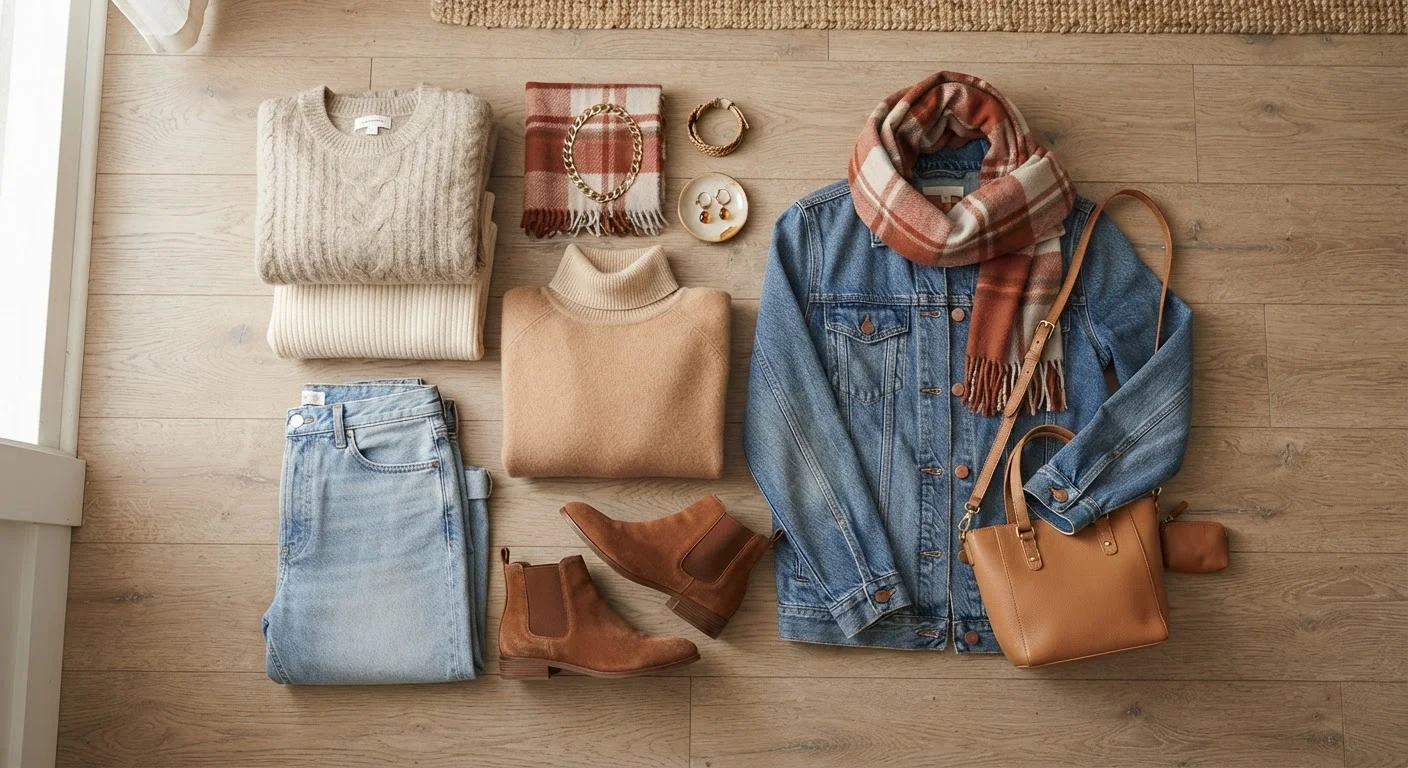
A practical starting point: identify two or three neutrals you're drawn to (think navy, camel, white, olive, grey, or black), then choose one to two accent colors you actually enjoy wearing. Keep the majority of your wardrobe in those neutrals, and let the accent colors show up in accessories, layering pieces, or statement items.
Pay attention to your undertone preferences too. Some people feel more alive in warm tones (earthy browns, terracotta, warm cream); others look and feel better in cool tones (slate blue, soft white, burgundy). Neither is objectively better — it's about what makes you feel good when you catch your reflection.
Color is also one of the areas where beauty and style intersect. If you love experimenting with hair and makeup, consider how your go-to tones in those areas relate to the colors you gravitate toward in clothing.
Editing Your Wardrobe Without the Overwhelm
You don't have to toss everything and start fresh. In fact, a wholesale closet purge often leads to impulse buying that recreates the same problem. A better approach is a structured edit — going through your wardrobe in categories (tops, bottoms, outerwear, shoes) and asking three questions about each piece:
- Does this fit me well right now?
- Have I reached for it in the past year?
- Do I feel good when I wear it?
If the answer to all three is yes, it stays. Two out of three — consider it. One or zero — it's likely not serving you. Be honest with yourself about "someday" pieces: if that dress has sat unworn for two years, the occasion you're saving it for probably isn't coming.
Avoid the 'Aspirational Wardrobe' Trap
Keeping clothes that fit a version of your life you don't currently live — the salsa dancing phase, the corporate era, the 'when I lose weight' section — takes up physical and mental space. Your wardrobe should serve who you are now, not who you might become. Hold onto one or two sentimental exceptions if you like, but be honest about the rest.
Once you've edited, you'll have a much clearer picture of what's actually missing — and that clarity makes future purchases more intentional. You're no longer shopping to fill a vague sense of "I have nothing to wear"; you're shopping for a specific gap in a wardrobe you understand.
Making Your Style Evolve Without Starting Over
Personal style isn't a destination you arrive at — it's something that shifts as you do. A style that felt perfect at 25 may feel off at 35, and that's completely normal. The goal isn't to lock yourself into a fixed aesthetic; it's to stay curious and give yourself permission to adapt.
A few habits that keep style evolving without constant upheaval:
- Add intentionally. Before buying anything new, consider how it works with at least three things you already own.
- Notice what you actually reach for. Your habits reveal more about your true style preferences than any quiz or Pinterest board.
- Borrow inspiration broadly. Observe what you admire on others — in real life, not just curated feeds — and notice the themes that recur.
Style growth is iterative. Small experiments — a new silhouette, an unfamiliar color, a different way of layering — are lower-risk ways to explore than a full wardrobe overhaul. The most authentic personal styles are built slowly, with attention and a little courage to keep trying.