

| Most Misunderstood Code | Smart Casual |
| Most Formal Civilian Code | White Tie |
| Black Tie Alternative | Dark suit (for Black Tie Optional events) |
| Cocktail Attire Hem Length | Knee-length to midi |
| Casual Dress Code Key Rule | Clean, presentable, and well-fitting |
| Number of Major Formality Levels | 7 (Casual through White Tie) |
Why Dress Codes Exist (and Why They Confuse Everyone)
Dress codes are essentially shorthand for the vibe a host wants to create. They signal to guests how formal the event will feel and help everyone arrive feeling appropriately put together — rather than awkwardly overdressed or underdressed. The problem? The language of dress codes has never been fully standardized, which means terms like "smart casual" or "festive attire" can mean wildly different things depending on who wrote the invitation.
The good news is that most dress codes fall along a predictable spectrum, from the most relaxed to the most formal. Once you understand the underlying logic, interpreting any code becomes significantly less stressful. For a broader foundation on expressing yourself through clothing, see our guide to getting dressed well on any budget.
Smart Casual
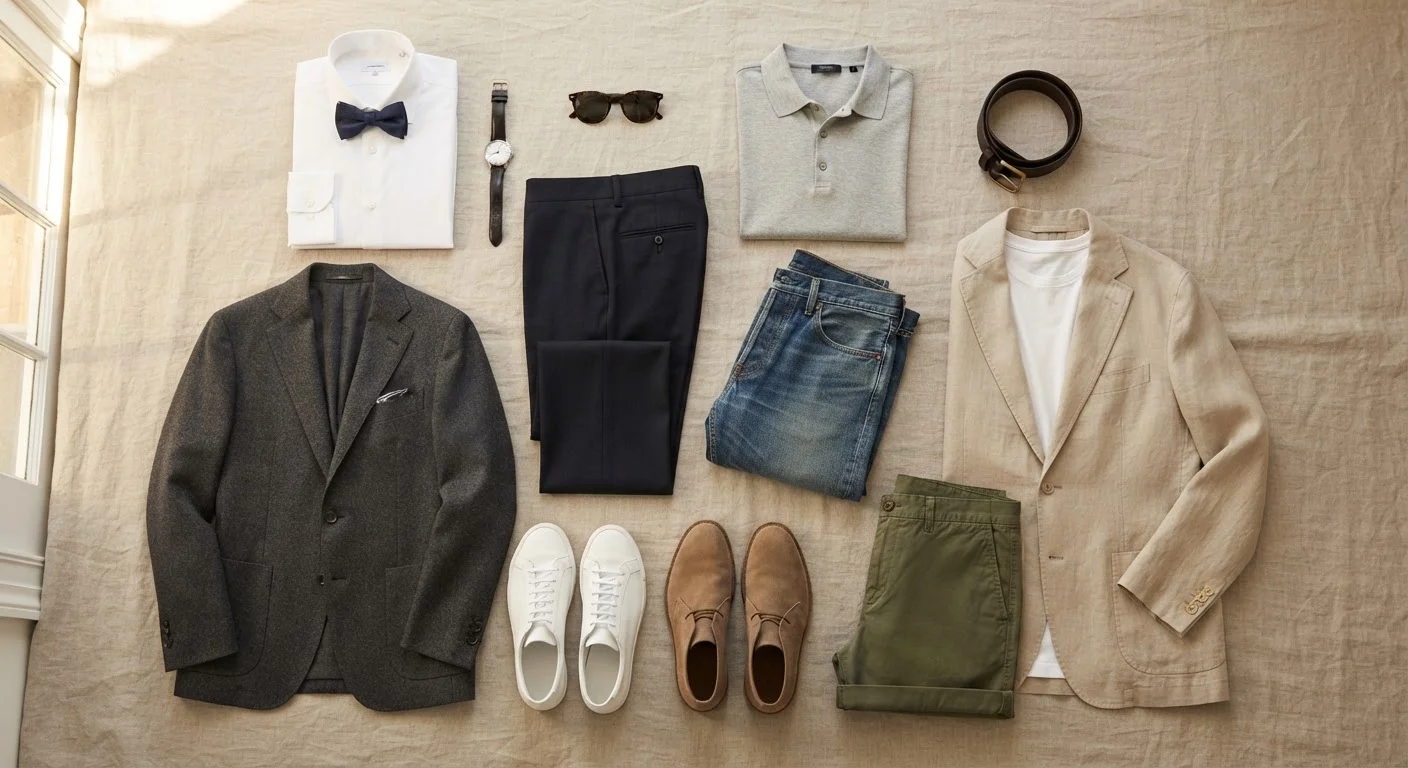
A mid-level dress code sitting between relaxed casual and business casual. It calls for polished everyday pieces — elevated basics like chinos, blouses, or neat knitwear — without requiring a suit or formal attire.
Cocktail Attire
An evening dress code calling for dressy but not floor-length formal wear. Knee-length or midi dresses, dressy jumpsuits, and tailored suits all fit this category.
Black Tie Optional
A formal dress code where a tuxedo is welcomed but not required. A dark, well-tailored suit or formal cocktail-length dress is fully appropriate.
White Tie
The most formal civilian dress code, typically reserved for galas, state dinners, or formal balls. It requires tailcoats in menswear and ball gowns in womenswear, with very little room for casual interpretation.
Business Casual
A professional dress code common in workplaces and daytime events. It favors tailored trousers, skirts, blouses, and sport coats, generally excluding athletic wear and often excluding denim.
Resort Casual
An informal, relaxed dress code associated with warm-weather or vacation settings. It typically means comfortable but neat — think linen trousers, sundresses, or loafers rather than swimwear or athletic gear.
The Formality Spectrum, Level by Level
Think of dress codes as a ladder, with each rung slightly more elevated than the last. Here's what each level genuinely calls for:
| Most Misunderstood Code | Smart Casual |
| Most Formal Civilian Code | White Tie |
| Black Tie Alternative | Dark suit (for Black Tie Optional events) |
| Cocktail Attire Hem Length | Knee-length to midi |
| Casual Dress Code Key Rule | Clean, presentable, and well-fitting |
| Number of Major Formality Levels | 7 (Casual through White Tie) |
Casual
Despite its name, casual doesn't mean anything goes. It typically means clean, comfortable, and presentable — think well-fitting jeans, a neat top or t-shirt, and clean footwear. Avoid anything visibly worn out, stained, or sloppy unless the setting truly has no expectations at all.
Smart Casual
This is the category that causes the most confusion. Smart casual sits between casual and business casual. It generally means elevated everyday pieces — dark jeans or chinos, a polished blouse or button-down, leather or suede shoes. No athletic wear, no flip-flops, but full suits aren't required either.
Business Casual
Common in workplaces and professional daytime events, business casual leans toward tailored clothing without requiring a full suit. Think trousers or skirts with a neat blouse, sweater, or sport coat. Denim is typically off the table unless the company culture explicitly allows it.
Cocktail Attire
Cocktail attire signals a polished evening event. For many people this means a knee-length or midi dress, a dressy jumpsuit, or tailored separates. A suit or blazer with dress trousers works equally well. The goal: elegant, but not floor-length formal.
Black Tie Optional
This phrase often trips people up. It means a tuxedo is welcome but not strictly required. A dark, well-fitted suit is completely appropriate — and often the more practical choice. Formal gowns or dressy cocktail-length attire read well for those preferring dresses.
Black Tie
Black tie is the clearest code: tuxedo (or dinner jacket) for those wearing menswear, floor-length or formal-length gown for those in womenswear. Creative variations in color or fabric are generally fine, but the silhouette and formality level should stay consistent with the code.
White Tie
White tie is the most formal dress code in civilian life, reserved for state dinners, certain galas, and rare formal balls. It calls for tailcoats and white bow ties in menswear; floor-length ball gowns for womenswear. This is a code you'll encounter infrequently, but when you do, there's very little interpretive wiggle room.
Navigating Ambiguous or Themed Dress Codes
Modern invitations increasingly include codes like "festive," "garden party," "resort casual," or "creative black tie." These aren't standardized, so treat them as cues to the event's mood rather than rigid rules. Festive usually means celebratory colors, textures, or metallic elements — dressier than everyday but not necessarily gown-formal. Resort casual typically means relaxed but polished: linen trousers, sundresses, loafers.
When in genuine doubt, it's entirely reasonable to contact the host or venue directly — most people appreciate a guest who cares enough to ask. You can also cross-reference the location and time of day as clues: a rooftop evening event skews dressier than a backyard afternoon gathering at the same dress code label.
When the Dress Code Is Still Unclear
If an invitation uses a vague or invented dress code label, look at two contextual clues: the venue type and the event's start time. Evening events at upscale venues almost always skew toward the dressier end of any code, while daytime outdoor events tend to allow more relaxed interpretations. When in doubt, slightly overdressing is generally better received than underdressing at formal occasions.
For a more detailed breakdown of what to wear to specific events — from weddings to casual Fridays — our occasion dressing guide is a practical companion to keep bookmarked.
Remember, dress codes aren't meant to stress you out — they're meant to help you show up feeling confident and appropriate. And if your interpretation lands slightly off? Fit, cleanliness, and intention carry a lot of weight regardless of where you land on the formality scale. See also our take on why body-type dressing rules often miss the point for more on dressing with confidence rather than anxiety.