

Key Takeaways
Our Verdict
Digital coupons win on convenience and speed, making them practical for most routine grocery and drugstore trips. Paper coupons still hold real value for shoppers willing to put in extra effort, particularly when combining manufacturer coupons with store sales. The sharpest savers use both formats strategically rather than committing to one exclusively.
| Best for | Recommended |
|---|---|
| Shoppers who want a quick, low-effort savings method | Digital Coupons |
| Those who shop at specific stores with strong paper coupon policies | Paper Coupons |
| Budget-focused shoppers willing to plan purchases around promotions | Both formats combined |
How Each Format Actually Works
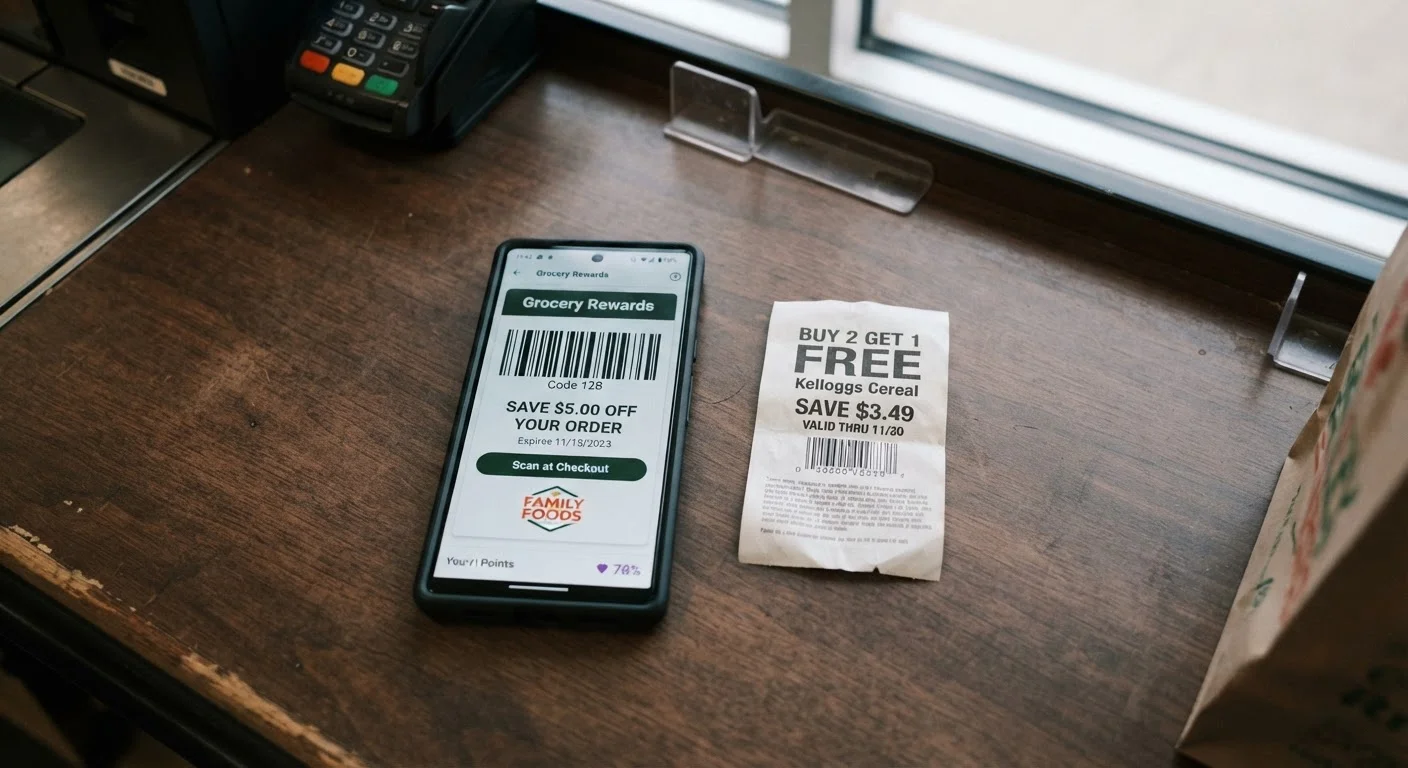
Paper coupons are physical vouchers — cut from newspaper inserts, printed from coupon websites, or received by mail — that you hand to a cashier at checkout. The cashier scans or manually enters the code, and the discount comes off your total. Manufacturer paper coupons are issued by the product's maker and can typically be used at any retailer that accepts them. Store coupons are issued by the retailer itself and are only valid at that chain.
Digital coupons live in store apps, loyalty account dashboards, or third-party apps. You "clip" them — usually by tapping a button — before shopping, and they apply automatically when your loyalty card or phone number is entered at the register. Some retailers also issue digital manufacturer coupons through coupon aggregator apps, which function similarly. No physical item to carry, no risk of leaving it at home.
Understanding this distinction matters because it directly affects which coupons you can use where, and whether they can be combined. For a deeper look at evaluating all the variables behind a purchase decision, see our guide to comparison shopping.
Access, Convenience, and Reliability
| Digital Coupons | Paper Coupons | |
|---|---|---|
| How you access them | Store app, loyalty account, or aggregator app | Newspaper inserts, brand websites, direct mail |
| Applied at checkout | Automatically via loyalty card or phone number | Scanned or entered manually by cashier |
| Where they're valid | Store-specific; some work at multiple chains | Manufacturer coupons valid at most retailers |
| Stacking flexibility | Varies by store policy; often restricted | Generally allows one manufacturer + one store coupon |
| Risk of expiry or failure | App glitches, silent expiry mid-week | Clear expiry date printed; no tech dependency |
| Effort required | Low — clip digitally before shopping | Higher — sourcing, cutting, organizing needed |
Digital coupons have a clear edge in accessibility: you can browse and clip offers from your phone at any time, without scissors or filing systems. Retailers often load personalized digital offers based on your purchase history, which means relevant deals surface automatically.
However, digital coupons come with hidden friction. Offers can expire mid-week, app glitches can prevent coupons from applying, and some deals require minimum purchase thresholds buried in fine print. If a digital coupon fails to scan, getting the discount corrected at a busy checkout lane can be awkward.
Paper coupons are more predictable in terms of what you see is what you get — the terms are printed on the coupon itself. The downside is the legwork: sourcing them, organizing them, remembering to bring them, and checking expiration dates manually. For shoppers who already have doubts about whether discounts equal real savings, common shopping myths worth questioning are worth reviewing before building a coupon strategy.
Stacking Rules: Where the Real Differences Show Up
"Stacking" means combining a manufacturer coupon with a store coupon or promotion on the same item. This is where paper and digital coupons diverge significantly — and where store policy becomes critical.
Most major retailers allow one manufacturer coupon and one store coupon per item. With paper coupons, this has historically been straightforward: a physical manufacturer coupon plus a physical store coupon. With digital coupons, the rules vary by chain. Some stores allow a digital manufacturer coupon to stack with a digital store coupon; others restrict it to one digital offer per item regardless of source.
A key rule: a store will almost never let you use both a paper and a digital version of the same coupon on the same product — duplicate discounts are flagged as misuse. Always read the coupon terms and check the specific store's coupon policy page before assuming a stack will work. For a practical breakdown of how stacking works across different savings methods, this guide to stacking coupons and promotions covers the mechanics clearly.
Check Store Policy Before You Shop
Every major retailer publishes a coupon acceptance policy, usually on their website. Before attempting a stack — especially mixing digital and paper — look up that policy rather than guessing at the register. Policies cover limits per transaction, exclusions on sale items, and whether digital and paper versions of the same coupon can be combined. Two minutes of research prevents checkout-line frustration.
Choosing the Right Format for Your Situation
The honest answer is that most shoppers benefit from treating digital and paper coupons as complementary rather than competing tools. Here's a practical way to think about it:
- Routine grocery trips: Digital coupons clipped through your store's app are fast and require no preparation beyond a few taps beforehand.
- Big-ticket or planned purchases: Paper manufacturer coupons — especially high-value ones from Sunday inserts or brand websites — can be combined with store sales for larger savings on items you were already going to buy.
- Drugstore shopping: Many pharmacy chains have sophisticated digital coupon ecosystems with loyalty rewards that layer on top, making digital the more powerful option at those specific retailers.
What neither format does reliably is turn a bad deal into a good one. A coupon on a product you don't need, or one that nudges you toward a higher-priced item, isn't savings — it's spending. Understanding the difference between a lower price and genuine value is worth keeping in mind whenever a coupon influences your purchase decision. You might also find it useful to compare coupons with other discount mechanisms — cashback programs and rewards points operate differently and suit different spending patterns.