

Key Takeaways
Why Documentation Is a Consumer Superpower
Most shoppers treat receipts as disposable — a crumpled slip that gets tossed before reaching the car. That habit quietly costs American consumers billions of dollars each year in disputes they can't prove and warranties they can't enforce. Documentation isn't paperwork for its own sake; it's evidence that shifts the burden of proof in your favor.
When a product fails, a charge appears twice, or a subscription renews without clear notice, the first question any merchant, bank, or regulator will ask is: Can you show us the original transaction? Without records, your claim rests entirely on your word. With them, you have verifiable facts. See how payment method affects this equation in our article on protections tied to your payment method.
What to Save — and What Actually Counts as Evidence
Not all documentation carries equal weight. Here's what tends to matter most in real disputes:
For big-ticket items especially, running through a pre-purchase checklist can also help you identify exactly what documentation you should be collecting at the point of sale.
How Long to Keep Records — and Where to Store Them
A practical rule: keep records for at least as long as the warranty or return window applies, plus one billing cycle. For major appliances or vehicles, that may mean several years. For everyday grocery or clothing purchases, 90 days typically covers you.
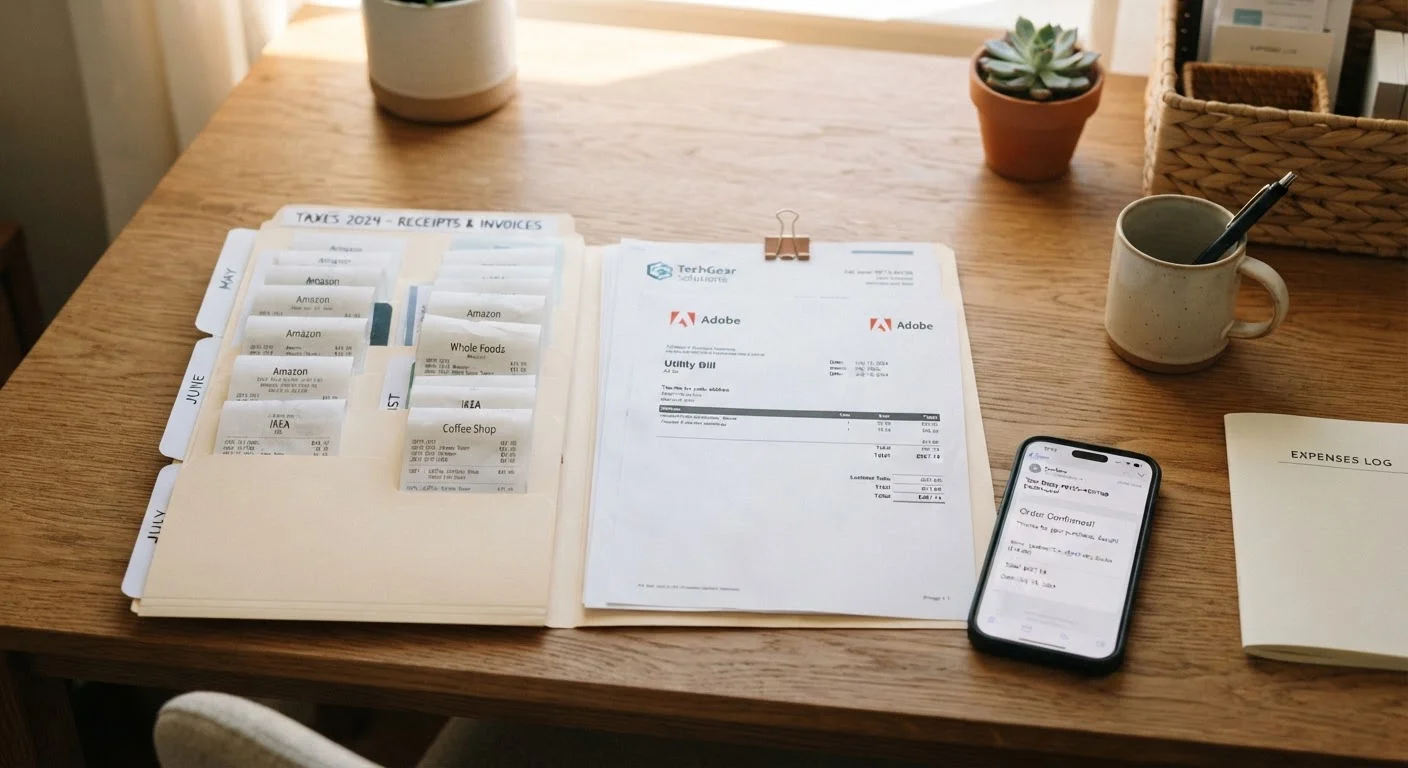
Digital storage is the most practical approach for most people. Forward confirmation emails to a dedicated folder. Take photos of paper receipts immediately — thermal paper fades within months. Cloud storage means your records survive a house fire or a lost phone.
Vehicle owners benefit from a similar discipline. Our guide on maintaining a vehicle service log shows how consistent documentation protects warranties and resale value over time.
Putting Records to Work in a Real Dispute
Good records change the outcome of disputes in concrete ways. Credit card chargebacks — the process of contesting a charge directly with your card issuer — typically require you to show proof of purchase, proof of the problem, and evidence that you tried to resolve it with the merchant first. Organized documentation makes each of those steps faster and stronger.
State lemon laws, small claims court filings, and Better Business Bureau complaints all work on the same principle: the more specific and timestamped your evidence, the harder it is to dismiss. Our Consumer Rights 101 guide covers exactly what rights you can exercise and when.
The habit pays for itself quickly. The time it takes to photograph a receipt or star an email is measured in seconds. The time it takes to reconstruct a purchase history from memory during a dispute is measured in hours — often unsuccessfully.
For a broader look at purchasing decisions that hold up over time, explore the Buying Smart hub for practical guidance across the full shopping lifecycle.