
Consumer Protections That Disappear When You Pay With Cash, Debit, or Gift Cards

Why Payment Method Changes Your Rights
Most shoppers focus on price at checkout. Few think about what happens if the merchant goes out of business, the product never arrives, or an unauthorized charge appears on their statement. The answer depends heavily on how you paid — not just what you paid for.
Federal law and card network rules create meaningful layers of protection for credit card users that simply do not extend to cash, debit, or gift card transactions. Understanding those gaps is one of the most practical things a consumer can do before making a significant purchase. For a broader view of your rights at the point of sale, see consumer rights explained at a glance.
Protections Tied to Credit Cards — and Why They Exist
The Fair Credit Billing Act (FCBA) gives credit card holders the right to dispute billing errors and unauthorized charges. When a dispute is filed, the card issuer investigates and can reverse the charge — a process called a chargeback. During the investigation, you generally are not required to pay the disputed amount. Your liability for unauthorized credit card charges is capped at $50 by federal law, and most major networks voluntarily reduce that to $0.
A separate provision — sometimes called Section 170 rights — allows cardholders to withhold payment for defective goods or services purchased with a credit card, under certain conditions, without penalty. This is a meaningful backstop when a seller refuses to issue a refund. For a step-by-step look at how disputes actually work, see how the chargeback process works.
Chargeback Rights Have Conditions
Credit card chargeback rights are not unconditional. Network rules and the FCBA require that you attempt to resolve the dispute with the merchant first. For Section 170 protections (disputing defective goods), additional conditions apply — including purchase amount thresholds and, in some cases, geographic proximity to the merchant. Check your card agreement and the CFPB's guidance for current details.
What You Lose With Cash, Debit, and Gift Cards
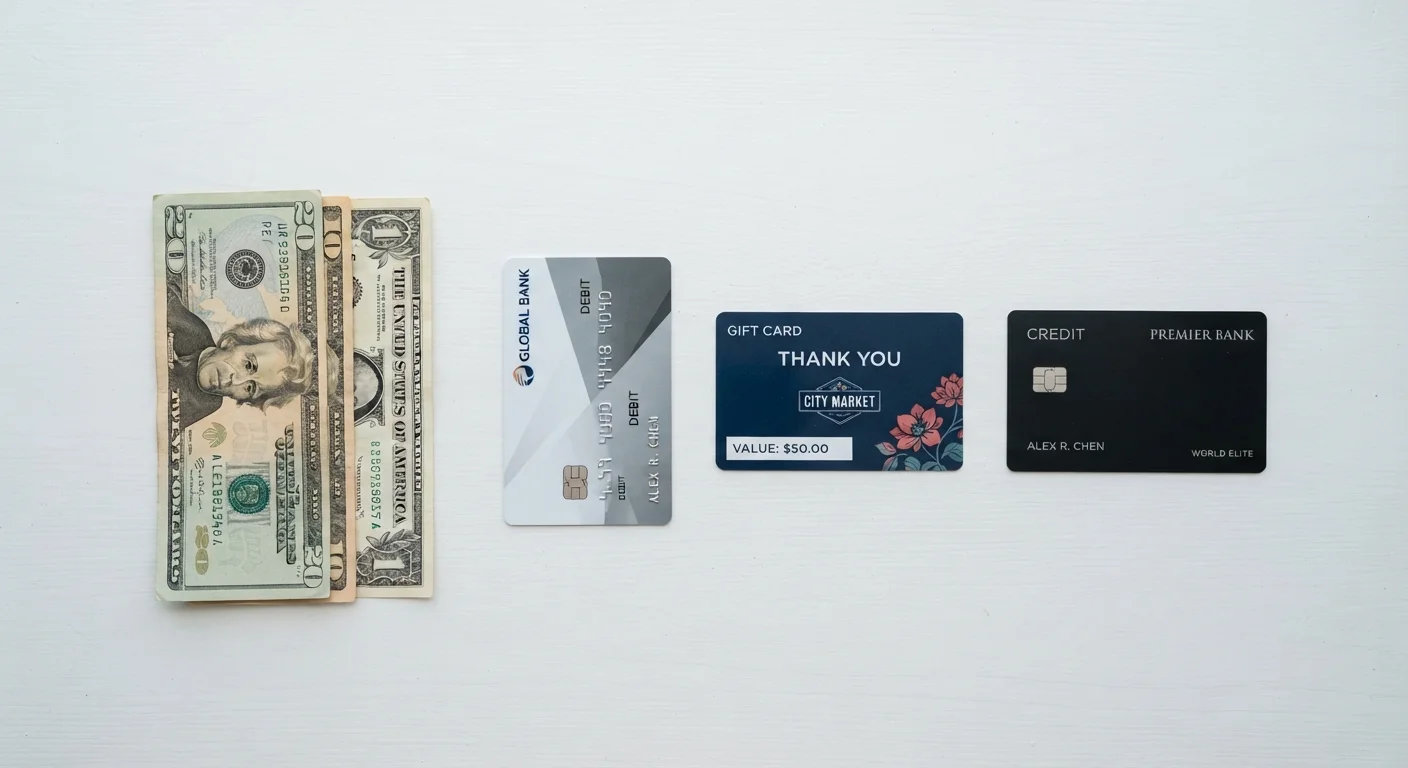
Cash offers zero recourse beyond whatever the merchant voluntarily agrees to. If a store refuses a refund, you have no third party to escalate to. There is no federal law requiring a merchant to accept returns or provide refunds on non-defective goods sold in person.
Debit cards are governed by the Electronic Fund Transfer Act (EFTA), not the FCBA. While debit cards do carry fraud protections, the liability window is time-sensitive: report an unauthorized transaction within two business days and your liability is capped at $50. Wait between 3 and 60 days and that cap rises to $500. Wait longer and you may bear the full loss. Critically, during any investigation, the funds have already left your bank account — you are fighting to get your own money back, not disputing a pending charge.
Gift cards are the most limited of all. Once purchased, they generally have no fraud protection unless the card is registered. If a gift card is lost, stolen, or the issuing retailer closes, recovery is difficult or impossible. Federal rules under the Credit CARD Act of 2009 do restrict inactivity fees and expiration dates on most gift cards, but those rules do not give you chargeback rights or dispute access.
Matching your payment method to the risk level of a purchase is a practical habit worth building. Matching payment methods to the right purchase covers this framework in detail.
Chargeback
A reversal of a credit or debit card transaction initiated by the card issuer on behalf of the cardholder. Credit card chargebacks are governed by the FCBA and network rules; debit card chargebacks follow the EFTA.
Fair Credit Billing Act (FCBA)
A federal U.S. law that gives credit card holders the right to dispute billing errors and unauthorized charges. It does not apply to debit card transactions.
Electronic Fund Transfer Act (EFTA)
The federal law that governs electronic payments including debit card transactions. It provides fraud protections, but liability limits depend heavily on how quickly the cardholder reports an unauthorized transaction.
Section 170 Rights
A provision of the FCBA that may allow credit cardholders to withhold payment for goods or services that are defective or not delivered as promised, under specific conditions including purchase amount and geographic thresholds.
Inactivity Fee
A fee charged by a gift card issuer when the card has not been used for a defined period. The Credit CARD Act of 2009 limits when these fees can be applied.
Practical Takeaways for Smarter Payment Decisions
None of this means cash or debit are always the wrong choice — they are appropriate for small, low-risk, in-person transactions where you trust the seller and the goods are in hand. The calculus shifts for higher-stakes purchases: travel, electronics, subscriptions, online orders from unfamiliar vendors, or any transaction where delivery happens later.
A few habits that reinforce your position regardless of payment method: keep receipts and order confirmations, photograph products on arrival, and note return deadlines. Keeping thorough purchase records is one of the simplest ways to strengthen any dispute. And if you believe common assumptions about payment and savings are working in your favor, shopping myths that quietly cost you money is worth a read.
This article provides general consumer information about U.S. payment laws and is not legal or financial advice. Laws and card network policies change; verify current terms with your card issuer or a qualified professional before making decisions based on specific protections.