

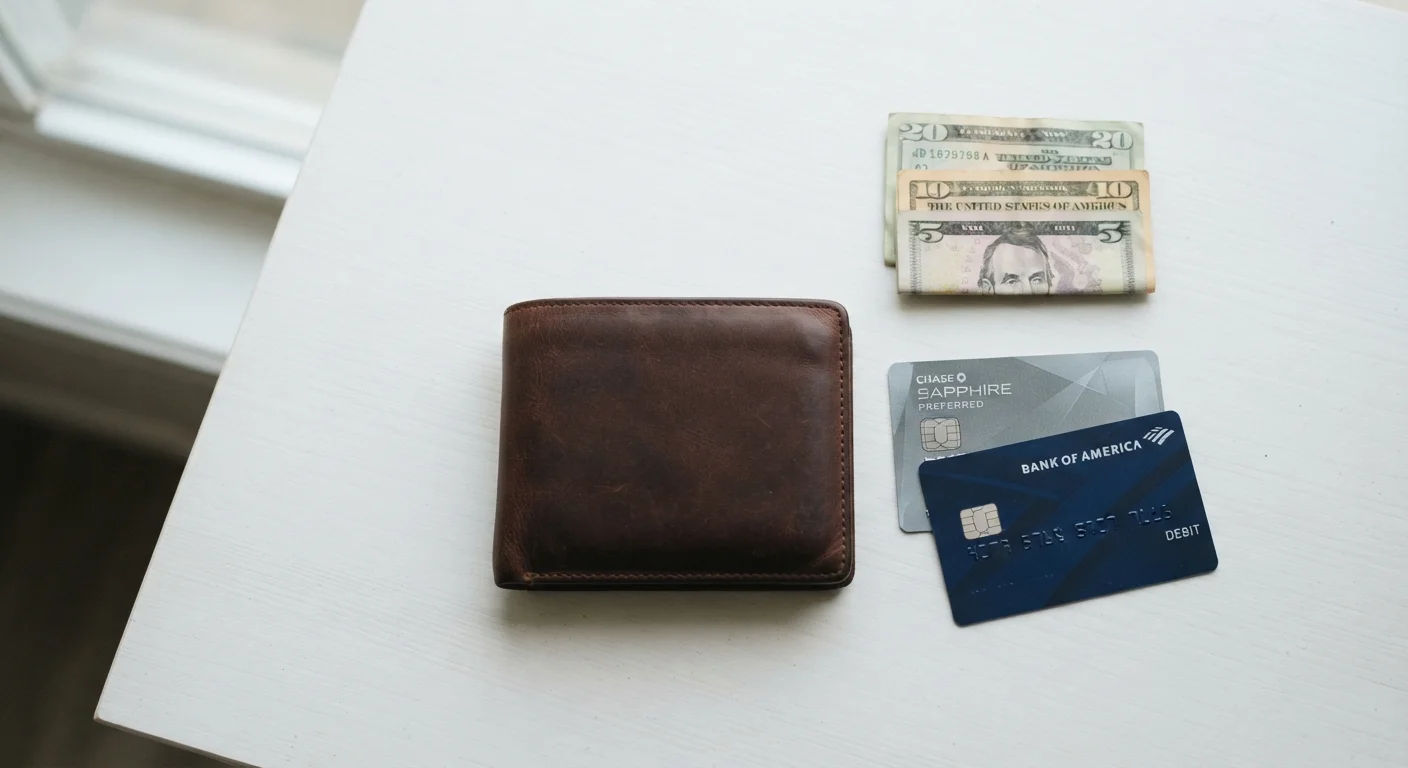
Key Takeaways
Our Verdict
No single payment method wins in every situation. Credit cards generally offer the broadest protections and potential rewards, but only for shoppers who pay their balance in full each month. Debit works well for everyday budgeted spending when credit discipline is a concern. Cash is best reserved for small, local, or privacy-sensitive purchases where overspending is the primary risk.
| Best for | Recommended |
|---|---|
| Shoppers who pay balances in full and want fraud protection | Credit card |
| Those who want to stay strictly within a set budget | Cash or debit card |
| Large purchases where dispute rights matter most | Credit card |
| Small local transactions with trusted merchants | Cash |
Why Payment Method Actually Matters
Most people pick a payment method out of habit — swipe the card that's on top, or tap your phone. But how you pay affects more than convenience. It determines what happens if a charge is fraudulent, whether you can dispute a merchant error, and whether you're spending money you actually have or money you'll owe later.
Before your next checkout, it's worth understanding what each method really does — and doesn't — protect. For a broader look at evaluating purchases before you commit, see our pre-purchase checklist for smarter decisions.
| Cash | Debit Card | Credit Card | |
|---|---|---|---|
| Fraud liability | Full loss, no recourse | Up to $500+ if delayed reporting | Capped at $50; often $0 |
| Dispute rights | None (merchant only) | Limited under Regulation E | Strong under FCBA |
| Overspending risk | None — hard limit | Low — limited to balance | High if balance isn't paid |
| Rewards or benefits | None | Rare; minimal | Cashback, points, travel perks |
| Privacy | Highest — no data trail | Transaction record kept | Full transaction history |
| Best for | Small local purchases | Budgeted everyday spending | Large or online purchases |
Cash: Simple, Finite, and Unprotected
Cash is the most straightforward payment method — you hand over money, you get goods. There's no billing cycle, no interest, and no debt. For people who struggle with overspending, using physical bills creates a natural limit: when it's gone, it's gone.
The downside is equally clear. Once cash leaves your hand, it's gone. There's no chargeback, no dispute process, and no fraud protection. If a merchant overcharges you or a product fails to arrive, your only recourse is the merchant's goodwill or small claims court.
Cash makes the most sense for small, local purchases — a farmers' market, a tip, a neighborhood yard sale — where the transaction is simple, the amount is low, and trust in the counterparty is high.
Use Cash for Spending You Want to Limit
Research in behavioral economics consistently suggests that paying with physical money creates more psychological friction than swiping a card — meaning people tend to spend less when using cash. If you have a discretionary category (dining out, entertainment) where you tend to overspend, allocating a set amount of cash each week can work as a simple, built-in brake. This isn't a guarantee, but it's a practical technique many budgeters find helpful.
Debit Cards: Convenience With a Hidden Risk
Debit cards feel like credit cards but behave very differently under the hood. They draw directly from your checking account in real time. That makes them useful for staying within budget, but it creates a significant vulnerability: a fraudster who gets your debit card number can drain your bank account before you notice.
Under Regulation E — the federal law governing electronic fund transfers — your liability for unauthorized debit card charges depends heavily on how quickly you report the problem. Report within two business days and your liability is capped at $50. Wait longer than 60 days and you could lose everything taken. This is a much stricter timeline than credit card rules.
Debit works reasonably well for everyday grocery runs and budgeted spending, but use caution at gas pumps, hotels, and online retailers — places where pre-authorization holds or card-skimming risk are elevated. Learn more about which consumer protections disappear depending on how you pay.
Credit Cards: The Strongest Protections — With a Catch
For purchases where something could go wrong — online orders, travel bookings, big-ticket items — credit cards offer the most robust consumer protections available. The Fair Credit Billing Act (FCBA) limits your liability for unauthorized charges to $50, and most major issuers offer $0 liability as a standard policy. You're also entitled to dispute charges for goods or services that weren't delivered or were misrepresented.
If you need to formally challenge a charge, our guide on how the chargeback process works walks through the steps. For large purchases, this protection alone can justify using credit over other methods — see smart approaches to large one-time purchases for broader guidance.
The catch is real: credit cards are only financially beneficial if you pay the full balance each month. Carrying a balance means paying interest — often at rates that erase any rewards earned. If you're already managing debt, weigh that carefully. Our article on balancing savings and debt payoff can help you think through the trade-offs.
A Simple Framework for Matching Method to Purchase
Rather than defaulting to one method for everything, consider the nature of the transaction:
- High-value or refundable purchases (electronics, flights, furniture): Use a credit card for dispute and chargeback protection.
- Recurring monthly bills: A credit card with autopay-in-full keeps spending trackable and protections active.
- Everyday budgeted spending (groceries, gas): Debit or cash both work — debit offers records, cash offers a hard limit.
- Small or cash-only merchants: Cash avoids card fees passed to consumers and simplifies the transaction.
- Online purchases from unfamiliar vendors: Always use a credit card; never debit or cash equivalents like wire transfers.
You can also combine methods strategically — for example, using a cash-back credit card for purchases you'd make anyway and paying it off immediately. For tips on layering savings tactics, see our guide on stacking coupons, cashback, and promotions.
This article is for general informational and educational purposes only and does not constitute personalized financial or legal advice. Consult a qualified financial professional regarding decisions specific to your situation.