
Needs vs. Wants vs. Nice-to-Haves: A Framework for Cutting Through Purchase Pressure

Key Takeaways
Needs vs. Wants vs. Nice-to-Haves
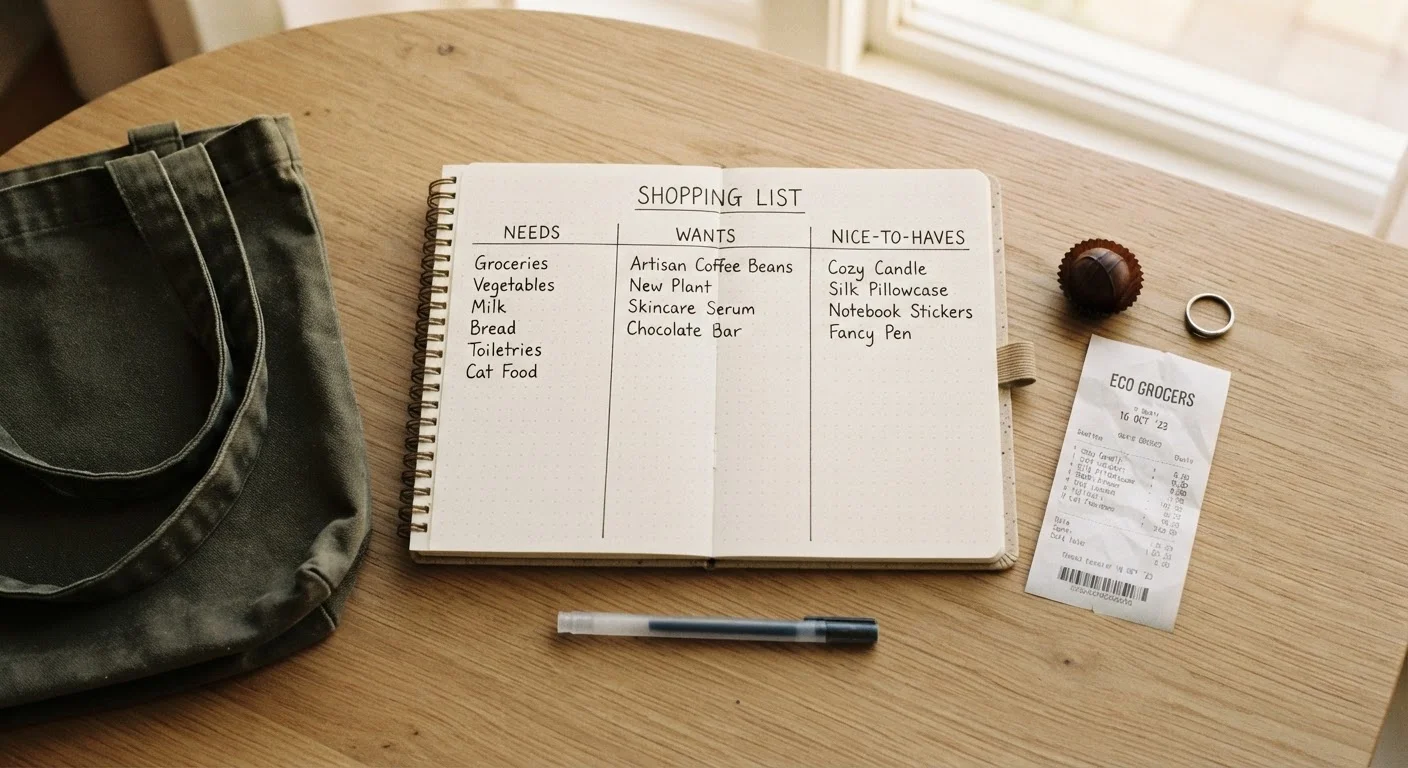
This is a three-tier framework for categorizing any potential purchase before you commit to buying it. A "need" is something that addresses a genuine, functional gap in your life — something you cannot reasonably do without. A "want" is a purchase that would improve comfort or convenience but isn't strictly essential. A "nice-to-have" is a feature or item that adds appeal but provides little practical value at its price point.
Behavioral economists sometimes refer to this sorting process as "preference clarification" — isolating actual utility from social signaling and emotional response before a financial commitment is made.
Why a Three-Tier Framework Beats a Simple Yes or No
The classic "do I need it or do I just want it?" question is a useful starting point, but it's a blunt instrument. Real purchase decisions are more layered. You might genuinely need a new laptop but be tempted into a model with features you'll never use. You might want a better kitchen knife set but be shopping while hungry after watching a cooking show. The binary framing collapses all that nuance into a single gate — and marketers have spent decades learning how to push people through it.
A three-tier model — needs, wants, and nice-to-haves — adds the precision missing from a two-option choice. It lets you say "yes, I should buy this" while still asking "but which version, and why?" That distinction saves money without requiring you to deny legitimate purchases. Understanding the gray area between wants and needs matters just as much as knowing the extremes.
Context Changes Everything
No universal list can tell you whether a specific item is a need, want, or nice-to-have — that depends entirely on your circumstances. A high-end blender is a nice-to-have for most households but a legitimate need for someone managing a medical condition that requires a specific diet. Apply the framework to your situation, not to the product in the abstract.
Defining Each Category Honestly
Needs solve a functional problem that would persist if you don't buy. The definition is tighter than most people apply in practice. A need isn't "this would make things easier" — it's "without this, something important doesn't work or is unsafe." Replacing worn brake pads is a need. Upgrading to a premium sound system in a car with a functioning one is not.
Wants improve your life in real, legitimate ways without being essential. There's nothing wrong with wants — they're a normal part of spending. The goal isn't to eliminate them but to spend on them consciously. Buying a comfortable office chair when you work from home all day is a reasonable want that may cross into need territory depending on physical circumstances.
Nice-to-haves are where most purchase regret lives. These are features, upgrades, or items that appeal in the moment but deliver little marginal value relative to their cost. The extended warranty on a low-cost item, the premium tier of a streaming service for one rarely-used feature, the color option that costs $150 more — these are textbook nice-to-haves. Identifying them upfront is the clearest path to a smaller receipt.
Write Down the Problem, Not the Product
Before evaluating any item, write a single sentence describing the specific problem you need to solve — without naming a product. This separates your actual need from the solution being marketed to you. If you struggle to define the problem in your own words, the purchase may belong in the want or nice-to-have column.
How to Apply the Framework Before You Buy
The most effective moment to sort a purchase is before you're in a buying environment — before you're in a store, on a product page, or looking at a countdown timer. Purchase pressure is designed to cloud this judgment, which means the framework works best when applied in a low-pressure moment.
A practical approach: write down the actual problem you're trying to solve. Not the product — the problem. Then evaluate whether the item you're considering fully solves it, partially solves it, or mostly appeals to you for other reasons. If it fully solves a real problem, it's likely a need or strong want. If the appeal is primarily aesthetic, social, or novelty-driven, it probably lands in the nice-to-have column.
For any significant purchase, combine this framework with a structured pre-purchase checklist that covers quality, total cost, and fit with your actual circumstances. And if the item is a major one, strategies for large one-time purchases can help you think through timing and trade-offs more carefully.
When Categories Shift — and Why That's Normal
The framework isn't a fixed label machine. The same product can be a need for one person, a want for another, and a nice-to-have for a third. A high-quality pair of work boots is a need for someone in a physical trade, a reasonable want for an outdoor enthusiast, and a nice-to-have for someone who works entirely indoors. Categories are personal and situational — which means you need to do the sorting for your circumstances, not follow a generic list.
Categories also shift over time. Financial constraints can temporarily push wants into the "not now" column without reclassifying them as unnecessary. Life changes — a new job, a move, a health change — can elevate former nice-to-haves into genuine needs. Building the habit of periodic reassessment is more useful than trying to get the categorization perfect once.
When you're in doubt and the purchase is meaningful, a set of focused questions can surface whether you're solving a real problem or rationalizing an impulse. And when you're ready to compare specific options, comparison shopping across multiple factors — not just price — will give you a more complete picture of value.
72%
Shoppers who report impulse purchase regret
According to a survey by Slickdeals, approximately 72% of American consumers report regularly experiencing buyer's remorse after unplanned purchases.
~$314
Average monthly impulse spending per US consumer
Research from Slickdeals estimated that American consumers spend an average of around $314 per month on impulse purchases, many of which fall into the nice-to-have category.
24 hours
Cooling-off period that reduces impulse buys
Consumer behavior research broadly supports that a waiting period — commonly cited as 24 hours — significantly reduces the rate at which non-essential purchases are completed.