

Key Takeaways
Why Envelope Budgeting Still Makes Sense
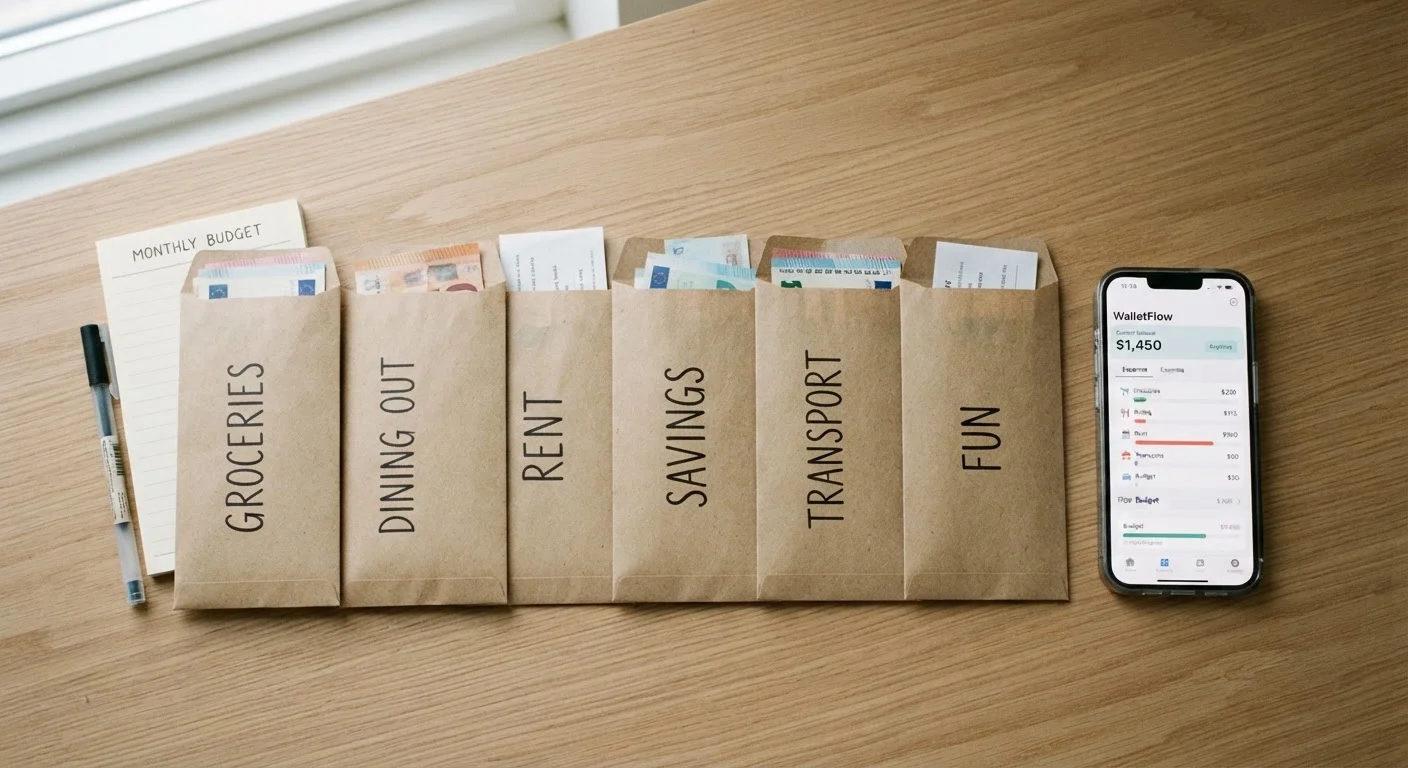
The envelope method is one of the oldest personal budgeting systems around. The original idea is simple: cash your paycheck, divide the bills into labeled envelopes — groceries, gas, dining out — and stop spending in a category the moment an envelope runs dry. The physical limit was the discipline.
Most Americans don't carry much cash anymore, but that doesn't make the system obsolete. The underlying principle — give every dollar a job before you spend it — is just as sound as it ever was. It's the same logic behind zero-based budgeting, just packaged differently. If you're new to structured budgeting, the household budgeting primer is a good place to orient yourself first.
The challenge is translating a cash-based habit into a world of debit cards, mobile pay, and automatic transfers. The good news: it's very doable, and you have more than one way to do it.
What you will need
Choosing Your Digital Envelope System
Before you set up categories, decide which format you'll actually use. There are two main approaches:
- Bank sub-accounts: Many online banks and credit unions let you open multiple savings or checking sub-accounts at no cost. You label each one — "groceries," "entertainment," "car expenses" — and transfer the budgeted amount in at the start of each month. Spending comes from the correct account. When it's empty, it's empty.
- Budgeting apps with envelope features: Several apps are built explicitly around the envelope model, letting you create virtual categories, fund them from your income, and log transactions against each one. If you're weighing digital tools, the spreadsheet vs. app comparison breaks down the trade-offs.
Either approach works. Sub-accounts give you a hard stop — you genuinely can't overdraw an empty envelope. Apps require more self-discipline but are more flexible when you use cards across multiple categories in a single shopping trip.
One Card Per Category Simplifies Tracking
If your bank allows multiple debit cards linked to different sub-accounts, designate one card per major spending category. Groceries go on the grocery card; dining goes on the dining card. This removes the need to manually split most transactions and makes the digital envelope feel much more like the real thing.
Setting Up Your Digital Envelopes: Step by Step
Run a quick spending audit
Pull your last one to two months of statements and sort every transaction into rough categories. You're not building the budget yet — you're gathering data so your category limits reflect reality, not wishful thinking. The spending audit checklist walks you through this process in detail.
List your categories and set dollar limits
Based on your audit, write out 5–8 spending categories that cover your variable expenses — the ones you actually control month to month. Common starting categories include groceries, dining out, gas, entertainment, clothing, personal care, and a miscellaneous buffer. Assign a realistic dollar amount to each based on what you actually spent, adjusted for any changes you want to make.
Set up your digital envelopes
Open sub-accounts at your bank — one per category — or create matching categories inside your chosen app. Label them clearly. If using sub-accounts, transfer the budgeted amount into each one on payday. If using an app, fund each virtual envelope from your income entry at the start of the month.
Spend and track in real time
As you make purchases, log them against the correct envelope immediately or at your daily check-in. If using sub-accounts, pay directly from the relevant account when possible. For situations where one card covers multiple categories in a single trip — a grocery run that also includes household supplies — split the transaction across envelopes manually in your app or spreadsheet.
Review and reset at month's end
Before the new month starts, look at how each envelope performed. Which ran out early? Which had money left over? Use that information to adjust next month's limits. A category that consistently runs short isn't a willpower problem — it may simply be underfunded. Budgeting is a skill that improves with data. For a comparison of other structured approaches, see zero-based budgeting vs. the 50/30/20 method.
Common Pitfalls and How to Avoid Them
Even a well-designed system breaks down if a few habits aren't in place.
Too many categories. Splitting spending into 20 envelopes sounds thorough, but it becomes a chore to maintain. Aim for 5–8 to start. You can always subdivide later once the habit is solid.
Forgetting to log card transactions. With cash envelopes, spending is automatic — the money leaves your hand. With digital envelopes, you have to record the transaction manually (or sync a card if your app allows it). Set a daily two-minute check-in to stay current.
Raiding one envelope to cover another. This happens. The key is to treat it as a deliberate budget adjustment, not a workaround. Reduce another category by the same amount and note why. That data helps you build a more realistic budget next month.
For a broader look at how money flows through your household before and after budgeting, see where your paycheck actually goes.
Don't Skip the Emergency Fund Envelope
The envelope method covers monthly spending, but it works best alongside a separate emergency fund — money set aside outside the envelope system entirely. Without one, an unexpected expense will force you to raid multiple envelopes and derail the whole structure. Even a small, consistent monthly contribution to an emergency fund changes your financial resilience. See the saving and debt hub for guidance on building that foundation.
This article provides general financial education and is not personalized financial advice. Consider speaking with a licensed financial professional about decisions specific to your situation.