

Key Takeaways
Household Cash Flow
Cash flow is the difference between the money coming into your household and the money going out each month. When more comes in than goes out, you have positive cash flow — money left over to save, invest, or pay down debt. When more goes out than comes in, you have negative cash flow, meaning you're spending beyond your income.
In personal finance, cash flow mirrors the concept used in business accounting: net cash flow equals total inflows minus total outflows over a defined period, typically one month.
The Basic Math Behind Your Money
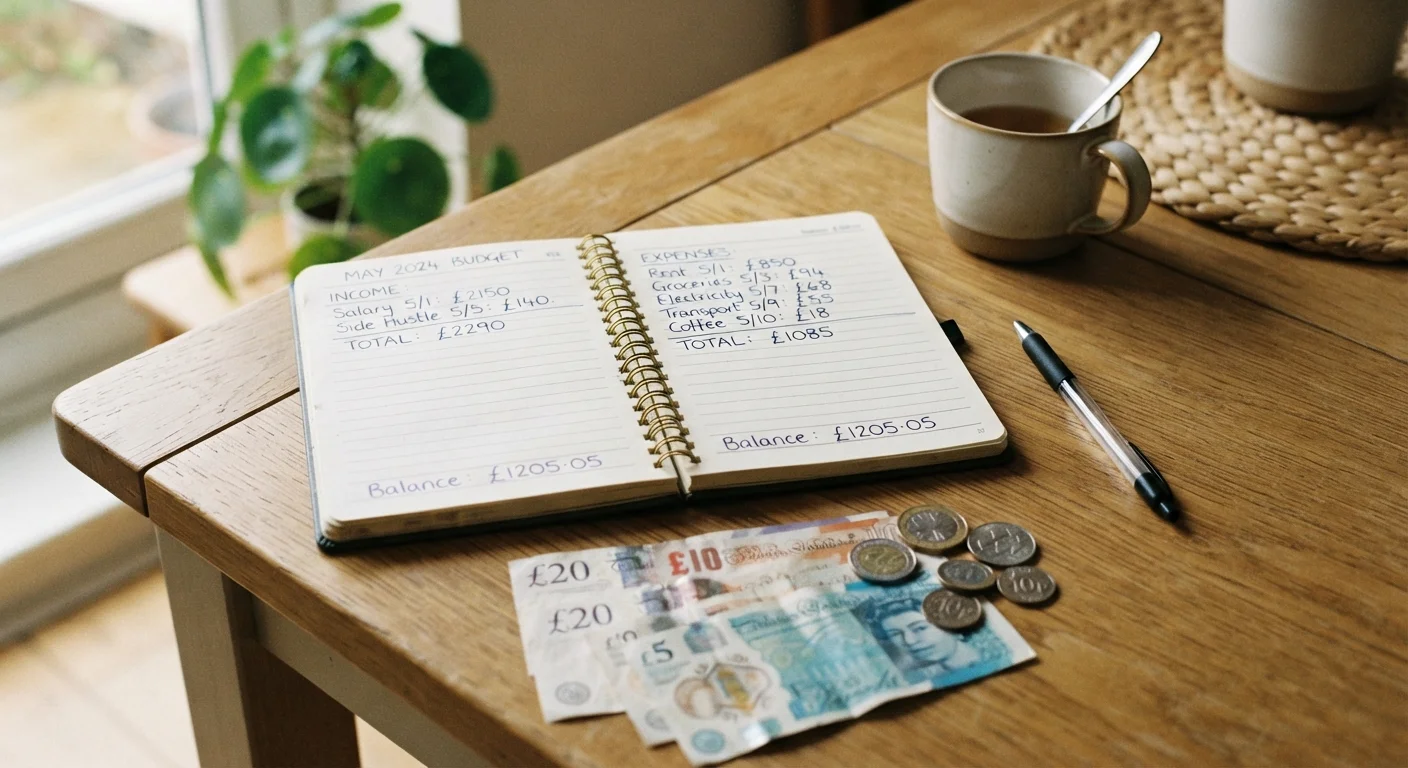
Every month, money enters your household and money leaves it. Cash flow is simply the name for that movement. The math is straightforward: total income minus total expenses equals your net cash flow. If you bring home $4,500 and spend $4,200, your cash flow is positive $300. If you spend $4,800, it's negative $300.
That gap — positive or negative — tells you more about your financial health than your salary alone. A household earning $80,000 a year can still run a cash flow deficit if spending consistently outpaces income. Understanding this is the foundation of any real financial progress.
For a deeper look at building structure around your cash flow, see our guide to household budgeting from the ground up.
~36%
Americans spending more than they earn
Federal Reserve survey data has consistently shown that a significant share of U.S. households report spending equal to or exceeding their monthly income.
$400
Emergency savings threshold many can't meet
The Federal Reserve's Report on the Economic Well-Being of U.S. Households has found that a notable share of adults would struggle to cover an unexpected $400 expense without borrowing or selling something.
3–6 months
Recommended emergency fund coverage
The Consumer Financial Protection Bureau (CFPB) and most mainstream financial guidance recommend maintaining three to six months of essential expenses in an accessible savings account.
Income: It's Not Always What You Think
Your gross salary is not your income for cash flow purposes — your take-home pay is. After taxes, health insurance premiums, retirement contributions, and any other payroll deductions, the number deposited in your account is what you actually have to work with.
If your income varies — through freelance work, tips, gig earnings, or hourly shifts — use a conservative average from the past three to six months rather than your highest month. Overestimating income is one of the most common reasons household cash flow plans fall apart.
Don't forget irregular income sources: a tax refund, a bonus, or a side gig payment. These can improve your cash flow in a given month, but they're unreliable, so treat them as one-time windfalls rather than recurring funds.
Use Your Last Three Bank Statements
Rather than guessing at your monthly spending, pull your last three months of bank and credit card statements and add up actual totals by category. This gives you a real baseline — not an idealized one — and often reveals expenses you'd forgotten were on autopay.
Expenses: Fixed, Variable, and the Sneaky In-Between
Expenses fall into a few categories, and knowing the difference helps you see where flexibility actually exists.
- Fixed expenses stay the same each month: rent or mortgage, car payment, insurance premiums, loan minimums.
- Variable expenses change month to month: groceries, gas, dining out, utilities. These are where most unintentional overspending happens.
- Irregular expenses don't show up every month but are predictable across a year: annual subscriptions, car registration, holiday gifts, medical co-pays. Dividing these by 12 and treating them as a monthly line item prevents them from blindsiding your budget.
A spending audit is one of the most effective ways to surface expenses you've forgotten about or stopped noticing — including subscriptions that quietly renew each month.
Groceries are a particularly common area where spending rises without any single obvious splurge. Our piece on grocery bill creep breaks down the quiet culprits worth examining.
How to Put Your Cash Flow to Work
Once you know your net cash flow, you can make deliberate decisions about it. A positive surplus doesn't automatically improve your finances — it has to be directed somewhere intentional. Common approaches include building an emergency fund, making extra debt payments, or setting up an automatic savings transfer before the surplus can be absorbed by casual spending.
Automating your savings is one practical way to capture a positive cash flow surplus before it disappears. If the transfer happens the day your paycheck lands, you never have to rely on willpower to save.
If your cash flow is negative, the path forward involves either increasing income, reducing expenses, or both. The envelope budgeting method — adapted for digital spending — can help contain variable expenses, which are typically the most adjustable part of any household budget.
Tracking cash flow isn't a one-time exercise. Reviewing it monthly builds awareness that gradually changes how you make everyday spending decisions — often without requiring dramatic sacrifice.
This article is for general informational and educational purposes only and does not constitute personalized financial advice. Please consult a qualified financial professional for guidance specific to your situation.