

Key Takeaways
Why a Plate Framework Works Better Than Calorie Counting
Most Americans don't carry measuring cups to the dinner table, and they shouldn't have to. Counting every calorie can feel tedious and unsustainable — yet eating without any structure often leads to unintentional imbalances in nutrients. A plate-based approach bridges that gap by using visual proportion as a practical guide.
The core idea is straightforward: divide your plate into zones and fill each zone with a category of food. This method was popularized through nutrition education programs and aligns broadly with guidance from public health institutions. It works because it scales — whether you're eating a grain bowl, a stir-fry, or a classic American dinner, the same proportional logic applies.
If you're newer to thinking about food structure, our Nutrition for Beginners guide covers the foundational vocabulary — macros, micros, and portion sense — that makes the steps below easier to apply. And if you want to understand how overall energy intake fits in, energy balance explained in plain terms is a useful companion read.
What you will need
Step-by-Step: Assembling Your Balanced Plate
Follow these steps each time you build a meal. With practice, the process takes seconds rather than minutes. The goal is consistent pattern-building, not perfection at every sitting.
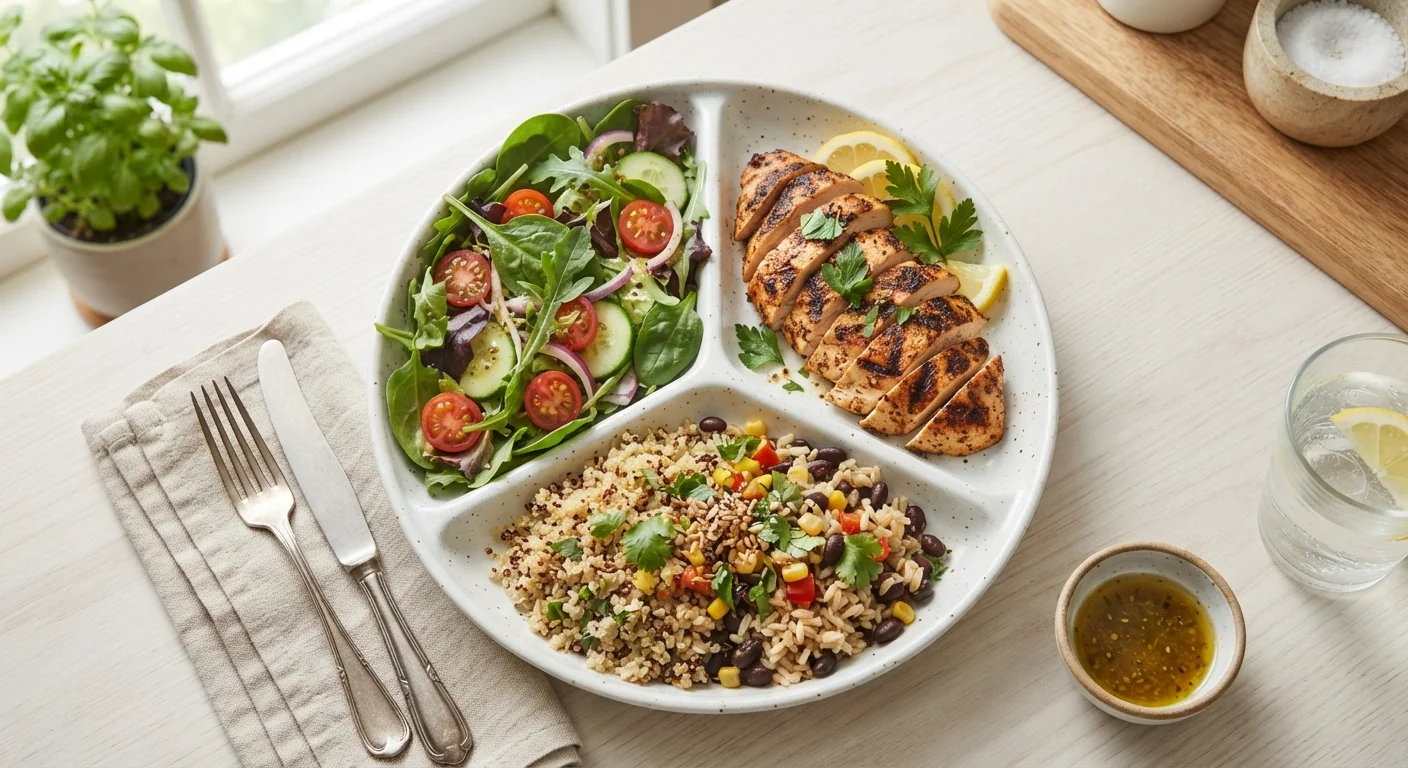
Fill half your plate with non-starchy vegetables
Non-starchy vegetables — think leafy greens, broccoli, bell peppers, cucumbers, tomatoes, zucchini, and carrots — are high in fiber, vitamins, and minerals while relatively low in calories. Dedicating half the plate to this category adds volume and nutritional density to the meal.
Aim for variety in color across the week, since different pigments generally indicate different phytonutrients. Fresh, frozen, and canned options (look for low-sodium versions of canned vegetables) all count.
Dedicate one quarter to lean protein
Protein supports muscle maintenance, helps slow digestion, and contributes to a sense of fullness after eating. Common sources include poultry, fish, eggs, legumes, tofu, tempeh, Greek yogurt, and lean cuts of beef or pork.
A rough visual guide: a serving of protein roughly the size of your palm is a reasonable starting point for most adults. For a deeper look at how animal and plant-based options compare, see protein sources side by side.
Use the remaining quarter for quality carbohydrates
Carbohydrates are the body's primary fuel source — the goal is choosing forms that provide sustained energy rather than rapid blood sugar spikes. Whole grains such as brown rice, quinoa, oats, whole-wheat bread, and starchy vegetables like sweet potatoes or corn fit well here.
Refined grains aren't forbidden, but whole-grain versions generally deliver more fiber and micronutrients for the same portion. Portion awareness matters more than elimination.
Add healthy fats as a complement, not a category
Healthy unsaturated fats — found in olive oil, avocado, nuts, seeds, and fatty fish — support nutrient absorption and heart health. They don't need a dedicated plate zone because they naturally appear in protein choices (salmon, eggs) and are often used in cooking or dressings.
A drizzle of olive oil on roasted vegetables, a few slices of avocado alongside, or a small handful of walnuts on a salad is typically sufficient. Fats are calorie-dense, so using them intentionally rather than abundantly is sensible.
Choose a low-sugar beverage to complete the meal
What you drink alongside a meal affects overall nutrition just as much as what's on the plate. Water is the most straightforward choice. Unsweetened beverages — plain coffee, tea, sparkling water — are also good options. Sweetened drinks can add significant sugar and calories without contributing meaningful nutrients.
Milk and fortified plant-based alternatives can contribute calcium and other micronutrients, making them reasonable beverage choices depending on individual dietary needs and preferences.
The Framework Travels Well
Restaurant meals don't derail the approach — you can apply the same proportional thinking when ordering. Asking for extra vegetables, choosing a side salad instead of fries, or splitting a large carbohydrate-heavy entrée are practical adaptations. For broader guidance on building steady habits, understanding where nutrition plans go wrong offers useful perspective.
Adapting the Framework Across Real-Life Situations
The plate model is a starting point, not a rigid prescription. Mixed dishes — tacos, soups, pasta — can still follow the same proportional logic even when food isn't literally separated on a plate. A hearty vegetable-forward soup with beans and a small whole-grain roll maps cleanly onto the framework; so does a burrito bowl layered with greens, salsa, black beans, rice, and grilled chicken.
Budget is a common concern, and the good news is that balanced eating doesn't require expensive ingredients. Frozen vegetables, canned legumes, eggs, and bulk whole grains are among the most cost-effective options available. For more on stretching your food dollar without sacrificing nutrition, see eating well on a tight food budget.
When shopping, a structured list helps. Our weekly grocery checklist built around nutrition fundamentals translates this plate framework directly into what to keep stocked at home. And once you're reading packaged food labels to fill those zones, reading a nutrition label without the confusion will help you evaluate options quickly.
This article is for general informational and educational purposes only and is not a substitute for personalized medical or dietary advice. Consult a registered dietitian or qualified healthcare professional before making significant changes to your diet, particularly if you have a medical condition or specific nutritional needs.