

Key Takeaways
No commute — train anytime, immediately
Eliminating travel time removes one of the most common barriers to consistency, making it easier to fit a workout into a packed schedule.
Lower ongoing cost than most memberships
A modest set of resistance bands or adjustable dumbbells involves a one-time expense, whereas gym memberships can run $30–$80 or more per month.
Complete privacy and personal comfort
Working out at home removes self-consciousness about appearance or performance, which research suggests is a real barrier for many beginners.
Full scheduling flexibility
Home training isn't limited by gym hours or class schedules, allowing workouts early in the morning, late at night, or in short midday windows.
Effective with minimal equipment
Bodyweight exercises like push-ups, squats, and lunges are well-supported by exercise science as tools for building functional strength and endurance.
Limited equipment variety restricts progression
Heavy compound lifts and certain cable-based movements are difficult or impossible to replicate at home without significant investment in equipment and space.
Distractions and domestic responsibilities compete for focus
Family members, household chores, and screens are all within reach at home, making it harder to maintain the mental focus that a dedicated gym space naturally supports.
No built-in social accountability
Without a training partner, class, or coach expecting you, it is easier to talk yourself out of a session or cut it short when motivation dips.
Harder to access professional coaching
While online trainers exist, real-time form corrections and hands-on guidance from a certified professional are much more accessible in a gym environment.
Our Verdict
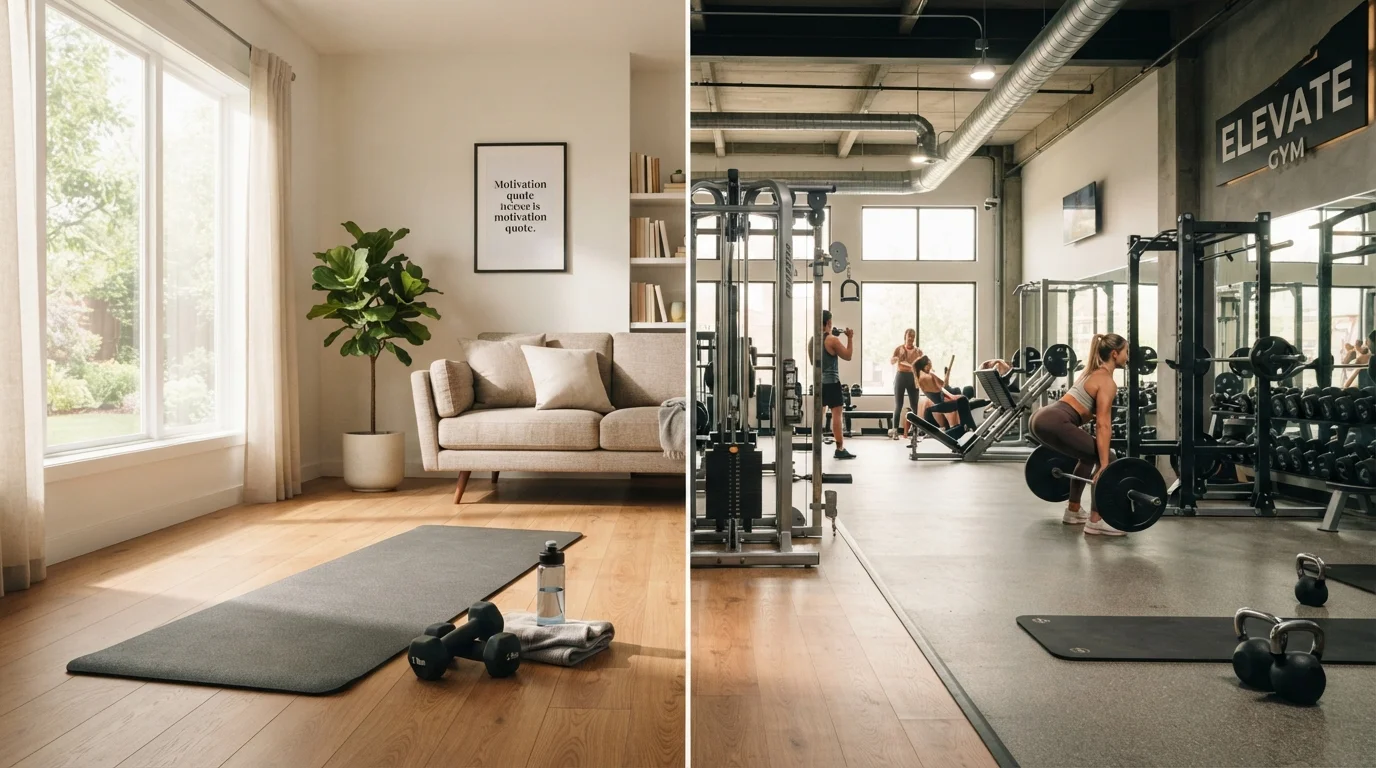
Home workouts and gym workouts are both legitimate, effective paths to better fitness. Home training wins on convenience, cost, and privacy; gym training wins on equipment access, variety, and social accountability. The environment that keeps you showing up consistently is the one that will actually deliver results.
Home workouts suit busy schedules, tight budgets, and privacy-conscious exercisers, while gyms are ideal for those who thrive on structured environments, need specialized equipment, or benefit from professional coaching.
Why the Setting You Choose Matters More Than You Think
Where you work out shapes more than just your exercise options — it influences how often you go, how long you stay, and whether you actually enjoy the process. Research consistently links exercise adherence to convenience and personal preference, not to any particular training location. If your environment creates friction, you're more likely to skip sessions. If it energizes you, you're more likely to return.
That said, both home and gym environments carry real trade-offs. Understanding them honestly helps you stop second-guessing your setup and start building a routine that fits your actual life — not an idealized one. For a broader look at how different fitness choices stack up, see our guide to common fitness myths that often derail beginners.
~23%
U.S. adults meeting both aerobic and muscle-strengthening guidelines
According to the CDC's National Health Interview Survey, fewer than one in four American adults meets the full federal physical activity recommendations.
67%
Gym members who rarely or never use their membership
Industry analyses and behavioral economics research have consistently found that a large proportion of gym members use facilities far less than they intend to when signing up.
The Real Advantages of Working Out at Home
Home training has moved well beyond basic jumping jacks. With resistance bands, adjustable dumbbells, and bodyweight progressions, you can build meaningful strength and cardiovascular fitness without leaving your living room.
No commute — train anytime, immediately
Eliminating travel time removes one of the most common barriers to consistency, making it easier to fit a workout into a packed schedule.
Lower ongoing cost than most memberships
A modest set of resistance bands or adjustable dumbbells involves a one-time expense, whereas gym memberships can run $30–$80 or more per month.
Complete privacy and personal comfort
Working out at home removes self-consciousness about appearance or performance, which research suggests is a real barrier for many beginners.
Full scheduling flexibility
Home training isn't limited by gym hours or class schedules, allowing workouts early in the morning, late at night, or in short midday windows.
Effective with minimal equipment
Bodyweight exercises like push-ups, squats, and lunges are well-supported by exercise science as tools for building functional strength and endurance.
The biggest underrated advantage is time. Eliminating a round-trip commute — even 20 minutes each way — adds up to hours per week that can be reinvested in actual training or recovery. For people juggling work, family, and other commitments, that difference is often what separates a sustainable routine from an abandoned one. Our article on bodyweight versus free weights explores how to make the most of limited home equipment.
Where Home Workouts Fall Short
Home training isn't without its limitations, and being honest about them helps you plan around them rather than be surprised by them.
Limited equipment variety restricts progression
Heavy compound lifts and certain cable-based movements are difficult or impossible to replicate at home without significant investment in equipment and space.
Distractions and domestic responsibilities compete for focus
Family members, household chores, and screens are all within reach at home, making it harder to maintain the mental focus that a dedicated gym space naturally supports.
No built-in social accountability
Without a training partner, class, or coach expecting you, it is easier to talk yourself out of a session or cut it short when motivation dips.
Harder to access professional coaching
While online trainers exist, real-time form corrections and hands-on guidance from a certified professional are much more accessible in a gym environment.
Motivation is the most commonly reported challenge. Without external structure — a class starting at 6 a.m., a trainer waiting, other members around you — it's easy to let a session drift into tomorrow. Creating a dedicated workout space, even a small one, and sticking to a consistent schedule can partially offset this, but it requires intentional habit-building that not everyone finds natural.
What the Gym Actually Offers
Gyms aren't just collections of expensive machines. For many people, the environment itself is the product — a space mentally coded for focused effort, separate from home responsibilities and digital distractions.
Access to a full cable system, barbells, cardio machines, and free weights lets you progress across a wider range of movement patterns and loading strategies than most home setups allow. This matters especially for those pursuing specific strength or physique goals. Trained staff and personal trainers (typically available at an additional cost) can also provide form corrections and programming guidance that's difficult to replicate through a screen. If you're weighing different intensity options at the gym, our breakdown of HIIT versus steady-state cardio can help you plan your sessions more effectively.
Group Classes: A Middle-Ground Option
Many gyms offer group fitness classes included in standard membership fees. These provide the structure and social accountability of a scheduled session while still giving access to professional instruction. For people who struggle with self-directed gym workouts, group classes can significantly improve consistency without requiring a personal trainer budget.
Building a Sustainable Routine Regardless of Location
The honest truth is that consistency beats perfection in either setting. Someone doing three solid home sessions per week will see more progress than someone with a gym membership they rarely use. What matters is matching your environment to your personality, schedule, and resources.
A hybrid approach works well for many people: gym sessions when time and energy allow, home workouts as a fallback on busy days. This prevents the all-or-nothing thinking that leads to long breaks in training. Daily movement habits outside structured workouts also play a larger role in overall health than most people realize, so don't discount what happens between sessions. For a deeper look at balancing different types of training, see our piece on strength training versus cardio.
This article is for general informational purposes only and does not constitute medical or fitness advice. Consult a qualified healthcare provider or certified fitness professional before starting or significantly changing any exercise program, especially if you have an existing health condition.