

Key Takeaways
Why Skids Happen — and What Makes Them More Likely
A skid occurs when a tire's grip on the road surface is exceeded by the forces acting on it — acceleration, braking, or cornering. Traction is never unlimited; it is a product of tire condition, road surface, speed, and weight distribution. When any of those factors tips out of balance, grip breaks down.
Road conditions are the most unpredictable variable. Wet pavement reduces traction dramatically, and ice or packed snow can reduce it by 70–80% compared to dry asphalt. Black ice — a thin, nearly invisible layer of ice — is especially dangerous because it provides no visual warning. For a broader look at how weather affects vehicle handling, see our guide on driving in rain, snow, ice, and fog.
Driver behavior contributes significantly as well. Entering a curve too fast, braking mid-corner, or accelerating sharply on a slippery surface all shift weight in ways that can overwhelm available grip. Distraction and overconfidence — explored in our piece on habits that erode driver awareness — reduce the reaction time needed to catch a skid early.
Tire condition is the foundation. Worn tread cannot channel water efficiently, which leads to hydroplaning. Under-inflated tires reduce the contact patch and generate heat. Keeping tires in good shape is one of the most effective skid-prevention measures a driver can take.
What you will need
Correct Recovery: Step by Step
The steps below cover the physical actions required to recover from the most common skid scenarios. Read through them before you need them — muscle memory built through understanding responds faster than logic in the moment.
Identify What Type of Skid Is Happening
The two most common skid types require opposite reactions, so identifying which one is occurring is the first step.
- Understeer (front-wheel skid): The front tires lose grip and the car plows straight ahead despite your steering input. Common in front-wheel-drive vehicles and during oversteering into a corner too fast.
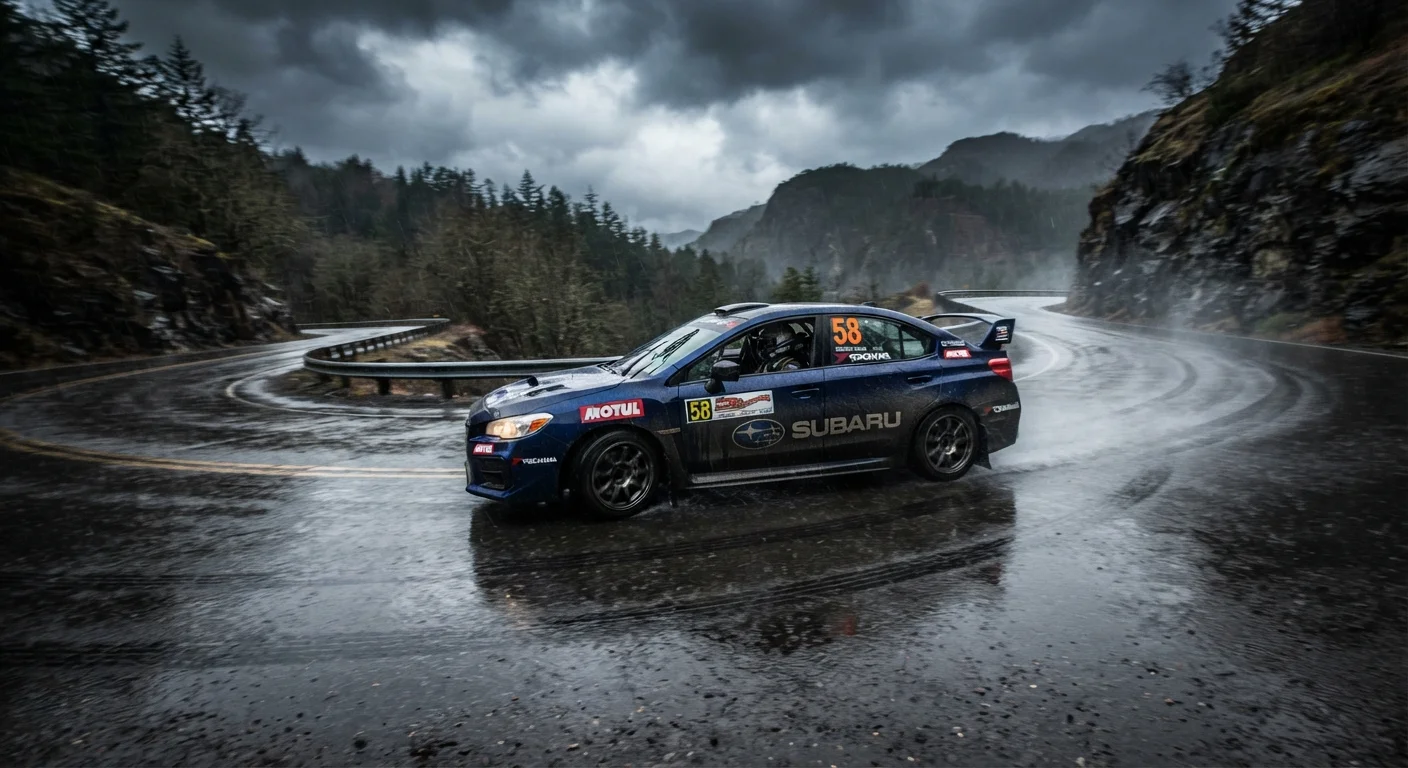
- Oversteer (rear-wheel skid): The rear tires lose grip and the back of the car slides outward. Common in rear-wheel-drive vehicles, or during sudden acceleration or sharp steering inputs.
Ease Off the Accelerator — Smoothly
The moment you sense a skid beginning, lift off the gas pedal in a smooth, controlled motion. Sudden deceleration can transfer weight abruptly and worsen the slide. Releasing throttle gradually allows the tires to begin rebuilding contact with the road surface without additional disruption.
Steer in the Direction You Want to Go
For an oversteer skid, steer gently in the same direction the rear is sliding — this is called "steering into the skid." If the rear is sliding left, steer left. The goal is to realign the vehicle's heading with the direction of travel.
For an understeer skid, reduce steering lock slightly — turning harder won't help and may deepen the plow. Ease off the wheel toward straight-ahead while also easing off the throttle to transfer weight back to the front axle.
Brake Gradually If You Need to Slow Down
If the skid involves excess speed heading toward a hazard, apply the brakes progressively rather than suddenly. On vehicles with ABS, apply firm, steady pressure and let the system pulse the brakes automatically — you will feel a vibration in the pedal, which is normal. On vehicles without ABS, use threshold braking: apply pressure just short of wheel lockup.
Straighten Out and Re-Establish Traction
As the tires begin to regain grip, you will feel the steering wheel start to respond naturally again. At that point, gently straighten your steering input to match the direction of travel. Avoid any sudden acceleration until you are confident traction is fully restored and the vehicle is tracking straight.
Do Not Panic-Brake Mid-Skid
Slamming the brakes when traction is already lost typically locks the wheels (on non-ABS vehicles) or overwhelms ABS sensors, extending the skid distance. Apply brake pressure gradually and smoothly if you need to slow. On ice or deep snow, threshold braking or gentle pumping may be more effective depending on your vehicle's braking system.
Over-Correcting Causes Secondary Skids
Turning the steering wheel too sharply while recovering from a skid can swing the rear end to the opposite side, creating a counter-skid that is often harder to control than the original. Apply steering inputs smoothly and progressively, then straighten out as grip returns.
Practice Helps — in a Safe Setting
Many driving schools and safety programs offer skid-pad courses where drivers practice controlled skid recovery on a closed course. Even a single session can significantly improve your instinctive response. Check with your local DMV or AAA chapter for programs in your area.
One broader habit worth reinforcing: maintaining adequate following distance gives you more room and time to manage a skid before you reach the vehicle ahead. Closing that gap removes your margin entirely — a dynamic detailed in our article on why tailgating is more dangerous than most drivers realize.
This article is for general informational purposes only. Driving conditions vary widely; always drive within your skill level and the limits of your vehicle. Consider formal driver training for hands-on skid recovery practice.