

Key Takeaways
Our Verdict
If maximizing your return matters most and you can invest the time, a private sale generally puts more money in your pocket. If speed, simplicity, and convenience are the priority—especially when buying another car simultaneously—a trade-in is the more practical route for most people.
| Best for | Recommended |
|---|---|
| Owners who want the highest possible return on their vehicle | Private Sale |
| Those buying a replacement vehicle at the same time | Dealer Trade-In |
| Sellers with limited time or who prefer a hands-off process | Dealer Trade-In |
| Owners with a well-maintained, in-demand vehicle and flexible timeline | Private Sale |
The Core Trade-Off: Money vs. Convenience
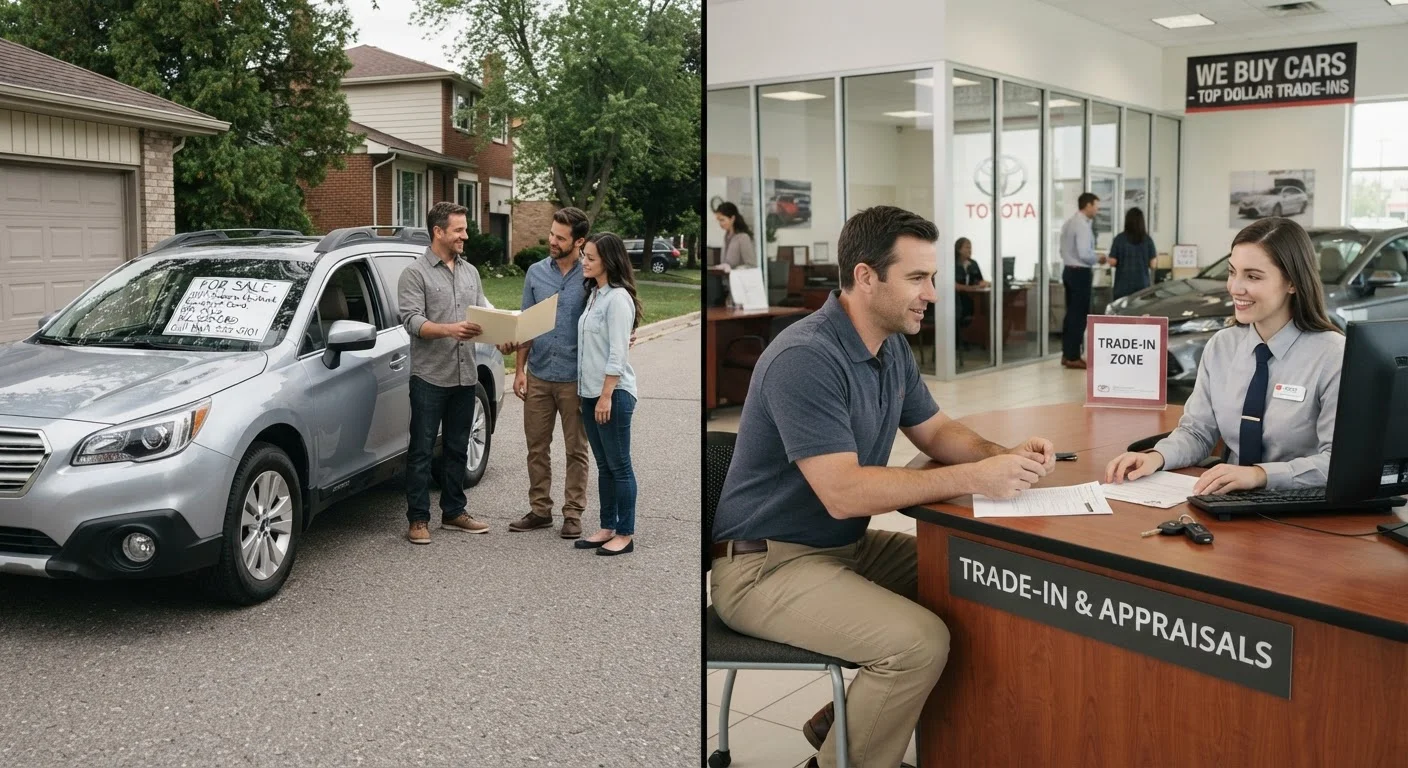
When it's time to move on from your current vehicle, you have two main options: list it yourself and sell to a private buyer, or hand over the keys to a dealership in exchange for a credit toward your next purchase. Neither approach is universally better—the right choice depends on how much your time is worth, how quickly you need to sell, and how much money you want to walk away with.
Understanding how depreciation affects your car's value is a useful starting point before deciding which route to take, since timing your sale can meaningfully affect what you receive either way.
| Private Sale | Dealer Trade-In | |
|---|---|---|
| Typical sale price | Higher (closer to market value) | Lower (dealer margin factored in) |
| Time to complete | Days to weeks | Same day, often within hours |
| Effort required | High (listing, showings, paperwork) | Low (dealer handles most steps) |
| Payment security | Requires careful vetting | Guaranteed by dealership |
| Sales tax advantage | None | Possible in many states |
| Best timing | When not buying immediately | When purchasing a replacement car |
What a Private Sale Actually Involves
Selling privately means taking on every step yourself: researching a fair asking price, cleaning and photographing the car, listing it on platforms like Craigslist or Facebook Marketplace, fielding inquiries, arranging test drives, and navigating the title transfer and payment process.
The upside is real. Private buyers aren't factoring in a dealership's reconditioning costs, markup, or profit margin, so they're often willing to pay noticeably more. For a vehicle in solid condition with strong demand, the difference between a private sale price and a trade-in offer can run into the thousands of dollars.
The downsides are also real. You'll need to handle strangers contacting you, coordinate your schedule for test drives, and accept that the process could take days, weeks, or longer depending on demand. You're also responsible for protecting yourself—accepting only certified payment methods (cashier's checks carry fraud risk; cash or verified bank transfers are safer), completing a proper bill of sale, and confirming the title is clear before any transaction.
Price Your Car Before You List It
Before setting an asking price, check multiple sources—such as vehicle valuation tools and current local listings for comparable cars. Pricing too high discourages serious inquiries; pricing too low leaves money on the table. A realistic price, clearly justified in your listing, tends to attract the most qualified buyers and speeds up the process.
How Dealer Trade-Ins Work
A trade-in is about as straightforward as car transactions get. You bring your vehicle to a dealership, they appraise it—often in 30 minutes or less—and offer you a dollar amount that gets applied to your next purchase. No listings, no test drive coordination, no title paperwork headaches on your end.
The trade-off is price. Dealers need to resell your car at a profit, so their offers typically fall below private-sale market value. That said, many states allow you to pay sales tax only on the difference between the new vehicle's price and your trade-in value, which can partially offset the lower offer. Check your state's rules, since this varies significantly and can affect the real-dollar comparison between routes.
If you're simultaneously weighing whether to buy or lease your next car, factoring in the trade-in credit alongside your financing arrangement makes sense. Speaking of which, dealer financing versus your own bank is another comparison worth making before you sit down at a dealership.
Making the Call: Questions to Ask Yourself
Before deciding, consider these practical factors:
- How much is the price gap? Get a trade-in quote and compare it to realistic private-sale comps on your vehicle. If the difference is $500 or less, the convenience of a trade-in may well be worth it.
- How quickly do you need to sell? If you're in a hurry, a trade-in offers certainty; private sales can stall.
- What condition is the car in? A vehicle with minor cosmetic issues may still command a strong private price but could get penalized heavily in a dealer appraisal.
- Are you comfortable with the private-sale process? Meeting strangers, managing negotiations, and handling paperwork are part of the deal. If that feels like too much friction, a trade-in is a legitimate choice.
If you go the private route, knowing what buyers will scrutinize can help you prepare your vehicle and price it accurately. Transparency about your car's condition tends to attract more serious buyers and smoother transactions.